Super Aleste arrived on the Super Famicom in 1992, and more than three decades later it remains the high-water mark for the vertically scrolling shooter on that machine. Compile developed it. Toho published it. It is part of the Aleste series, and it does exactly what that lineage promises: you fly a spacecraft, you shoot enemy ships, and the screen fills with fire.
A spacecraft, a bird’s-eye view, and enemy ships
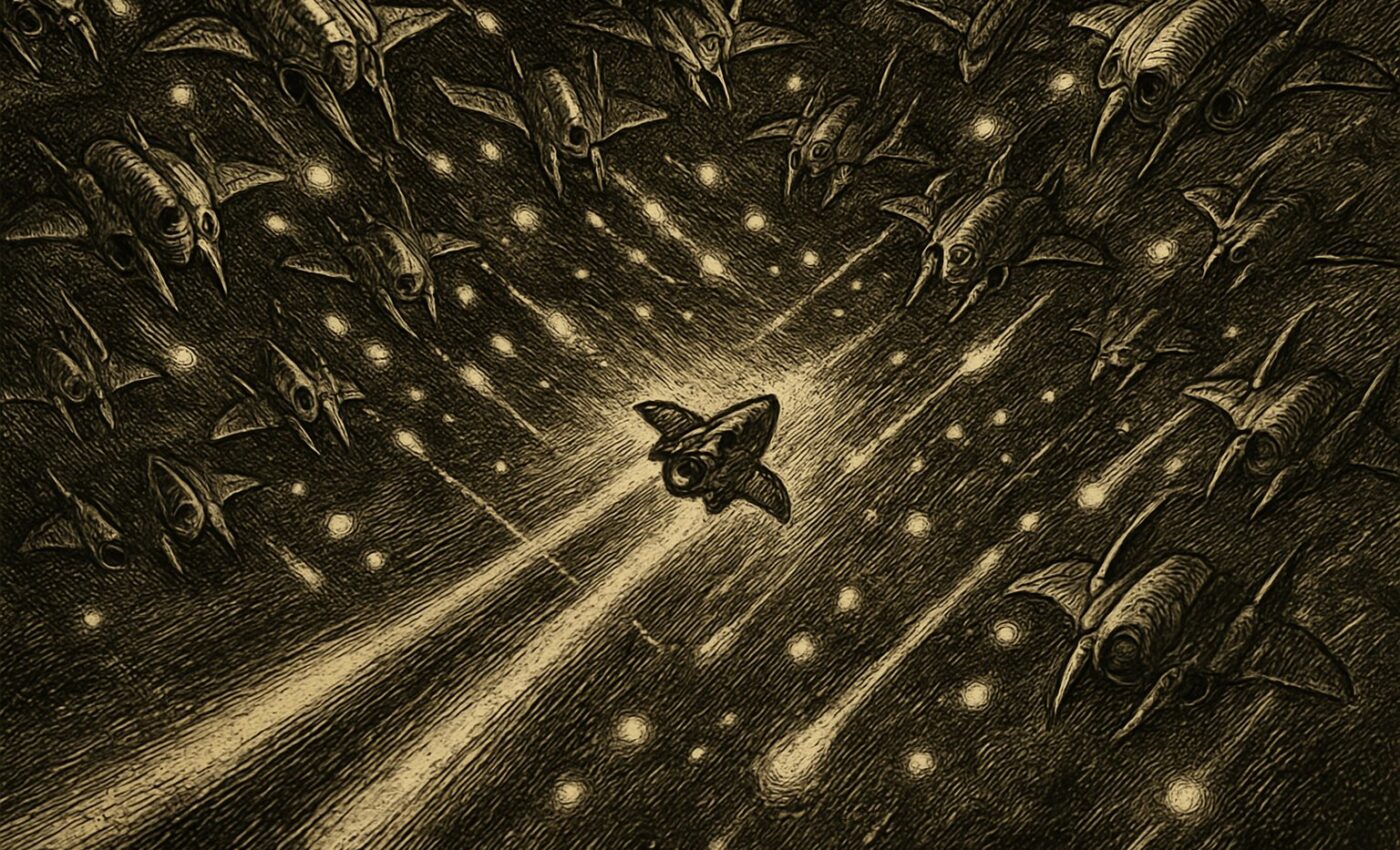
The setup is science fiction and nothing more elaborate than that. Super Aleste puts the player in a single spacecraft across a run of locales, seen from a bird’s-eye view, and asks for one thing — keep shooting. There is no co-op, no second player, no split-screen compromise. Modes are single player only.
That restraint is the point. Compile built a shooter that trusts its own pacing. You move, you fire, you read the screen, and the game never stops to explain itself.
The genre at its most crowded
By 1992 the shooter was not a novelty. It was a crowded field, and the Super Famicom was not the obvious home for the best of them. Super Aleste did not try to out-weird its rivals or bury the player in systems. It took the vertical formula — ship at the bottom, enemies pouring down from the top — and executed it with a consistency most of the era’s shooters could not match.
The bird’s-eye view matters here. The isometric angle gives the action a readable geometry. You can see what is coming. In a genre where a single unseen bullet ends a run, that clarity is not a small thing.
What the score of 9.3 reflects
GameSpot’s user rating for Super Aleste sits at 9.3 out of 10. That is the published critical score, and it holds up.
Here is what that number is actually measuring:
- Consistency — the game rarely dips, level to level.
- Readability — the bird’s-eye view keeps the chaos legible.
- Focus — single player, one ship, no padding.
- Longevity — a shooter you return to, not one you finish and shelve.
Those four things are why the rating lands where it does. None of them are flashy. All of them are hard.
Compile and Toho, and the Aleste name
Compile developed Super Aleste, and the studio’s fingerprint is on every screen. Toho published it. The Aleste series gave the game its frame, and Super Aleste wears that inheritance without leaning on it. You do not need to know the earlier entries to play this one. The game stands alone.
That is rarer than it sounds. Series entries in this era often assumed a player who had been there from the start. Super Aleste did not.
The case for the spacecraft
Strip everything else away and the case for Super Aleste is simple: the spacecraft, the enemies, the view from above, and a design that never wastes your time. The game knows what it is. It is a shooter about shooting, and it does that one job at a level few of its peers reached.
The science-fiction setting is a frame, not a story. There is no plot to follow, no character to root for. What you get instead is a machine that responds exactly as you expect, in a genre where that is the whole game.
The number, plainly
Super Aleste is not a curiosity. It is not a relic worth revisiting only for historical reasons. It is a 1992 Super Famicom shooter that Compile built with care and Toho shipped to an audience that knew exactly what it wanted.
Key facts
- Title: Super Aleste
- Developer: Compile
- Publisher: Toho
- Year: 1992
- Platform: Super Famicom
- Genre: Shooter
- Modes: Single player
- Perspective: Bird’s-eye / isometric
- Published critical score: 9.3/10
The shooter genre has a long tail of games that were fine and are now forgotten. Super Aleste is not one of them. Its single-player focus, its readable bird’s-eye view, and Compile’s steady hand across every locale keep it in the conversation. The 9.3 is not nostalgia talking. It is a rating that the game earned in 1992 and has not lost since.
Score: 9.3 of 10.
Get the Notebook.
The day's best stories and every fresh verdict, in plain English, in your inbox by seven. One email a day, no more.