Broken Age arrived twice. The first act landed on January 28, 2014, two weeks early for Kickstarter backers; the second act followed on April 28, 2015. That split release is the whole story of this game in miniature — a project that promised one thing, delivered part of it, and then asked its audience to wait and see whether the rest held together.
It mostly does. Double Fine’s point-and-click adventure is a hand-painted, side-view tale of two teenagers living parallel lives, and it earns its 7.7 of 10 on the strength of its writing, its two leads, and its refusal to let either of them accept the role someone else picked out. What it does not earn is a clean finish.
Trailer, via Double Fine.
Vella Tartine and the Maiden’s Feast
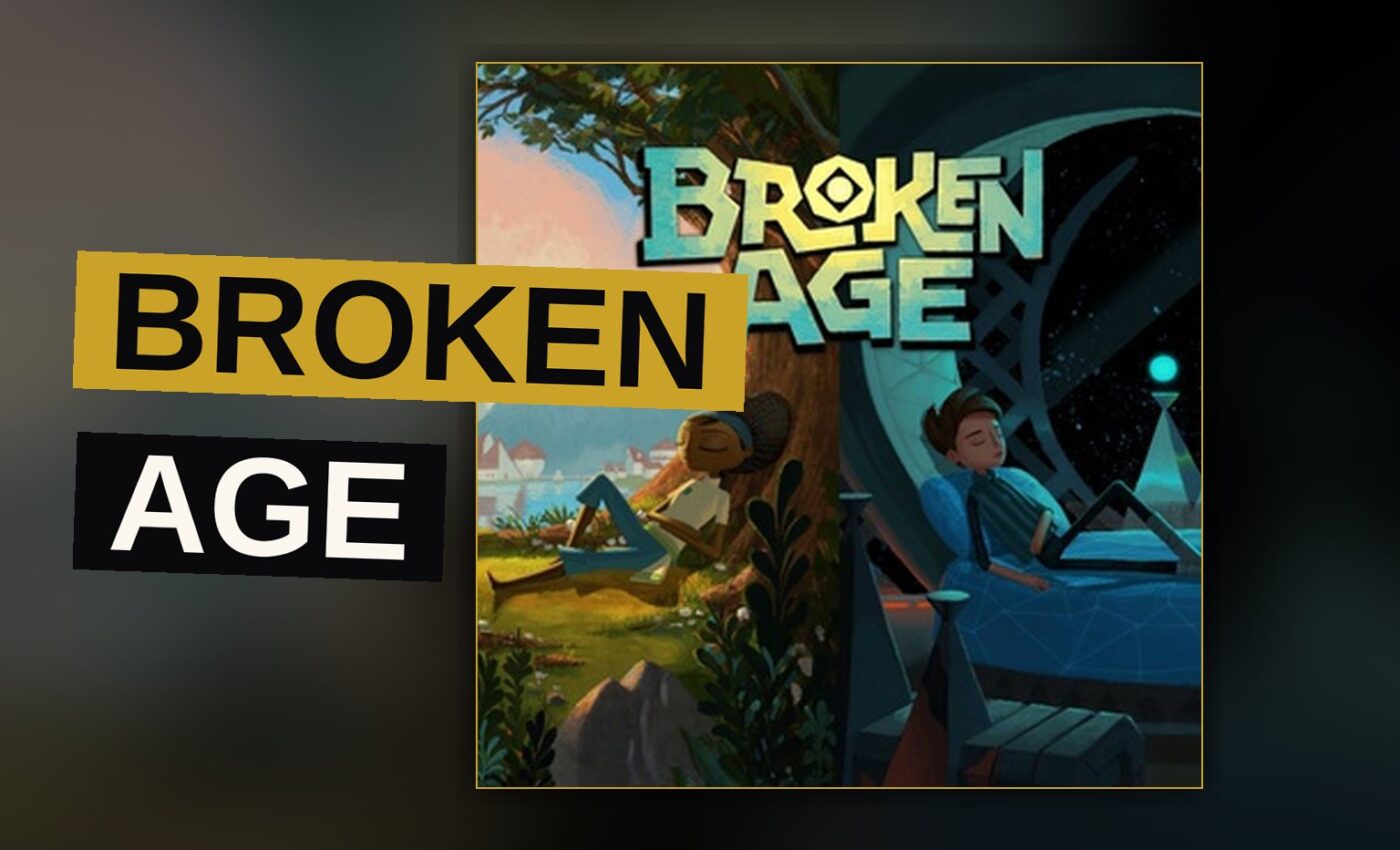
Vella Tartine is a young woman in a village that has a tradition. Every year, the village holds the Maiden’s Feast, and a girl is selected to be offered up as a willing sacrifice to a monstrous creature. Vella is chosen. She refuses.
That refusal is the engine of her half of Broken Age. She does not run from the monster; she sets out to fight back, and the game follows her as she works against a fate her community treats as an honor. The setup is grim on paper, and the game knows it. Broken Age plays it as comedy, with fantasy trappings and a side view that keeps the player at a slight distance from the worst of it. Vella’s world is bright and storybook-flat, and the joke is that everyone in it is perfectly calm about feeding a teenager to a beast.
Shay Volta and the Spaceship
Shay Volta is a teenage boy on a spaceship. He is alone except for a motherly computer that coddles him, filling his days with hollow make-believe missions. He wants out. He wants adventures and he wants to do good in the world, and the computer that keeps him safe is the thing standing between him and any of it.
Shay’s half is science fiction where Vella’s is fantasy, and the contrast is the point. His missions are fake, scripted, low-stakes — the computer’s idea of keeping a child busy. The game’s comedy here is drier. Shay is not in danger. He is bored, and the boredom is the cage.
The two stories run in parallel. The player can switch between Vella and Shay at will through the game’s interface. They do not interact in any direct way, and their worlds are seemingly separate. The source material is careful about that word — seemingly — and the game spends its runtime hinting at deeper connections waiting to be uncovered. Whether those hints pay off is the thing the two-act structure makes hard to judge cleanly.
How Broken Age Plays
Broken Age is a point-and-click adventure. The player directs a character around the screen, examines objects, and talks to non-player characters to learn about the world. Each character has a separate inventory. Items are collected, dragged onto context-sensitive areas, or combined with other items in the inventory.
The notable design choice is the abandonment of verb lists. Early adventure games made the player pick from a menu of verbs — use, look, talk, open. Broken Age uses context-sensitive actions instead. Tim Schafer, the game’s director, explained the reasoning plainly: in essence, “there really was always one verb, which was ‘interact with’.” So the game drops the pretense and gives the player that one verb, dressed up by context.
That is the right call, and it is the least interesting thing about the game. The puzzles are not the draw. The draw is the two kids.
A Kickstarter That Changed the Math
Broken Age began as Double Fine Adventure, a Kickstarter project promoted by Double Fine and 2 Player Productions in February 2012. The original goal was $400,000, set to cover development costs and documentary filming. It raised more than $3.45 million from more than 87,000 backers within the month, becoming the largest crowdfunded video game project at the time.
That figure matters beyond Broken Age. The game remains one of the highest-backed crowdfunded projects of any type, and its success helped establish crowdfunding as a viable alternative to traditional venture capital and publisher funding for niche video game titles. A documentary series from 2 Player Productions chronicled the development in episodes, which means the messy parts were on camera.
there really was always one verb, which was ‘interact with’
Schafer’s line is the design philosophy in one sentence, and it is also a decent description of what the Kickstarter audience was doing: interacting with a project, one update at a time, waiting to see what the money built.
Platforms, Acts, and What Shipped When
The release history is scattered, and it is worth laying out plainly, because Broken Age did not arrive as a single object.
| Release | Date | Platforms |
|---|---|---|
| Act 1 | January 28, 2014 | Microsoft Windows, macOS, Linux, iOS, Android, PlayStation 4, PlayStation Vita, Xbox One |
| Act 2 | April 28, 2015 | Same platforms |
| Complete retail version | April 28, 2015 | Windows, macOS, Linux (published by Nordic Games) |
| Nintendo Switch version | September 13, 2018 | Nintendo Switch |
The first act was available two weeks earlier for Kickstarter backers. The second act landed more than a year later, alongside a retail version of the complete game published by Nordic Games for Windows, macOS, and Linux. The Switch port came three years after that.
Broken Age was Schafer’s first return to the point-and-click genre since 1998’s Grim Fandango. That gap is sixteen years, and the game carries the weight of it. It is a homecoming and a test case at the same time.
Where the Two Halves Meet
The parallel structure is the game’s best idea and its riskiest. Vella fights a fate imposed by tradition. Shay fights a fate imposed by a machine that loves him. Both are coming-of-age stories about refusing the role you were assigned.
Broken Age commits to that symmetry. It lets the player jump between the two at any time, which keeps either story from wearing out its welcome. It also means neither story gets to build the kind of sustained momentum a single protagonist would generate. The switching is a feature. It is also a hedge.
The comedy holds up better than the plotting. Broken Age is funny in a specific register — fantasy village absurdism on one side, deadpan sci-fi routine on the other — and the tone stays consistent across both. The hand-painted art is the other thing that lasts. It is a good-looking game, and it looks like nothing else that shipped in 2014.
The Verdict on Broken Age
Broken Age is worth playing, and it is not the game its Kickstarter promised. The crowdfunding campaign sold a return to form from a director who helped define a genre. What arrived was two acts, a year apart, telling two stories that never quite close the distance between them.
The 7.7 is fair. The writing is sharp, the two leads are worth the time, and the context-sensitive design is a clean solution to a problem adventure games had been carrying for decades. What holds it back is the structure. Splitting the game across two releases, and across two protagonists who never directly meet, keeps Broken Age from landing the ending its setup deserves. The hints at deeper connections are there. The payoff is thinner than the hints.
This is a game about two teenagers who refuse the lives picked out for them, made by a studio that took a very public bet on doing things its own way. Both of those bets mostly worked. Neither worked completely. Broken Age is the rare crowdfunded game that shipped, got finished, and is still interesting to argue about — which is more than most of its contemporaries managed.
7.7 of 10.
Get the Notebook.
The day's best stories and every fresh verdict, in plain English, in your inbox by seven. One email a day, no more.