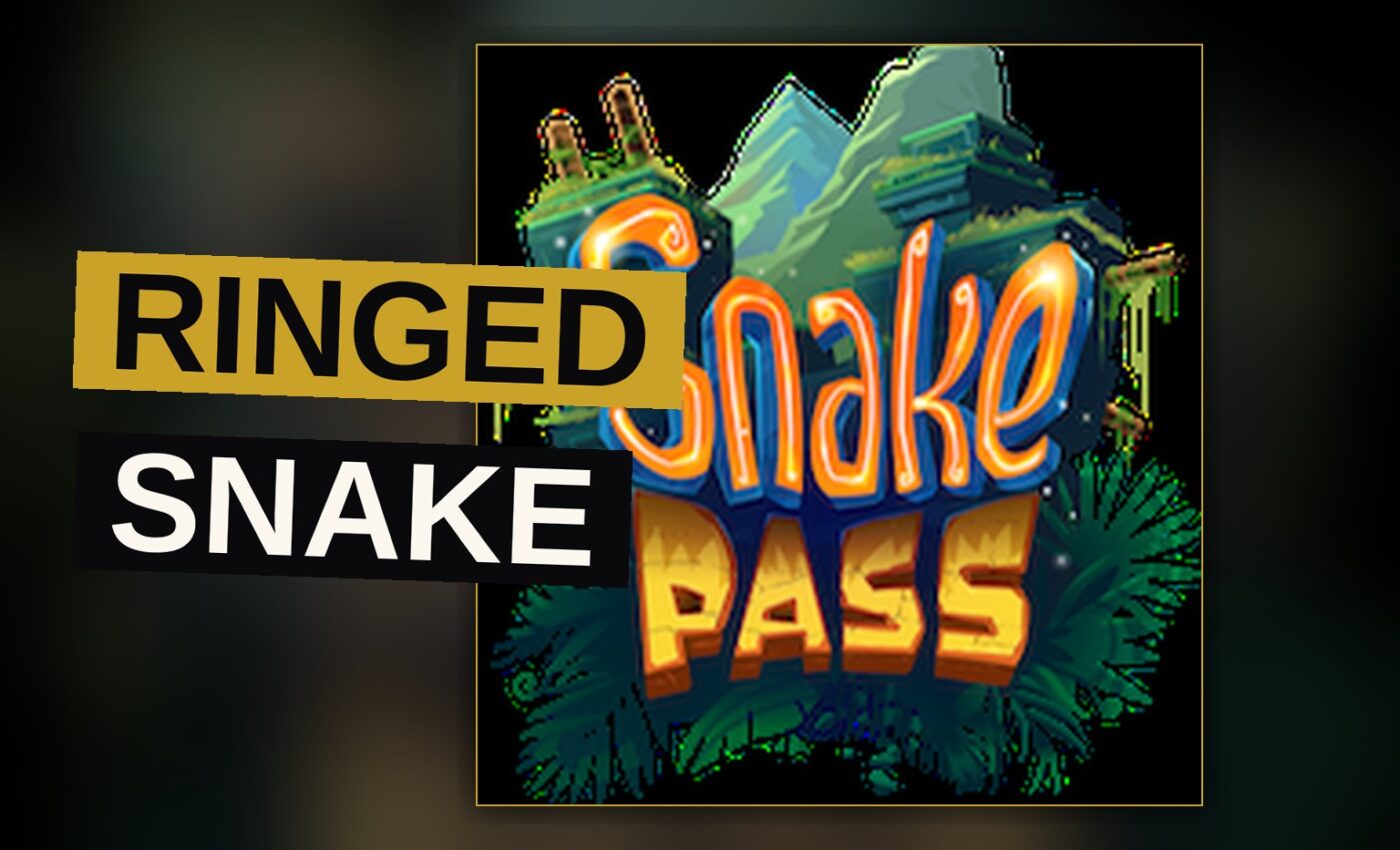
Snake Pass is a puzzle game about a snake made of linked rings, and it asks you to bend that snake around itself to get through narrow passages, over gaps, and past hazards. That premise sounds simple. It is not.
The game, available on PS4, PC, XONE and Switch, tasks players with guiding a small ringed creature across winding paths built from wooden logs, stone blocks, and vines. Each ring can be bent, pushed, pulled, and stacked, and the goal is always the same: reach the end of the level while keeping the snake together. The difficulty ramps fast, and the controls are precise enough that even small errors cost you dearly.
Trailer, via Snake Pass.
The Ringed Body
The core mechanic is the snake’s segmented form. Each ring is connected to the one ahead of it, and bending one ring bends those behind it too. This creates a chain reaction that forces you to think several steps ahead. A push on the front of the snake can send the back of the snake into a wall, and a bend in the middle can twist the tail into a position that traps it.
The game’s puzzles often hinge on this chain effect. You might need to bend a ring to create a ledge for the next ring to climb, then bend again to slide the whole snake down a slope. The best levels feel like a single, continuous motion, and the worst ones feel like a series of separate obstacles strung together.
Controls and Sensitivity
The controls are sensitive, which is both a strength and a weakness. On PC, you can adjust the sensitivity, but on console versions, the default setting is demanding. A gentle nudge can send the snake careening off a cliff, and a quick turn can snap the tail into the wall. Players who want to be precise need to learn a light touch.
The game also lets you pause at any moment, which is essential for tricky sections. Pausing lets you plan your moves, and the game remembers your position so you can restart from the exact spot you left. It is a generous feature that keeps frustration from boiling over.
The Levels
There are 60 levels in the main campaign, and they are arranged into three worlds: the Forest, the Desert, and the Mountain. Each world has a distinct visual style and a set of hazards tied to that environment. The Forest features tall grass and branching paths; the Desert has sand dunes and shifting ground; the Mountain has steep cliffs and icy slopes.
The levels are not all created equal. Some are clever and rewarding, like the ones that require you to stack rings to reach a high platform or bend the snake into a tight tunnel. Others feel repetitive, asking you to repeat the same bend-and-push pattern without adding anything new. The game leans heavily on the bending mechanic, and while that focus gives the design a consistent identity, it also means variety suffers in the later stages.
Difficulty Curve
The difficulty curve is steep. Early levels are forgiving, letting you learn the controls without much pressure. Midway through, the game starts throwing multiple obstacles at you at once: a gap you need to cross while avoiding a moving hazard, a narrow passage that requires precise timing, and a final stretch that tests your memory of the path. By the end, you are juggling three or four systems at once.
The game does not hold your hand. There is no hint system beyond the occasional visual cue, and the game expects you to remember the layout of each level. This can be frustrating when you are stuck on a level for ten minutes, but it also rewards persistence. Once you solve a difficult level, the sense of achievement is strong.
Visual Style
The art direction is bright and cheerful. The snake itself is expressive, with eyes that follow your movements and a body that reacts to your commands. The environments are detailed, with leaves rustling in the wind, water dripping from vines, and dust swirling in the desert. The game runs smoothly on all platforms, with no noticeable frame drops during play.
The sound design is minimal but effective. The snake’s rings make a soft clinking sound when they move, and the background music is gentle and unobtrusive. The game does not rely on audio cues, which could be a problem for players who are hard of hearing, but the visuals are clear enough to convey everything you need to know.
Performance Across Platforms
| Platform | Performance Notes |
|---|---|
| PS4 | Runs smoothly, no performance issues reported |
| PC | Adjustable sensitivity, full control options |
| XONE | Runs smoothly, no performance issues reported |
| Switch | Runs smoothly, no performance issues reported |
The game performs well on all four platforms. There are no major technical problems, and the load times are short. The Switch version handles the portable mode well, though the smaller screen means you need sharper eyes for the finer movements.
Replay Value
The main campaign takes about six to eight hours to complete, depending on your skill level. There is also a bonus mode that unlocks after finishing the campaign, offering a harder set of levels. These levels are shorter but denser, and they test your mastery of the bending mechanic in ways the main campaign does not.
There is no multiplayer mode, and there is no online leaderboards. The game is designed for solo play, and it does not try to be anything else. For players who finish the campaign quickly, the replay value comes from trying to improve your time on the harder levels.
Final Word
Snake Pass is a competent puzzle game with a novel mechanic. The bending system is clever, the presentation is polished, and the difficulty is challenging in a way that feels fair. It is not a game that will appeal to everyone, and it is not a game that pushes the medium forward in a radical way. But it is a solid, well-made game that delivers what it promises.
The game’s strengths are its core mechanic and its visual charm. Its weaknesses are its lack of variety and its steep difficulty curve. If you enjoy puzzle games and are willing to put in the effort, Snake Pass is worth your time. If you prefer games with a wider range of ideas, you might find the repetition tiresome.
Get the Notebook.
The day's best stories and every fresh verdict, in plain English, in your inbox by seven. One email a day, no more.