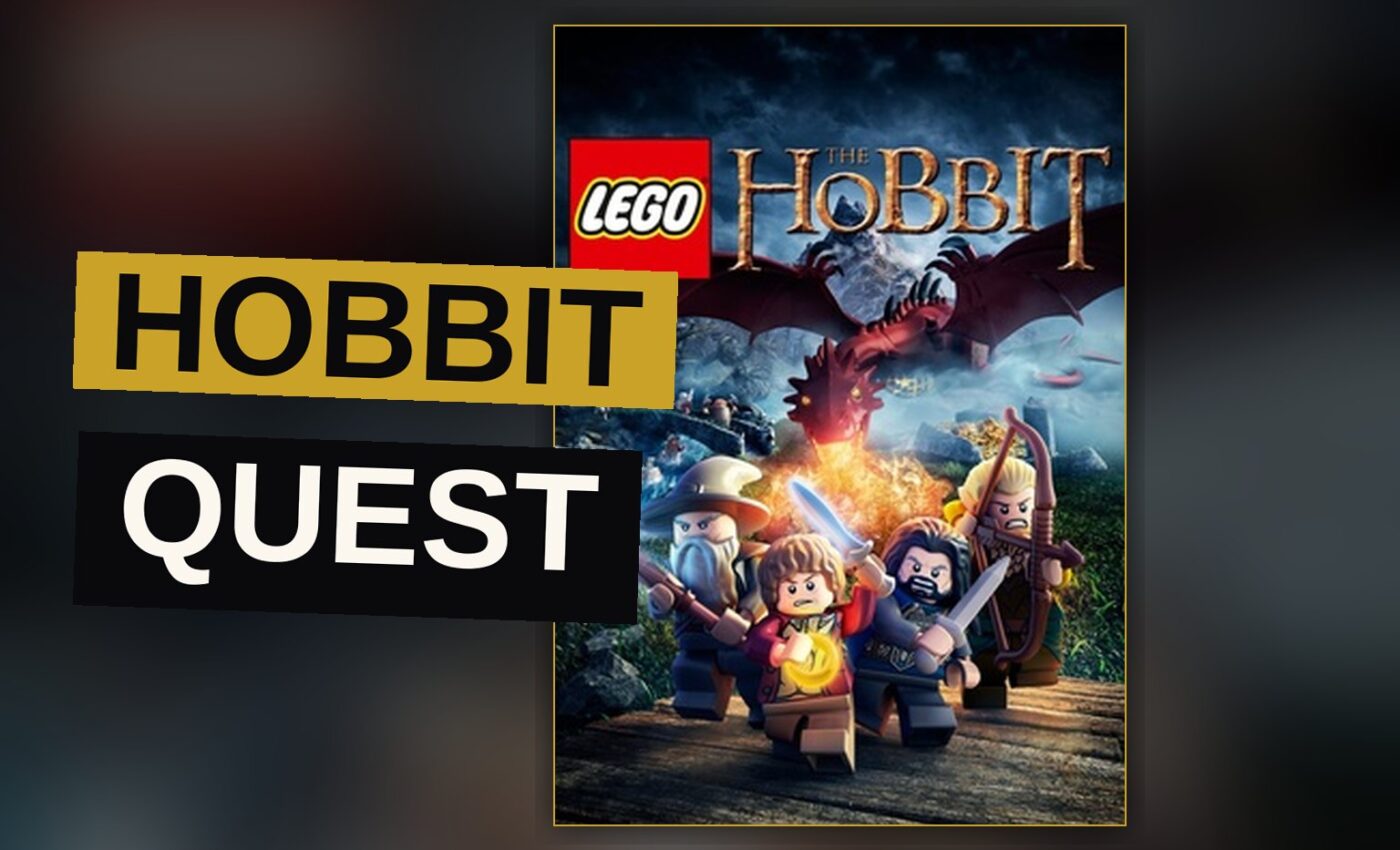
LEGO The Hobbit turned Middle-earth into a toy box in 2014, and for the most part the pieces fit. Traveller’s Tales built the game as a follow-up to Lego The Lord of the Rings, drawing on the first two Hobbit films, An Unexpected Journey and The Desolation of Smaug. Warner Bros. Interactive Entertainment released it on 8 April 2014 in North America and 11 April in Europe, across a sprawling platform list that ran from PlayStation 3 and Xbox 360 to PlayStation 4, Xbox One, Wii U, Nintendo 3DS, PlayStation Vita, Mac and PC.
Trailer, via IGDBcom.
Bilbo Baggins and the Dwarf Company
The pitch is the same one that has carried the series for years: reclaim the Lost Kingdom brick by brick. You join Bilbo, Gandalf, Thorin and his company of Dwarves on the road to the Lonely Mountain, battling Trolls and Orcs between puzzles. The Dwarf Company is where the design does its real work. Each member carries a distinct action — one has archery, another swings a hammer big enough to move large objects, another pulls minerals out of stone. Solving a puzzle means combining those abilities, and the game leans into the comedy when the combination goes sideways.
Bilbo grows as the story moves. When he gains Sting he becomes a more skilled fighter. When he gets the One Ring he can vanish and build invisible Lego structures, a mechanic that turns stealth into construction.
Combine the Dwarves’ unique abilities to solve puzzles – often with hilarious results!
From the Shire to Goblin-town
The map is the other break from the older games. Rather than a single hub, LEGO The Hobbit spreads across a large open map, with the player moving among events where characters ask for specific materials or want to trade them. It is the most expansive LEGO game of its era, and it shows in the Shire, in Goblin-town and in the stretches between.
The building mechanic carries over from previous entries. Find the right materials, feed them into a machine, then pick the correct pieces in exchange for studs. It is familiar, and familiarity is both the comfort and the limit here.
A Story Cut Into Chapters
Traveller’s Tales compressed two films into a run of chapters per film, trimming the storylines to fit and adding the humour the series is known for. That choice keeps the pace up. It also means the game stops where the second film stops, which leaves the Lonely Mountain and everything after it untouched.
The 2019 Delisting
Worth remembering: on 1 January 2019, all digital sales of the PS3 and Xbox 360 versions were halted, confirmed days later by Warner Bros. Interactive. The game came back to Steam on 27 April 2020 and to console stores on 6 May 2020. A delisting that reverses itself is a reminder of how thin the shelf life of a licensed tie-in can be.
Our Verdict
LEGO The Hobbit is a good game with a narrow ambition. The Dwarf Company’s split abilities and Bilbo’s Ring-driven building are the parts that matter — they give the puzzles a reason to exist beyond stud collection. The open map is a genuine step up from the hub, even if it thins the focus. What holds it at 7.2 is the ceiling: this is a faithful, funny, well-built adaptation of two films, and it never tries to be more than that. The chapter structure serves the source material and caps the game at the same time. For a licensed tie-in, that is a respectable place to land.
Get the Notebook.
The day's best stories and every fresh verdict, in plain English, in your inbox by seven. One email a day, no more.