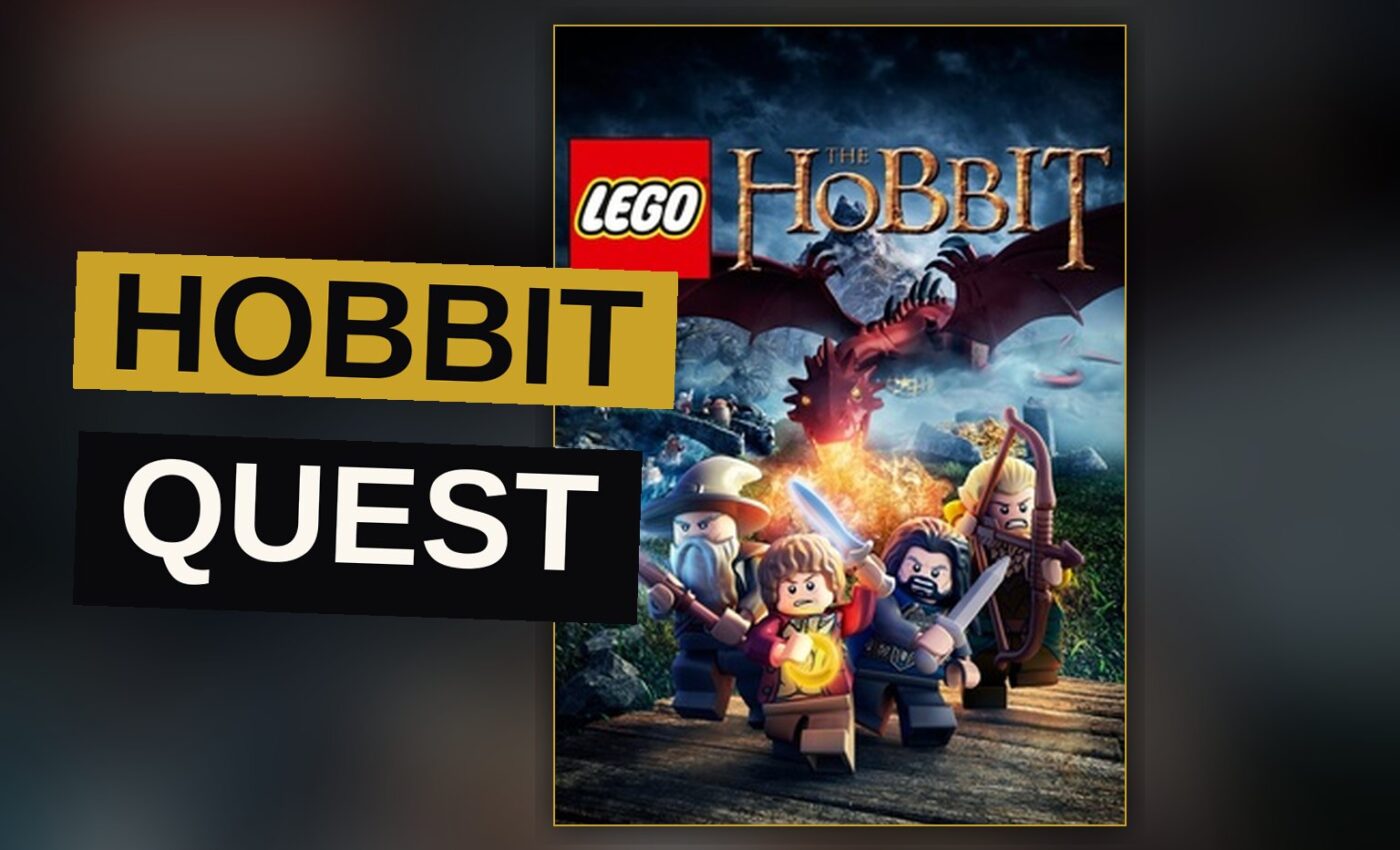
LEGO The Hobbit is a video game that takes the Lord of the Rings books and turns them into a series of jokes about elves, dwarves and wizards. It is a game built around solving puzzles, fighting enemies and collecting treasure, wrapped in a story that follows Bilbo Baggins through his journey to reclaim Erebor from Smaug the dragon. The game was released in 2014 for PS3, PS4, 3DS and PC, and it carries a critical score of 7.2 out of 10.
The game asks players to guide Bilbo, Gandalf and Thorin Oakenshield through Middle-earth, moving from the Shire to Rivendell to Mirkwood to the Lonely Mountain. Along the way, they fight goblins, trolls and wargs, solve puzzles using keys and levers, and collect golden coins and red bricks that unlock extra content. The humor is constant, with Bilbo frequently making jokes about being a hobbit and Thorin grumbling about dwarves being the better race.
Trailer, via IGDBcom.
The Humor
The humor is the main draw. Bilbo’s jokes about being a hobbit and his nervous reactions to danger are delivered with a soft-spoken charm that makes him feel distinct from other LEGO characters. Gandalf’s dry wit and Thorin’s grumpy pride give the game a sense of character beyond the plastic figures on screen.
The jokes land more often than they miss, though some of the gags rely on repeating the same joke several times across a single level. The game also includes a narrator who comments on the action, sometimes explaining what is happening or offering a humorous aside. This narrator is present throughout, and while he adds to the tone, he can also feel like a fourth wall-breaking device that breaks the immersion at times.
Bilbo’s Role and Combat
Bilbo Baggins is the player’s main companion, and the game leans heavily on his personality to carry the tone. He is nervous, curious and often out of his depth, which makes him easy to root for even when the story is moving towards familiar ground. His lines are written to play up his hobbit nature, and the game spends considerable time establishing why he is reluctant to leave the Shire before sending him on his adventure.
Thorin Oakenshield is the opposite. He is proud, stubborn and often dismissive of Bilbo’s fears. Their relationship is the engine of the early story, with Bilbo’s doubts about his ability to help the dwarves contrasted against Thorin’s certainty that Bilbo is the one destined to find the treasure. The game uses this dynamic to set up the central conflict, even though the outcome is never really in doubt.
Combat in LEGO The Hobbit is simple. Players move a character forward, press a button to attack, and avoid enemy attacks with a dodge move. Boss fights add a layer of timing, requiring players to wait for openings in the enemy’s attack pattern before striking. These fights are short and easy, and they rarely demand much skill beyond patience.
Puzzles and the Story
Puzzles are the other core mechanic. They involve finding keys, flipping switches, and moving objects to create paths. Most puzzles can be solved within minutes, and the game rarely requires players to think about more than one step ahead. The difficulty curve is gentle, and the game does not punish players for failing. Instead, it simply moves them forward after a brief restart.
The story follows the events of the book closely, though it omits many details and compresses the timeline. Bilbo leaves the Shire, meets Gandalf, joins the dwarves, and eventually faces Smaug. The game covers the journey through Mirkwood, the battle at Erebor, and the final confrontation with the dragon. It does not include the full scope of the book, but it captures the essential shape of the story.
The game also includes a framing device that shows Bilbo telling the story to Frodo and Merry. This device is used to explain the events of the game to the player, but it also serves as a way to tie the story back to the larger narrative of the Lord of the Rings saga. It is a small touch, but it gives the game a sense of continuity with the broader Middle-earth universe.
Collectibles and Red Bricks
Collectibles are everywhere in LEGO The Hobbit. Players earn golden coins for defeating enemies and completing levels, and they collect red bricks that unlock extra content. The coins are used to buy items in the shop, while the red bricks open up new playable characters and bonus missions. The game rewards exploration, and there is always something to find in each level.
The red brick system is the game’s version of extra content. Each brick opens a side mission or a new character, and completing these missions earns additional coins and red bricks. The system encourages players to return to levels they have already finished, looking for the items they missed the first time. It is a simple but effective way to extend the game’s length.
The Look of the Game and Multiplayer
The graphics are bright and colorful, with a cartoonish style that fits the LEGO aesthetic. Characters are blocky and exaggerated, with large heads and simple movements. The environments are detailed for a console game of the time, with forests, mountains and castles rendered in a way that feels alive despite the low polygon count. The lighting effects are subtle, and the sound design is cheerful, with a score that mixes orchestral music with electronic beats.
The game runs at a steady frame rate, though the PS3 version shows its age with occasional slowdown during busy scenes. The PS4 version runs more smoothly, and the PC version offers higher resolution options for players who want a sharper picture. The 3DS version is a port, and it suffers from the limitations of the handheld hardware, with lower detail and slower performance.
The multiplayer mode lets two players join forces to complete levels together. It is a simple co-op mode that mirrors the single-player experience, with both players sharing the screen and working through levels side by side. The mode does not add much new content, but it gives players a reason to share the experience with friends. It is a small addition, but it extends the life of the game for those who enjoy playing with others.
The Final Word
LEGO The Hobbit is a solid, if unambitious, entry in the LEGO video game series. It is funny, accessible and easy to pick up, but it rarely reaches the heights of its predecessors. The combat is shallow, the puzzles are simple, and the story is familiar. It is a game for fans of the franchise who want a light, enjoyable experience rather than a deep one.
The game succeeds best when it focuses on its strengths: humor, collectibles and exploration. The puzzles are clever, the jokes land, and the world is full of things to see. It is a game that knows what it wants to be and delivers it without much fuss.
| Platform | Release Date |
|---|---|
| PS3 | 2014 |
| PS4 | 2014 |
| 3DS | 2014 |
| PC | 2014 |
Ranking the Platforms
- PS4 — the smoothest performance, with the sharpest visuals and the fewest technical issues.
- PC — high-resolution options make it the best choice for players who want the clearest picture.
- PS3 — the original version, showing its age with occasional slowdown and lower detail.
- 3DS — the handheld version, limited by the hardware’s capabilities.
Final Score
LEGO The Hobbit earns a score of 7.2 out of 10. It is a competent, entertaining game that does not push the boundaries of the genre. It is worth playing for fans of the franchise, but it is not a game that demands repeated playthroughs. The humor, the puzzles and the collectibles are enough to keep players engaged, but the game rarely rises above its formula. It is a pleasant ride through Middle-earth, but it is not a memorable one.