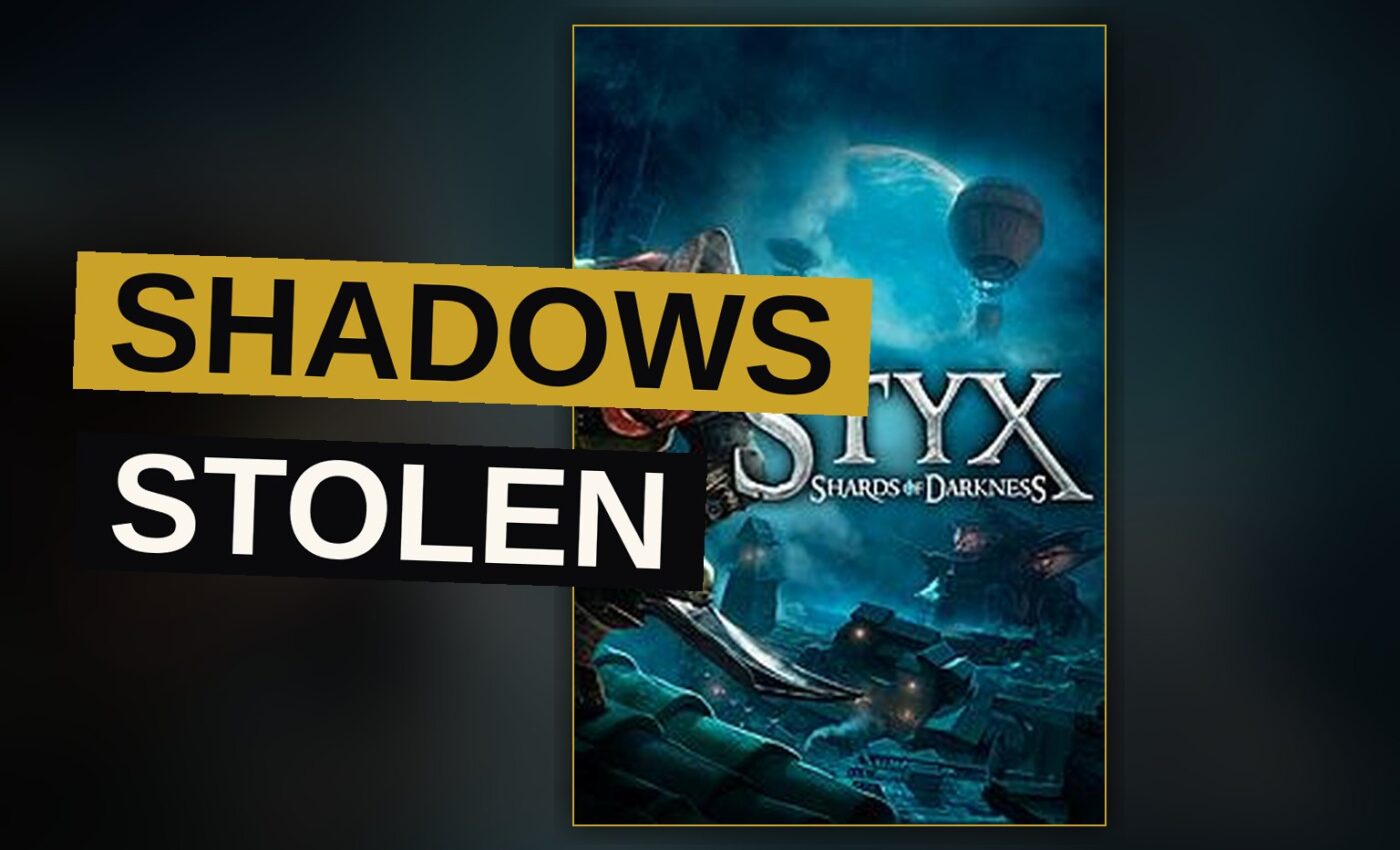
Styx: Shards of Darkness is a stealth game about a goblin who climbs things, and it knows exactly what it is. Cyanide Studio developed it. Focus Entertainment published it. It came out worldwide on 14 March 2017 for PlayStation 4, PC and Xbox One, and it is the sequel to 2014’s Styx: Master of Shadows.
It is also the third game set in the world of the Of Orcs and Men series, which matters less than it sounds. Shards of Darkness does not ask you to know that history. It asks you to get a goblin over a wall.
Trailer, via IGDBcom.
Akenash Has Fallen and Körangar Is Next
The setup is thin and the game is fine with that. Following the fall of Akenash tower, an extraordinary matter forces Styx out of hiding. His target is Körangar, the city of the Dark Elves, described in the game’s own material as supposedly impregnable.
A diplomatic summit gives him the opening. Styx learns the event is nothing but a façade. The Elves have joined forces with the Dwarves, and the only thing both races have in common is a mutual hatred of the Goblins.
That is the whole pitch. One goblin, one impossible city, two races who despise him and each other. It is a good frame for a stealth game because it makes every room hostile by default. There is no friendly territory to retreat into.
Cloning, Invisibility and a Knife on a Rope
The mechanics are where Shards of Darkness earns its keep. Styx can clone himself. He can lay traps. He can temporarily turn invisible. The player chooses whether to engage enemies or avoid them, and the game does not punish either answer.
Movement is the real selling point. Ropes and grappling hooks let Styx reach high areas. He grapples around corners. He climbs ropes. He uses his knife as a zip-wire.
That last detail is the one that sticks. A goblin sliding down his own blade across a gap is not a realistic idea, but it is a coherent one. It tells you the game cares about traversal first and plausibility a distant second.
The stated aim is unparalleled freedom of movement, along with refined stealth and assassination mechanics. Shards of Darkness is explicitly built to expand and improve on the strengths of Styx: Master of Shadows rather than replace them.
Two Goblins Are Better Than One
There is a multiplayer co-op mode. A second player controls one of Styx’s clones. That is the entire concept, and it is a better one than most co-op pitches because it grows out of a mechanic the single-player game already had.
Cloning is not a bolt-on here. It is a core ability that the co-op mode simply hands to a second person. The result is a game where the second player is not a guest but a duplicate, with the same tools and the same limits.
The camera sits in third person throughout. The genres listed are role-playing and adventure, with action, fantasy and stealth as the themes. Single player, multiplayer and co-operative are all supported.
What Shards of Darkness Gets Right
The freedom of movement claim holds up. Ropes and grappling hooks change how you read a room. A courtyard with a high ledge is not a wall anymore. It is a route.
The engage-or-avoid choice is the other thing the game gets right. Stealth games often pretend to offer this and then punish the loud option. Shards of Darkness does not.
The clone mechanic is the strongest idea in the package. It is a stealth tool that is also a movement tool that is also a co-op feature. Very few games get one mechanic to do three jobs.
The setting does its part too. Körangar is built on a lie, and the Elves and Dwarves are allied on the strength of a shared hatred rather than any real affection. That is a premise with teeth. It gives the stealth a political edge without asking the game to say anything about politics.
Where It Comes Up Short
Shards of Darkness is a refinement, and it says so. It expands and improves on Master of Shadows. It does not reinvent it. Anyone who wanted the sequel to be a departure will find the same goblin doing the same things with better tools.
The story is a frame, not an engine. Styx infiltrates a city because a summit is a façade. That is enough to start, but it is not enough to carry a long campaign on its own, and the game leans hard on its mechanics to do the work the plot will not.
The genre labels are also doing more advertising than the game does. Role-playing and adventure are listed, but the abilities described are stealth abilities: clone, trap, turn invisible, move. On the evidence available, this reads as a stealth game wearing an RPG label it has not earned.
And the third-person camera is a choice, not an achievement. It works. It is not what anyone will remember.
The Score
Published critical scores put Styx: Shards of Darkness at 7.1/10, an aggregate across 14 outlets. That number is fair, and it lands where this review lands.
Three things decide this game, in order of how much they matter:
- The traversal. Ropes, grappling hooks and the knife-as-zip-wire are the reason to play.
- The clone. It is a stealth tool, a movement tool and a co-op feature at once.
- The story. It starts the game and then gets out of the way.
The grapple and the zip-wire knife are the heart of it. If that image appeals to you, the game delivers on it. If you need the narrative to pull its weight, it will not.
Like its predecessor, Styx is able to clone himself and to lay traps for his enemies, and can temporarily turn invisible.
That is the whole game in one line, and it is enough.
A sequel, Styx: Blades of Greed, was released in 2026, nine years after this one. That gap is worth noting only because it suggests the series was not in a hurry.
For 2017, on PlayStation 4, PC and Xbox One, Shards of Darkness was a solid entry in a genre that rarely gets them. It is not a landmark. It is a well-built machine for climbing walls and stabbing people who do not see you coming.
7.1 of 10.
Get the Notebook.
The day's best stories and every fresh verdict, in plain English, in your inbox by seven. One email a day, no more.