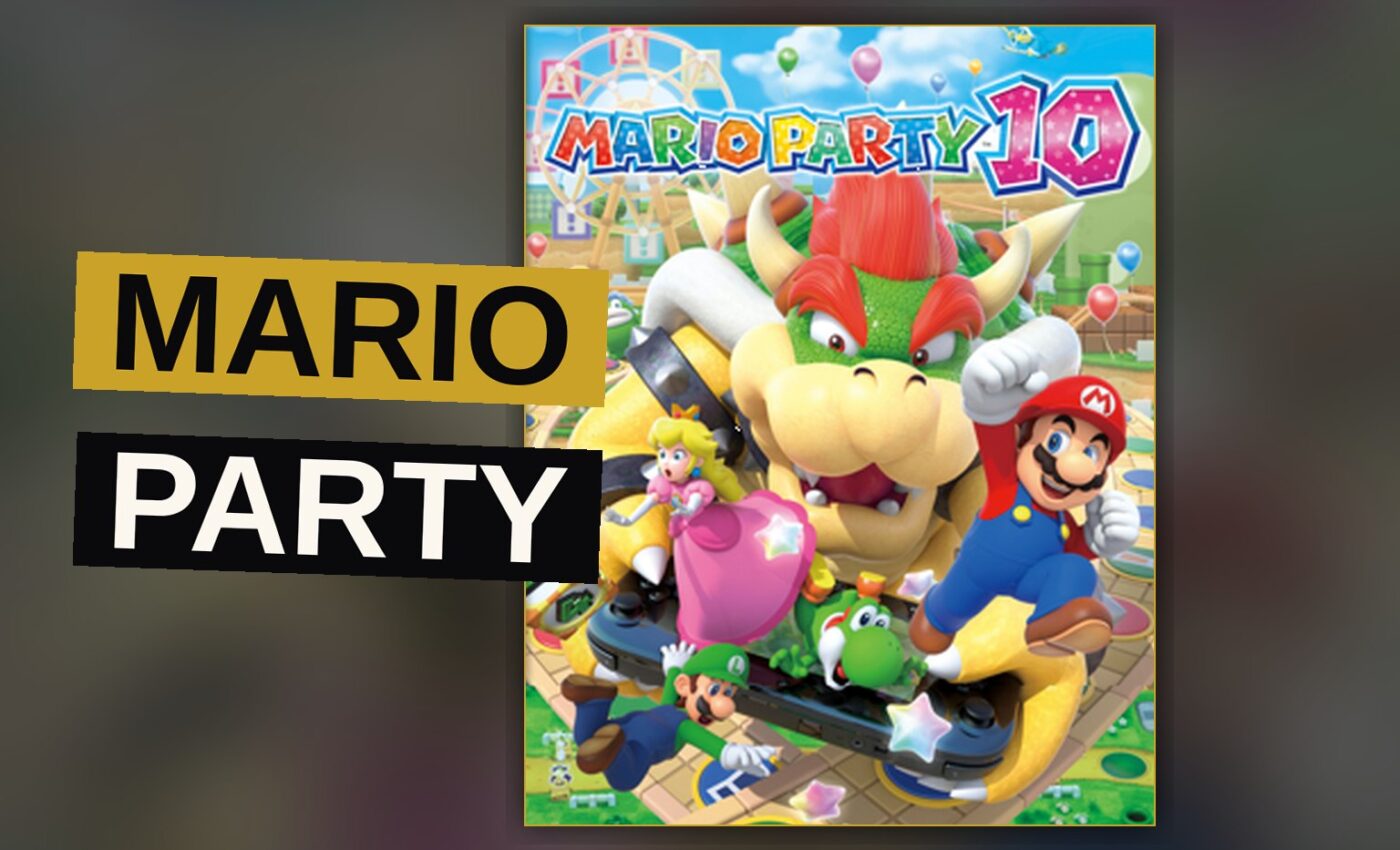
Mario Party 10 asks four players to roll a die, move across a board, and land on spaces that send them up, down, left, or right. That core loop has not changed since the series began. What has changed is how Nintendo handles it, and the results are mixed.
Trailer, via Nintendo of America.
New Boards
The new boards in Mario Party 10 are bright and busy, packed with paths, shortcuts, and hazards. Players can move through rings, slide down slides, and ride moving platforms. This adds variety to the old grid of squares, though some boards feel busier than they need to be.
Mini-Games
The mini-games remain the heart of Mario Party 10. There are plenty of them, and they range from simple tasks to elaborate challenges. Some are pure fun, while others feel dated or dull. The best games reward quick hands and fast reactions; the worst punish players who do not know the rules.
Here is a rough breakdown of what stands out:
- Simple tasks that test reaction time
- Elaborate challenges that take several turns to learn
- Dated games that feel worn thin
- Quick hands as the key skill
A New Mode
Mario Party 10 adds a mode where players work together to beat a boss, which breaks from the usual competition. This is a welcome change, even if it does not fully remake the formula. The mode gives players a reason to cooperate, which is something the rest of the game rarely does.
Technical Limits
With four players on a shared screen, Mario Party 10 shows its age. The Wii U hardware struggles with the sheer number of characters on the board at once, especially during busy turns. Loading times are noticeable, and the game stutters when too many players try to act at once.
Final Word
Mario Party 10 is a solid entry in a long-running series, but it does not push the genre forward. The boards are inventive, the mini-games are plentiful, and the cooperative mode is a nice addition. But the technical issues and dated content hold it back. For longtime fans, it is worth a play. For newcomers, there are better places to start.