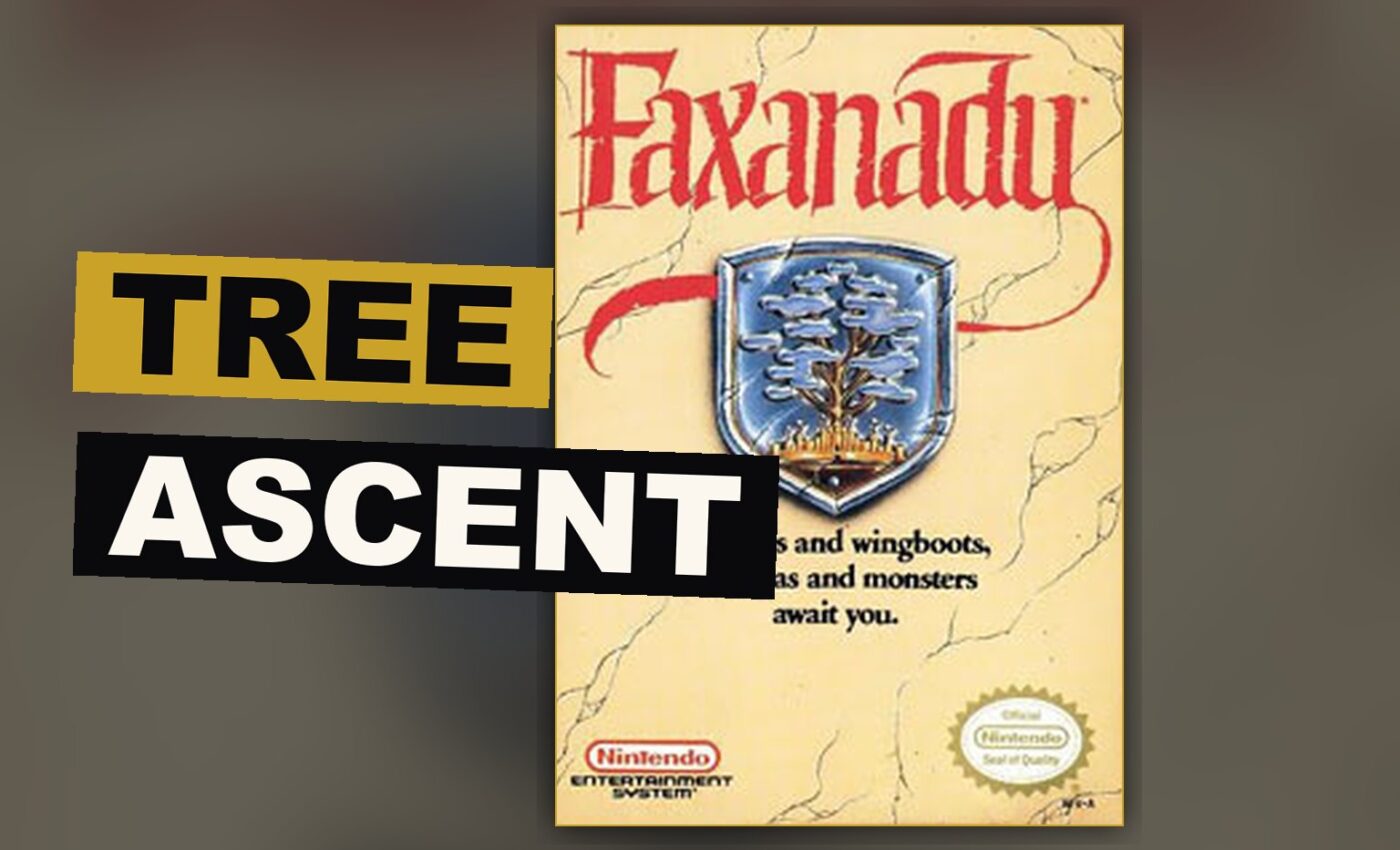
Faxanadu drops players into a world built inside a massive, ancient tree. The setup is strange even by NES standards, and it works. Nearly forty years on, the game still gives players a reason to keep moving upward through its many floors.
A World Built Upward
The tree that houses Faxanadu’s entire world is not just scenery. It shapes how the game feels to play, with levels rising one above another instead of laid out across a single level. Players move up and down through towns, caves and ruined halls, picking up items and information as they go.
Fighting is simple but demands timing. Enemies hit hard early on, and players who rush in without upgrading their gear will find themselves dead fast. Difficulty rises quickly, but it never feels harsh once the enemy movements are learned.
Talking to Strangers
Faxanadu relies on the people of its towns for direction. Conversations with the people players meet hand out clues, warnings and history, and paying attention to them matters. Players who avoid these talks often end up lost, wandering the tree without a clear goal.
This design asks for patience. There is no guide shown on the screen, no quest record, no help given without asking. The game trusts players to remember what they have heard and connect it to what they find.
Sound and Look
The look of Faxanadu is a step up from many early NES titles, with detailed scenery and its own design for each part of the tree. The music matches that effort. Composer contributions give Faxanadu a dark, fitting score that many players still recall clearly.
Below is a quick comparison of the game’s core systems, weighed against usual expectations for an adventure game of its time:
| System | Faxanadu | Usual NES Adventure Game |
|---|---|---|
| World design | Rising, built within a tree | Single level |
| Guidance | Talk with people met only | Mix of talk and displayed guides |
| Difficulty | Rises quickly early, fair once learned | Often harsh throughout |
| Look | High, each part has its own design | Often repeated scenery |
| Music | Worth remark, dark and fitting | Plain, less worth remark |
Where It Falls Short
The game is not without problems. Handling items can be hard to follow, since players must put on and take off gear through an awkward menu system. Returning to earlier places, while sometimes necessary, can feel like extra length rather than a design choice made with intent.
Some fights rely too hard on trial and error. Players die, learn the enemy’s movements, and try again. That round of trial can be satisfying, but it also breaks the pace in a game that otherwise moves well.
Why It Still Matters
Faxanadu earned a reputation over time as one of the more different adventure games on the NES. Its setting, its design and its willingness to trust players with less guidance than usual set it apart from many of its rivals. That reputation holds up on a second playthrough.
The game asks for effort. It rewards players who search fully, talk to every person, and pay attention to the world’s small details. Those who put in the work walk away with a game that feels truly different from its peers.
Faxanadu is not a perfect game. Its menus are awkward, its difficulty can rise without warning, and its reliance on talk over displayed guides will frustrate players used to more modern habits. But its world, its music and its sense of discovery still land. The tree at its center remains one of the more good settings on the console, and moving through it is still worth the time.