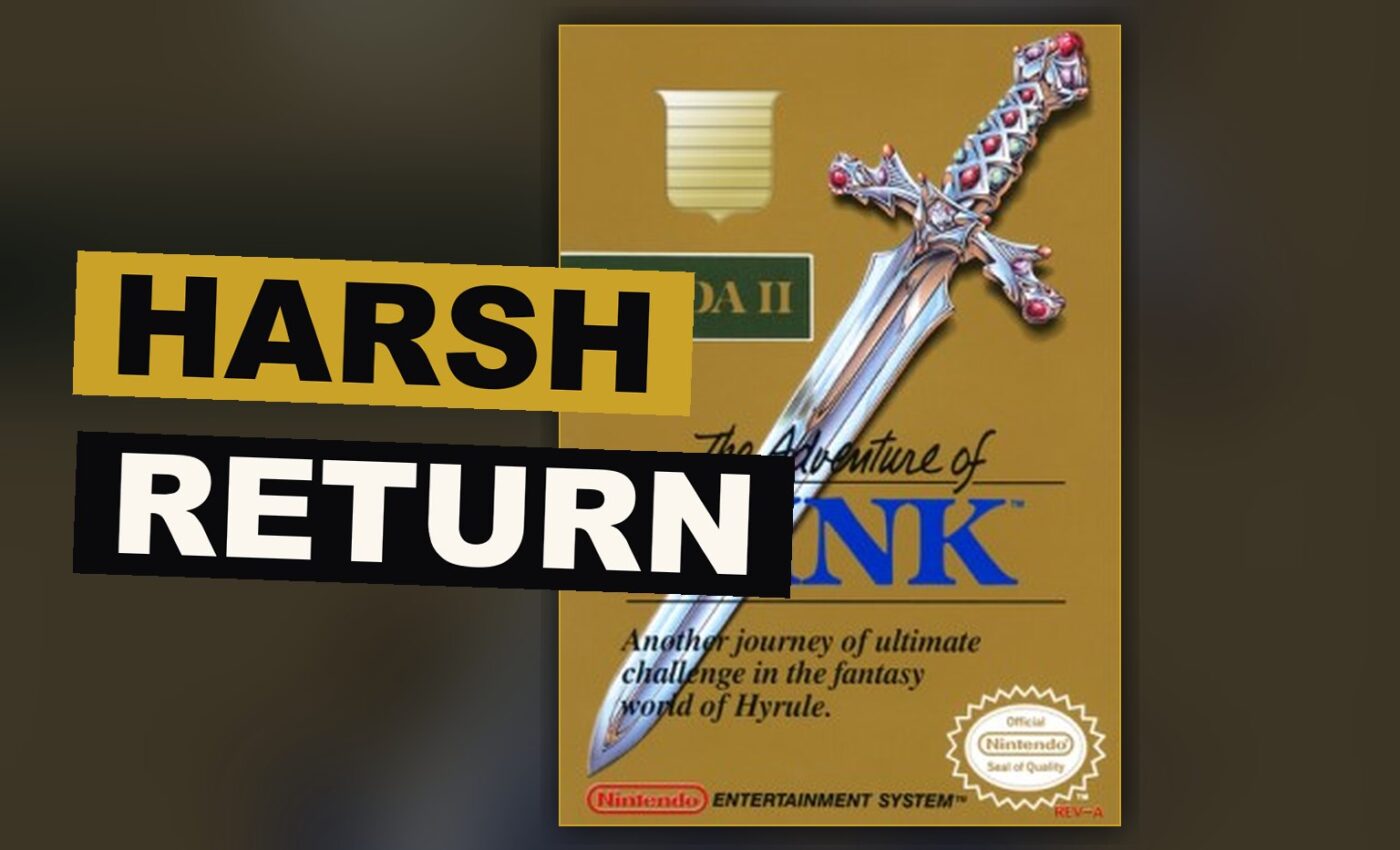
Zelda II: The Adventure of Link takes the series in a direction few expected in 1988. It takes the place of the view from above of the original with fighting seen from the side, gaining levels the way certain games do, and a chart that sends players between towns and dungeons. The change split opinion then, and it still does now.
A Different Kind of Kingdom
Zelda II: The Adventure of Link drops Link back into the kingdom after the events of the first game, tasked with waking Princess Zelda from a sleep spell. The world outside is shown from above, but every fight, dungeon and town visit changes to a view from the side. That view is where the game asks the most of players: enemies strike high or low, and timing matters more than in most NES action titles.
Gaining levels adds another layer. Link earns points from beaten enemies and spends them on attack, magic or life gains. Miss a chance to grow stronger and a hard dungeon can turn brutal fast.
Difficulty and Design
The difficulty is severe. Enemies hit hard, lives run out quickly, and a game over sends players back to the start of the game, not just the last dungeon. That choice remains the single biggest point of complaint against Zelda II: The Adventure of Link.
Dungeons themselves are thick with turns and built around new spells that Link learns along the way. Spells add depth to fighting and searching alike, giving Link tools the original game never offered.
What Holds Up
The music stands out even decades later, with a title theme that many still know at once. Fighting seen from the side, once mastered, offers a rhythm the original Zelda never attempted. The touches of character building, gaining levels, learning spells, growing collection of powers, give the adventure a sense of progress the first game lacked.
| Feature | The Legend of Zelda | Zelda II: The Adventure of Link |
|---|---|---|
| View | Shown from above throughout | Shown from above outside, from the side in fights |
| Progress | Built around items | Built around points earned and levels gained |
| Difficulty | Moderate | Severe, harsh on losing |
| Fighting | Simple sword and item use | Strikes aimed high or low, guarding, spells |
“a game over sends players back to the start of the game, not just the last dungeon”
That harsh sending back to the beginning remains the game’s chief fault. It punishes progress in a way that feels out of step with the searching Zelda II: The Adventure of Link otherwise encourages.
Still, the will to try something new counts for something. Few sequels change so greatly and still find an audience. Zelda II: The Adventure of Link did, and its mark shows in later games that borrowed pieces of its fighting and leveling systems even after dropping its view from the side entirely.
Final Verdict
Zelda II: The Adventure of Link is a strange, ambitious game in the series. It asks more patience than most NES titles of its time, and its harsh way of sending players back to the beginning will frustrate players who don’t master its fighting early. But its music, its systems of levels and spells, and its will to break from formula make it worth playing, even if it never quite matches the original’s sense of discovery.