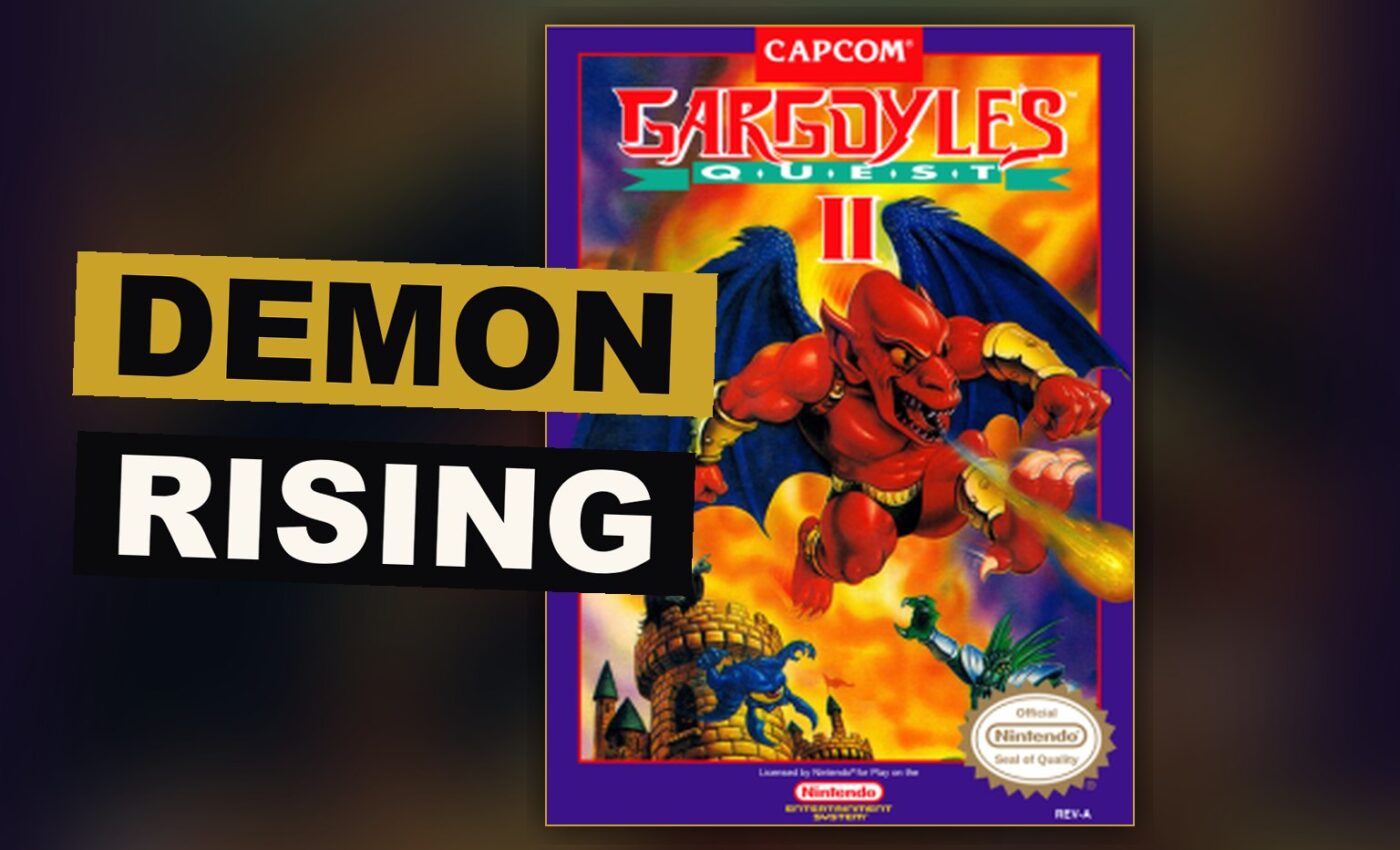
Gargoyle’s Quest II brings back the small demon hero from the original Game Boy game for another run on NES, and this time the stage is bigger. The game mixes walking screens, where the hero talks to villagers and picks a goal, with scrolling stages built for fighting and rising through the air. Most of it works.
Travel Screens and Action Stages
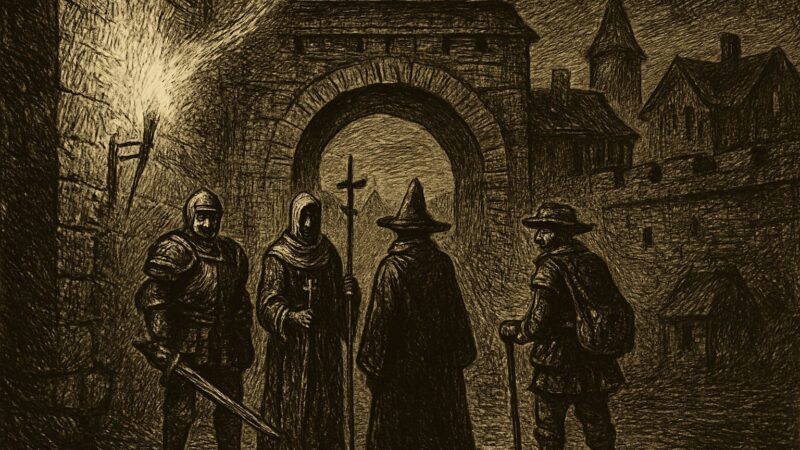
Gargoyle’s Quest II splits into two kinds of screens. The hero walks across an open view of the land, speaks with villagers, and chooses where to go next. Then the game drops him into a scrolling stage where the real fighting happens.
This arrangement gives Gargoyle’s Quest II a shape that a straight run of levels would lack. Progress feels earned rather than handed over.
The walking screens are quiet by design, meant as a breather between the harder stages. That said, they can weigh on the pace when a player only wants to reach the next fight.
Rising, Scaling and Fighting
The hero can fly for short spells, cling to walls, and throw flames, and the stages are built around those tools. Some ask for careful springs timed around a flight. Others turn into long waves of enemies coming from every side.
The set of abilities holds up across the whole game. A few parts carry real weight:
- Clinging to walls lets the hero scale narrow, standing spaces that would otherwise stop him cold.
- Short spells of flight open paths through stages that reward careful timing.
- Thrown flames give the hero a way to hit enemies standing at a distance.
Boss fights rely on these same tools, forcing players to join flight and throwing under pressure rather than just hitting the attack button.
The difficulty in Gargoyle’s Quest II sits on the harder side of the NES library, though it rarely feels unjust. Enemy position is deliberate, and most deaths come down to a player misjudging a spring rather than taking a cheap hit.
Here is how the pieces build on each other:
- The travel screens set a goal and give reason for each stage.
- The stage design tests every part of the hero’s set of abilities.
- The boss fights demand skill with flight, scaling walls and throwing together.
- The rising difficulty rewards players who take the time to learn these systems.
That chain of design choices is what separates Gargoyle’s Quest II from an ordinary action game of its time.
Sound, Look and Final Score
The game looks solid. Sprite work on the hero and the enemy cast is detailed, and the stage scenery carries a dark tone that fits the world of demons the game is set in.
Motion during flight and fighting stays smooth, which matters given how much the game asks of those moves.
The music holds up its end too, changing mood between the quiet travel screens and the anxious stages. Sound effects are plain rather than remarkable, though they never get in the way.
The game is not without its problems. The less quick pace of the travel screens is a real weight on the game’s flow, and some players will find those parts wearisome to sit through again after losing a life. Checkpoint position in a few of the harder stages can also feel harsh, sending players back further than the stage before it seems to justify.
Taken as a whole, though, the parts support each other well. The travel screens give reason to the stages, the stages give purpose to the hero’s abilities, and the abilities give the boss fights their shape.
Gargoyle’s Quest II is a strong action game with a shape that gives it more identity than most NES games of its kind. The hero’s set of abilities fits the stage design closely, and the mix of travel screens and scrolling stages gives the game a rhythm that holds up across its whole run, even if that rhythm eases here and there. The rough spots in pace and checkpoint position keep it from reaching the very top of the console’s library, but the game remains a solid, carefully made piece of work that rewards the time put into it.