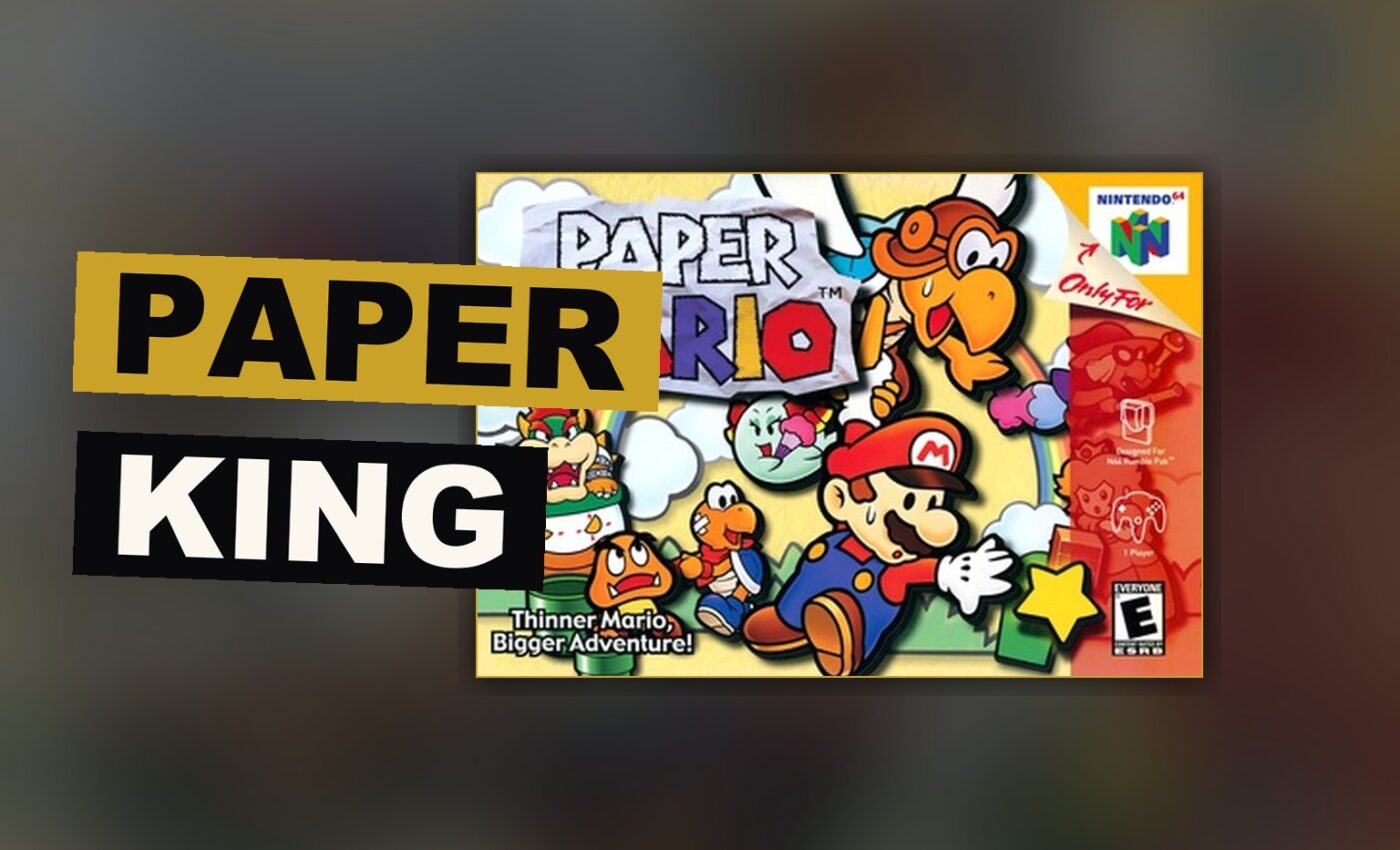
Nintendo 64 owners have a new reason to keep the console running. Paper Mario trades polygons for paper and comes out stronger for it. The result is one of the most charming games on the system.
Mario Made of Paper
Mario himself is now made of paper, and so is everything around him. Enemies, allies and scenery all share that same thin, folded look. It could have read as a novelty. Instead, the style gives every screen a warm, welcoming look that the N64’s usual heavy 3D rarely manages.
The game builds on the joke constantly. Characters turn thin and seem to fold against the world around them, battle scenes open up like pages, and the paper look shapes how every scene is staged and shot. Nintendo built this style directly into how the world is presented, so the idea behind the look never feels separate from how the game plays.
Fighting happens in turns, and each turn adds a layer of timing. Pressing the right button at the right moment makes an attack land harder or guards against damage. It sounds small. In practice, it keeps every fight alive instead of dull.
Partners matter too. Mario picks up a changing group of allies, each with a distinct skill in a fight and a distinct personality when he talks with them. Choosing between them changes how a fight or a puzzle gets solved, and the game gives each partner enough to say that they feel like real characters rather than a list of numbers.
A Kingdom Worth Talking To
The story sends Mario after a stolen item of great power, taken by Bowser, who uses it to send Peach’s Castle rising into the sky. It is a simple setup. What raises it is the writing — funny, light, and more clever than most games of its kind bother to be. The town Mario starts in and the kingdoms beyond it are full of small jokes and side characters worth talking to twice.
Here is a quick comparison of two sides of the game that work together well:
| Feature | Look | Feel |
|---|---|---|
| World | Thin, paper style | Warm and welcoming |
| Fights | Turn by turn, timed hits | Active, never dull |
| Partners | Named, distinct skills | Full of personality |
| Story | Simple setup | Funny, light writing |
The game rarely drags. Each new setting, a hot desert, a haunted wood, a snowy mountain, brings new enemies and new looks for Mario’s paper world before moving on. Waits between screens are short, and the menus stay simple throughout.
Difficulty sits on the gentler side. That is not a weakness so much as a choice. Paper Mario is not trying to punish players; it is trying to keep the story and the jokes moving. Anyone wanting a hard, grinding game should look elsewhere. Anyone wanting a game that respects their time will find exactly that.
Small Cracks in the Paper
Nothing here is without fault. A few side quests feel like filler, and the closing hours ask players to cross old ground again more than the earlier hours did. These are small complaints against a game that otherwise rarely puts a foot wrong.
The music deserves credit too. Each setting gets its own tune that matches its mood without wearing out its welcome. Music during fights in particular avoids the repeating that sinks many games of this kind over a long playthrough.
Paper Mario also does something quietly important for games of its kind on consoles: it proves a world need not carry heavy text or grim stakes to stay with a player. The stakes here are Bowser stealing a magic item. The tone stays light. The characters still land.
Games since have borrowed its timed hits and its changing cast of partners, but few have matched the welcoming feeling of that first thin, folded kingdom. That first game still holds its place as the one this writer returns to when the console comes out of storage.
Paper Mario earns a score of 9.3 of 10.