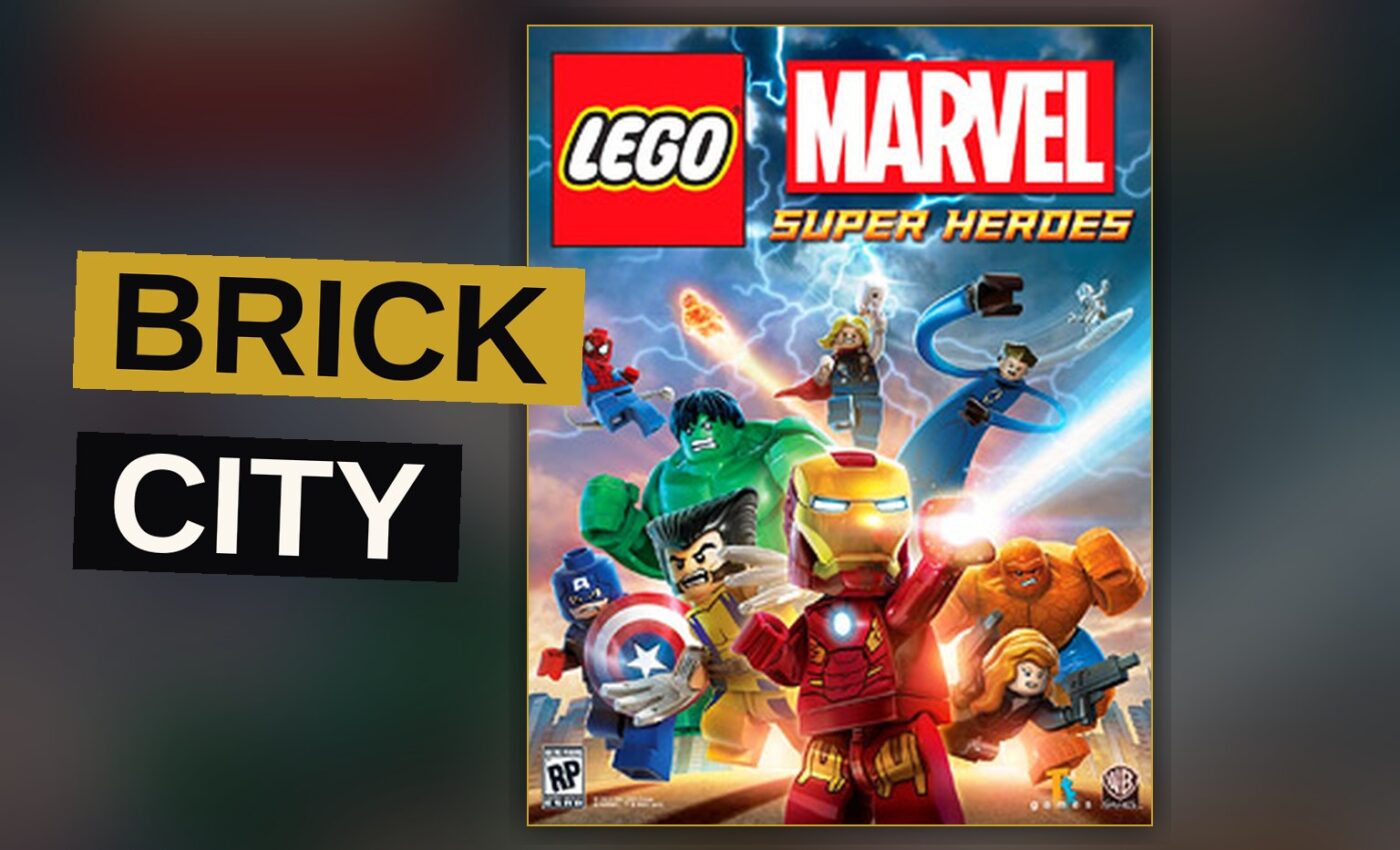
LEGO Marvel Super Heroes puts 180 Marvel characters in a Lego Manhattan and lets you smash most of it. Traveller’s Tales developed the 2013 action-adventure game, and Warner Bros. Interactive Entertainment published it for PlayStation 3, PlayStation 4, Xbox 360, Xbox One, Wii U, PC and Nintendo Switch. Feral Interactive handled the OS X release. A Nintendo Switch version followed on October 8, 2021, and a handheld spin-off, Lego Marvel Super Heroes: Universe in Peril, shipped separately for iOS, Android, Nintendo DS, Nintendo 3DS and PlayStation Vita.
The formula is the one Lego Star Wars: The Complete Saga and Lego Batman 2: DC Super Heroes already proved. Action sequences alternate with puzzle-solving, and each hero carries abilities that open specific doors. Spider-Man swings on webs and uses his Spider-Sense. The Hulk, larger than a standard minifigure, throws large objects. Hulk and Bruce Banner are separate playable characters you swap between at will, and Banner can access computers Hulk cannot.
Doctor Doom, Loki and the Cosmic Bricks
The story is original to the game, not lifted from a film. Silver Surfer is captured by Doctor Doom while scouting planets for Galactus, and his board shatters into “Cosmic Bricks.” Doom, warned by an imprisoned Loki that Galactus is coming, builds the Doom Ray of Doom from the bricks so the pair can beat Galactus and then take the world. Nick Fury calls in Iron Man, the Hulk, Thor, Spider-Man, Wolverine and others to grab the bricks first. Sandman and Abomination hold Grand Central Station hostage for one. Doctor Octopus steals another from the Baxter Building, and the chase runs through the Daily Bugle into Times Square.
Stan Lee in Peril
The settings do the heavy lifting. Arthur Parsons, the game director, and producer Phil Ring put a Lego Manhattan at the center, with Liberty Island and Ryker’s Island open to explore, plus a Lego Asgard built for the campaign. Stan Lee appears in “Stan Lee in Peril” missions, modeled on the “Citizen in Peril” tasks from earlier Lego games, and he is playable with a stack of borrowed powers: Spider-Man’s webbing, a mix of the Human Torch’s heat beam and Cyclops’s optic blast, Mister Fantastic’s grappling, Wolverine’s adamantium skeleton and Hulk’s transformation.
| Mode | Content |
|---|---|
| Main campaign | 15 missions |
| Side missions | 11, narrated by Deadpool |
| Playable characters | 180 |
| Critic aggregate (IGDB) | 8.5/10 |
Free exploration of the Marvel New York comes with a catch. You need a specific character, and buildings only open after the campaign is finished. That is a real limit, not a technicality — it gates the best part of the map behind a full playthrough.
Where the Design Holds Up
The Lego games have always been co-op machines, and this one keeps single player, multiplayer, co-operative and split screen on the box. Third-person and side-view perspectives swap as the levels demand. The character count sounds like a marketing number until you play it: Banner-only terminals and Hulk-only destruction mean the roster is a set of keys, not a costume rack. Deadpool narrating the bonus missions is the sharpest joke in the package, and it fits a game that treats Marvel continuity as a toy chest rather than a canon to protect.
The weak point is pacing. Fifteen campaign missions is generous, but the puzzle logic stays shallow, and the Manhattan cleanup after the credits asks for patience the combat does not always earn. Lego Marvel Super Heroes is the best-selling Lego game of all time, ahead of Lego Star Wars: The Complete Saga, and that tracks — it is the one where the license and the format finally matched. A spin-off, Lego Marvel’s Avengers, arrived January 26, 2016, and a sequel, Lego Marvel Super Heroes 2, followed November 14, 2017. Neither changes what this one got right. The open city is the reason to stay; the campaign is the reason to start.
Get the Notebook.
The day's best stories and every fresh verdict, in plain English, in your inbox by seven. One email a day, no more.