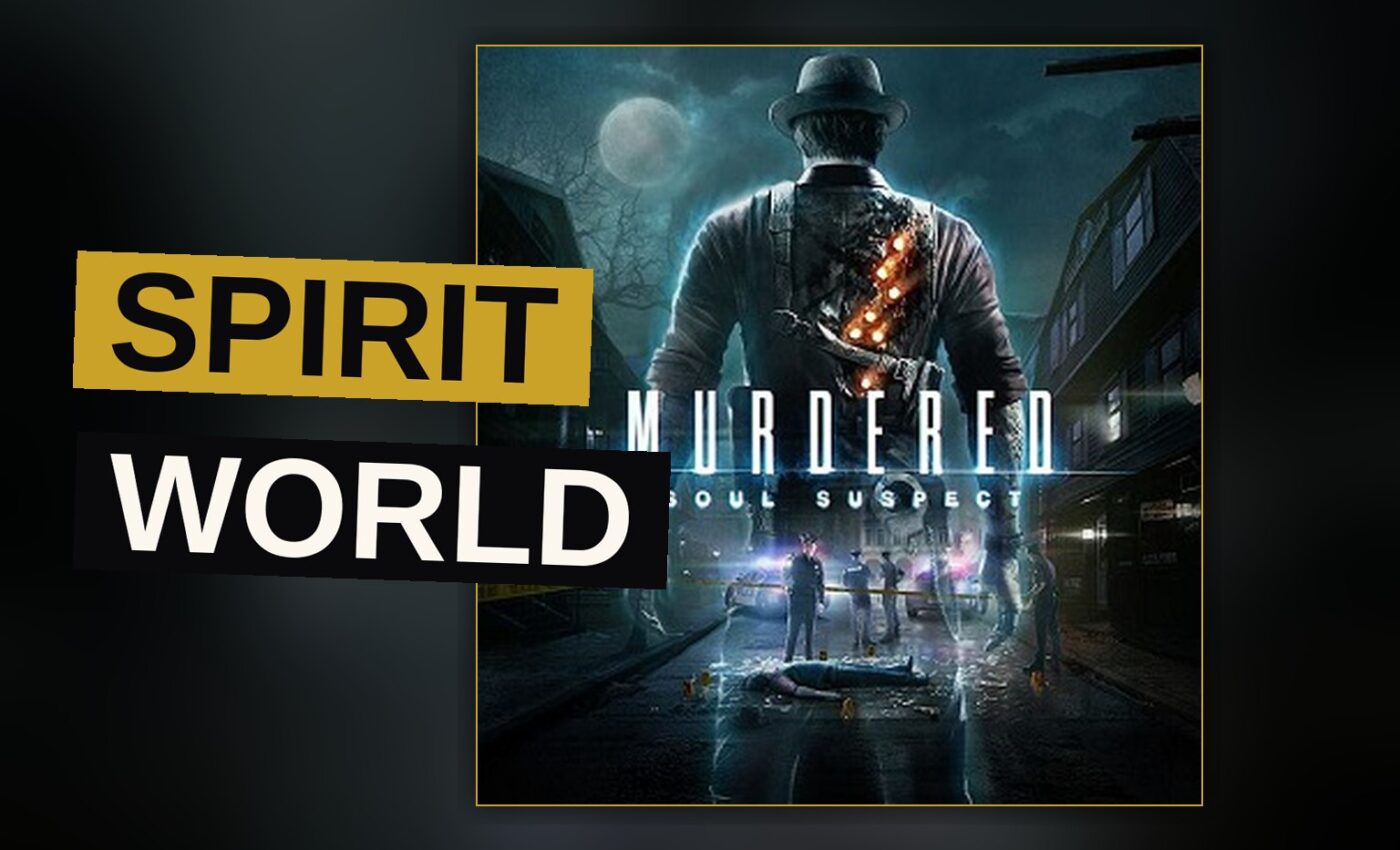
Murdered: Soul Suspect puts players in the shoes of a detective who can leave his body behind and walk through walls, talk to ghosts, and see the dead. It is a crime thriller built around the idea that a murder investigation can be solved by visiting the spirit world. The game asks players to move between the living and the dead, gathering clues, talking to witnesses, and piecing together a case that would otherwise remain closed. That premise is promising. The execution does not always deliver on it.
Trailer, via IGDBcom.
The Detective and His Ghostly World
The protagonist is a man who died during a robbery and now haunts the city he once patrolled. He can step out of his body, becoming a translucent presence that can pass through solid objects. This allows him to investigate crime scenes from angles no human could reach. He can also communicate with spirits, some of whom were murdered and want justice. The setup is clever, and it gives the game a distinct identity compared to other detective titles.
The ghostly ability is the core mechanic. Players switch between a living detective and a spectral one, moving through walls to examine rooms, listen to conversations, and find hidden evidence. It works well in concept, but the way it plays out can feel awkward. The switching takes time, and the interface is clunky, which slows down the pace of exploration.
Case Files and the City
The game is set in a fictional American city, and players move between crime scenes, police stations, and civilian homes to gather evidence. Each case file contains witness statements, photographs, and physical items that need to be matched up. The investigation is structured like a puzzle box, with players collecting pieces across multiple locations before solving the mystery.
The city itself is detailed. Side streets, apartments, and public squares are rendered with care, giving the game a lived-in feel. However, the scale can be deceptive. Some areas look rich, but the underlying content is thin, and walking between points can feel like padding rather than exploration. The game encourages players to visit these places anyway, since the clues they contain often unlock the next step in the case.
Voice Acting and Storytelling
The dialogue is well written, and the voice acting carries weight. The detective delivers his lines with conviction, and the supporting cast, particularly the ghosts he encounters, are memorable. The game relies heavily on conversation, and the writing holds up for the most part. The pacing suffers in the middle stretch, where the narrative slows while players gather the same kinds of evidence over and over.
The story follows a standard crime procedural format. A murder occurs, the detective investigates, leads appear and vanish, and the truth emerges in a final confrontation. The plot is straightforward, but the characters are interesting enough to keep players engaged. The game does not attempt anything ambitious, and it succeeds best when it stays focused on the investigation rather than trying to expand its scope.
Difficulty and the Investigative Loop
The difficulty is moderate. Puzzles require careful observation, and players must revisit scenes multiple times to spot new details. The game rewards patience, but it can also frustrate players who want a faster pace. Some clues are hidden well, and finding them requires searching the environment thoroughly.
The investigative loop is repetitive. Players move between locations, collect evidence, return to the station, and repeat. The variety comes from the cases themselves rather than the process of gathering information. This structure suits the genre, but it means the game does not offer much change from one hour to the next. Here is how a typical investigation breaks down:
- Collecting witness statements
- Photographing evidence
- Matching physical items to the case file
- Revisiting scenes to spot new details
- Talking to ghosts for additional clues
Technical Performance and Visuals
On PS3 and PS4, the visuals are competent but unremarkable. Character models are detailed, and the environments look solid, but the animation is stiff in places, particularly in cutscenes. On PC, the game runs smoothly, though it does not push the hardware. The lighting is well done, and the ghostly effects add atmosphere.
The audio design is strong. Sound effects, music, and voice acting all work together to create a tense mood. The score is moody and effective, and it matches the tone of the story well. The game does not rely on spectacle, and its technical presentation is serviceable rather than striking.
Where the Game Falls Short
The game’s biggest weakness is its pacing. The middle portion drags, with repeated visits to familiar locations and similar tasks. The case files become tedious, and the repetition can wear down the player’s interest. The game also lacks a strong sense of urgency. The stakes are there, but the story does not build tension effectively.
There are moments where the game feels unfinished. Some side quests are left unresolved, and the main plot wraps up quickly after the final reveal. These loose ends give the game a slightly ragged feel, especially after the hours spent on the earlier chapters.
Comparing the Platforms
| Platform | Performance | Strengths | Weaknesses |
|---|---|---|---|
| PS3 | Competent | Solid detective story | Clunky switching, repetitive investigation |
| PS4 | Improved | Better frame rate, smoother controls | Same pacing issues as PS3 |
| PC | Smooth | Best performance | Standard hardware demands |
The differences between platforms are minor. The core experience is the same on all three systems, with only small variations in performance and control. Players looking for a polished package should consider PC, where the game runs at its best. Those with older consoles will get the same story but with less fluid motion.
Final Verdict
Murdered: Soul Suspect is a decent detective game with a unique premise and solid writing. Its ghostly mechanics are innovative, and the voice acting is strong. However, the pacing problems and repetitive investigative loop hold it back. The game is worth playing for players interested in crime thrillers, but it is not a standout entry in the genre.
The game is a solid but imperfect example of its kind. It deserves credit for attempting something distinctive, even if the execution falls short of its ambitions. For fans of the genre, it offers a fresh perspective on a familiar format. For everyone else, it is a competent but unspectacular addition to the shelf.
Get the Notebook.
The day's best stories and every fresh verdict, in plain English, in your inbox by seven. One email a day, no more.