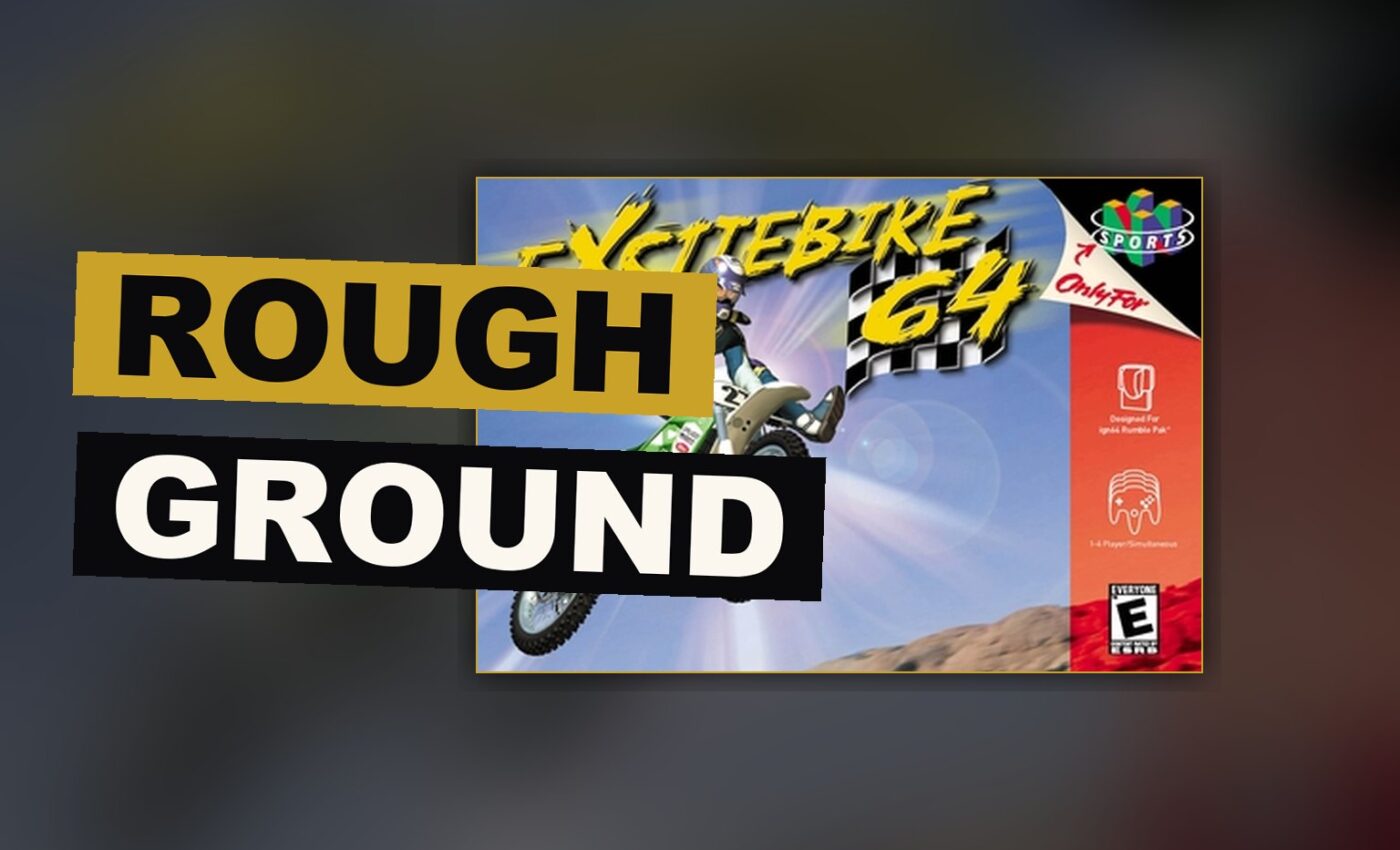
Excitebike 64 brings racing over rough open ground back to Nintendo hardware, and it lands with weight and real force. The game builds on the original Excitebike formula, but the move to 64-bit hardware gives the tracks depth and the machines a sense of mass they never had before.
Handling and Feel
The core of Excitebike 64 is force carried through motion. Riders bend into turns, catch air off rollers, and land with a heavy sound that carries into the next part of the track. Engine heat returns as a system, forcing players to manage sudden gains of force rather than call on them constantly.
Wet, soft ground is not just scenery here. Riding through it lowers a machine’s pace and changes the way it handles, and racers who neglect that fact will lose ground fast. Raised metal edges lining parts of certain tracks let skilled players grind along them for an extra push, adding a layer of risk to every quicker path across a course.
Falls carry weight too. A racer thrown from a machine loses real ground, and getting back up costs time that matters in a close race.
Modes and Tracks
Excitebike 64 offers more than straight racing. A trick mode rewards style of execution, while a track editor lets players build and share their own courses. Multiplayer support means races don’t have to be run alone; friends can race directly, which extends the game’s life well past its own courses.
Below is a look at how the main modes compare against one another:
| Mode | Focus | Best For |
|---|---|---|
| Championship | Standard racing | Players chasing steady, ongoing progress |
| Trick Mode | Style scoring | Players who want form over pace |
| Track Editor | Custom course building | Players who want to design and share tracks |
| Multiplayer | Direct racing | Groups playing together |
That variety of modes keeps Excitebike 64 from feeling dull. Each mode asks something different of the player, from careful turning to original course design.
The championship follows a set order of events, each with its own ground and hazards. Here’s how a run through the game’s courses breaks down:
| Stage | Ground Type | Key Hazard |
|---|---|---|
| Early Courses | Packed earth | Wet, soft patches |
| Middle Courses | Mixed ground | Metal edge parts |
| Later Courses | Rough, broken ground | Engine heat risk on long pushes |
| Final Courses | Technical track | Wet ground, edges and rises joined together |
This order pushes players to get comfortable with edges and soft ground early, since the later courses join every hazard at once. It’s a fair order. Nothing feels dropped in without warning.
Excitebike 64 looks neat for its time, with tracks that show real texture in the ground and clear difference between ground types. Machines and riders read well at pace, which matters in a game built around quick action and instant changes of path.
The sound design rests on engine noise and the weight of a fall. Falls carry a real force, and the steady drone of engines gives races a sense of physical effort rather than arcade ease.
Final Verdict
Excitebike 64 is not without rough edges. The trick mode, while pleasant, does not carry the same depth as the racing itself, and some players may find it a smaller draw next to the championship mode. The track editor is a strong feature but takes time to learn, and new players may need several sessions before building something worth sharing.
Still, none of these issues lower the strength of the core racing. They sit at the edges of an otherwise tight whole.
Excitebike 64 succeeds because it respects the physical feel of racing over rough ground. Soft ground cuts your pace. Metal edges reward a steady hand. Engine heat punishes excess. Every system points back to the same idea: pace has to be earned, not handed out.
The track editor and multiplayer support give it lasting appeal beyond a single playthrough, and the championship offers a fair, steady challenge from start to finish. Excitebike 64 stands as one of the stronger racing games on Nintendo 64, built on systems that still hold up.