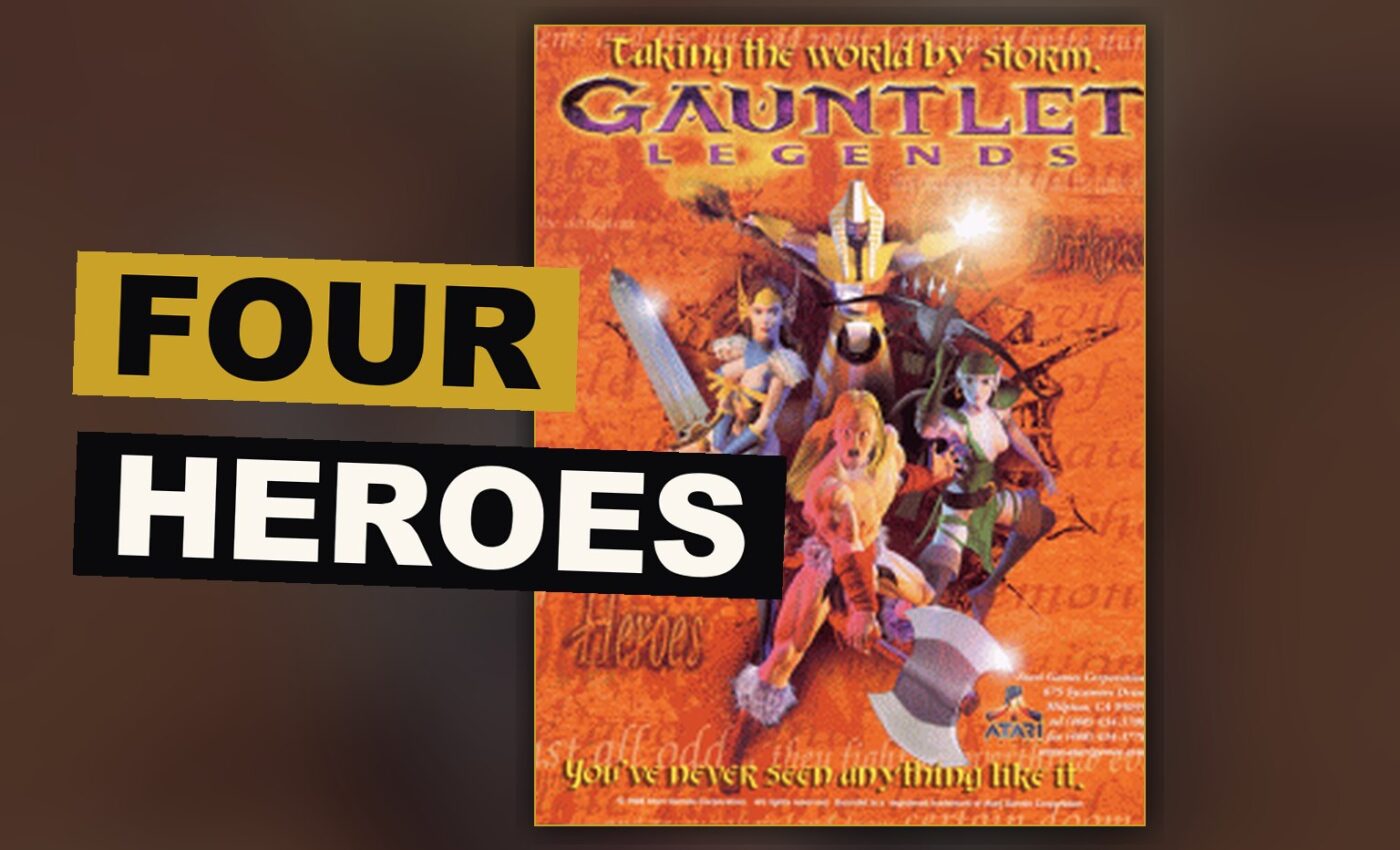
Gauntlet Legends came to the PlayStation in March 2000, a second console version of the 1998 arcade hack and slash. Atari Games developed and published the original arcade game. Midway Games West developed the port; Midway Games published it. It kept the inventory system and the two new realms from the Nintendo 64 version, along with the extensive cheat codes. It also drew criticism for how far it drifted from the arcade original.
Down-Sized Levels and Missing Multitap
The complaints were specific. Most levels were reduced in size, many objects had buggy physics, and the port dropped four-player cooperative play by omitting Multitap support. That omission gave the port relatively bad ratings.
The arcade game was built to be crowded around. A home version that skips four-player cooperative play loses part of what the arcade design offered.
Garm, Skorne, and the Thirteen Runestones
The story is thin but serviceable. A corrupt mage named Garm used a set of Runestones to summon a demon named Skorne. Skorne crushed him, imprisoned his soul in the Underworld, and scattered the Runestones across four kingdoms so they could never be used against him.
Players fight through each realm, defeat its end boss, and claim a key. Four keys open the desecrated temple, where Skorne can be banished. Collecting the Thirteen Runestones lets the party pursue him into the Underworld for the final kill.
The arcade version required three rune stones per kingdom. The home versions, this one included, need one from the battle grounds.
Leveling Up, and the Four Attributes
Character progression is what sets Gauntlet Legends apart from 1985’s Gauntlet and 1986’s Gauntlet II. Heroes earn experience by slaying enemies and taking treasure, then apply it to four attributes:
- Strength — damage dealt by physical attacks
- Speed — movement and attack rates
- Armor — damage taken from enemy attacks
- Magic — range and effectiveness of potion attacks
Every level raises those numbers, a role-playing hook bolted onto a beat ’em up.
The arcade original ran a contest for its first 500 finishers, who could mail in a validation code for a free Gauntlet Legends shirt.
This game will not end unless the player runs out of health.
The 1998 arcade game was the last Gauntlet produced by Atari Games. In 2000 it was followed by Gauntlet Dark Legacy, which added new characters and levels.
This port sits between those two points. The missing Multitap support is not a small cut, and the down-sized levels and buggy object physics compound the loss. The inventory system and the two extra realms are worth having, but they do not answer the central problem. A Gauntlet that cannot seat four players is a different game, and this one never makes the case that the trade was worth it.
Score: 7.2/10 (MobyGames).
Get the Notebook.
The day's best stories and every fresh verdict, in plain English, in your inbox by seven. One email a day, no more.