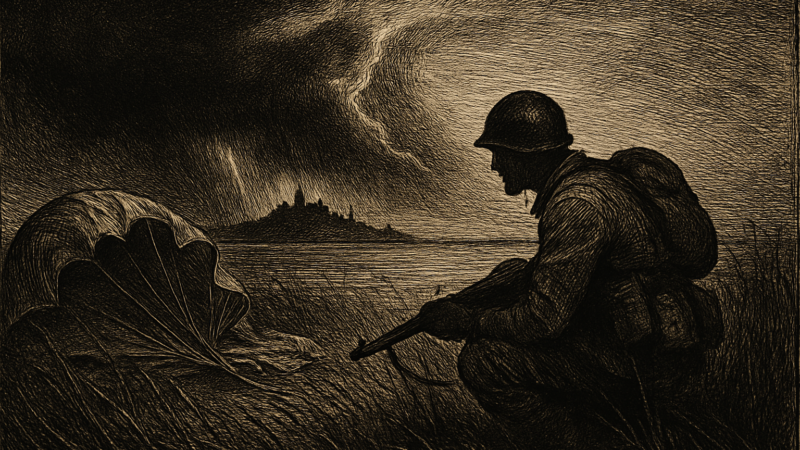
Papo & Yo turns a child’s closet into a doorway. Quico, a young boy hiding from his abusive, alcoholic father, touches a strange chalk mark on the wall and finds himself in a dream-like favela. Minority built the whole game around that escape, and around the creature Quico meets there.
Trailer, via GameSpot.
Quico and the Monster
Monster is a giant. He has razor-sharp teeth, and he is, at first, docile and playful. He holds down pressure plates. His belly works as a super-trampoline to reach rooftops. Quico loves him.
That is the setup, and it is also the trap.
Monster is addicted to poisonous frogs. The minute one hops by, he eats it and flies into a violent, frog-induced rage. In that state nothing around him is safe, including Quico, who has to run or calm him with a rotten fruit. The game asks players to use Monster’s emotions, good and bad, to solve puzzles and push forward. It is a mechanic and it is a metaphor, and Papo & Yo is smart enough not to explain which one it means.
A Favela That Folds
The world is an unspecified South American favela, and Quico can bend it. A glowing thread pulls a stairway out of a building’s side. A cardboard box lifts and an entire building comes unmoored from its foundations. Shacks sprout legs and scuttle into place to form a bridge.
The platforming and puzzle work is built on those tricks. Players stack individual shacks on each other. They lure Monster where they need him. The game is third-person, single-player, and it runs on PlayStation 3, PC, Mac and Linux. It came to PlayStation Network on August 14, 2012, to Windows through Steam on April 18, 2013, to OS X and Linux through Humble Indie Bundle X on January 7, 2014, and back to Steam on July 1, 2015.
Ars Technica described the effect well: “there’s a sense of childlike imagination at play in the way the game adds a layer of magic into the rundown world, and it’s likely to make you look at your own surroundings a little differently after you play.” That is the pitch, and the game mostly earns it.
Alejandra, Lula and the Shaman
Quico does not travel alone. Alejandra, a young girl, first sees him as a threat, then becomes a guide. Lula, his robot doll, comes alive and helps too. Both warn him about Monster. He ignores them.
Then Monster damages Lula during a rage. Alejandra sends Quico to a temple where Monster’s anger can be used to revive her, which means luring the creature into giant traps meant to hurt it. Quico does it. Lula comes back. Then Monster chases all three of them, catches Alejandra, and eats her. Before she dies she tells Quico to find the Shaman who can cure Monster.
Quico guides Monster to a sky-tram device. Lula has to stay behind to operate it. The tram ends at the Shaman, and there is no Shaman — only the memories of Quico’s father, and the story of how he fell into his alcoholic and abusive state. Between these scenes, Quico wakes inside the dream and watches a past memory: his father running over a person with his car in a dark rainstorm. In one of those scenes his father’s shadow is Monster’s shadow.
What the Gameplay Carries
Here is the honest accounting. The puzzle design is clever but thin. Stacking shacks and pulling threads are good ideas that get reused until they stop surprising you. Monster as a tool is the best thing in the game — a companion you have to read and manage, whose affection and violence come from the same body. The rotten fruit is a fine solution and a sad one.
The platforming is loose in places. The camera and the pacing do not always serve the material. But the material is doing something most games of its size never attempt: it is about a real thing.
Vander Caballero designed Papo & Yo and built the story from his own past with an abusive, alcoholic father. That is not marketing copy. You can feel it in the way the game refuses to make Monster a villain and refuses to make Quico a victim who simply escapes.
The game’s limits are real. It is short, its puzzles run out of ideas before its themes do, and the ending leans on memory sequences that carry more weight than the mechanics around them can support. The favela is beautiful and the magic is lovely, but the best parts are the quiet ones — Quico and Monster walking together, and you knowing what is coming.
The Parts Worth Naming
- Quico, the boy who runs from his father and into the favela
- Monster, the giant whose frog addiction turns him violent
- Lula, the robot doll who animates and guides Quico
- Alejandra, the girl who becomes a guide and is eaten by Monster
- The Shaman, who turns out not to exist
- The father’s shadow, which is Monster’s shadow
7.5 of 10
Papo & Yo is a 7.5. The score matches the published critical aggregate across nine outlets, and it is the right number. What holds it back is craft: the puzzles repeat, the platforming wobbles, and the last act asks the story to do work the game systems cannot quite match.
What lifts it up is nerve. Minority took a semi-autobiographical story about an alcoholic, abusive parent and made it a puzzle platformer about a boy and a monster, and it never once flinches from the ugliness underneath. The result is uneven and worth playing anyway. The shadow on the wall is the whole game, and the game knows it.
Get the Notebook.
The day's best stories and every fresh verdict, in plain English, in your inbox by seven. One email a day, no more.