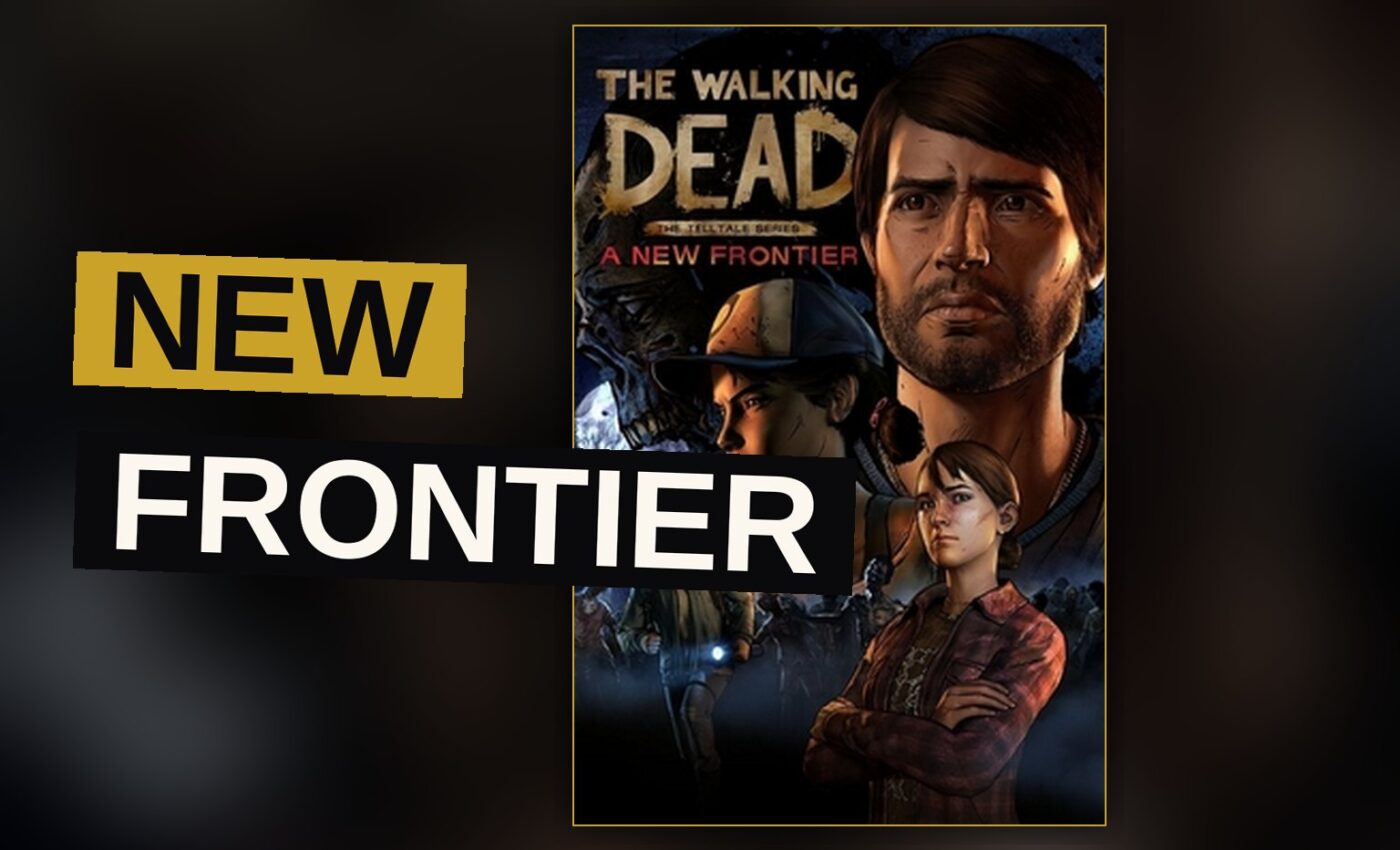
The Walking Dead: A New Frontier drops Clementine and Lee, the duo who defined Telltale’s previous seasons, and hands control to a new character named Sid. The change is a gamble, and it mostly pays off. This season takes the series into a new setting and a new set of moral questions, and the result is one of the stronger entries in the franchise.
Sid is a former soldier who finds himself stranded in a small town in Texas, surrounded by survivors who are barely holding on. The game opens with him walking through a desert wasteland, and that opening sequence sets the tone: this is a world that has moved past the initial panic of the zombie apocalypse, into a quieter, more desperate phase. The writing leans heavily on dialogue, and the performances from the voice cast carry a lot of the weight.
Trailer, via IGDBcom.
Sid’s Voice
Sid is the player’s eyes and ears for most of the season. He is a man of few words, which makes him a natural fit for a story about survival. His quiet presence lets the other characters do the talking, and the season spends a lot of time exploring the bonds between the people he meets along the way. The game is at its best when it slows down and lets these relationships breathe.
The voice work is strong across the board. The supporting cast delivers lines with conviction, and the pacing is deliberate enough that the emotional beats land. There are moments where the writing reaches for a bigger statement, and those moments can feel heavy-handed, but the core performances keep the season grounded.
The Town of Abacoa
Abacoa is the heart of the season. It is a small settlement built around a river, populated by a handful of families who have formed a fragile community. The town is a place of contradictions: it is safe, but it is also isolated; it is stable, but it is also fragile. The game does a good job of making the town feel lived-in, with a sense of history and routine that gives the setting a life beyond its plot function.
The town’s residents are not just cardboard victims. They have their own agendas, their own fears, and their own ways of dealing with the constant threat of the outside world. The game asks the player to make choices that affect these people directly, and those choices carry weight. The season is structured around a series of episodes, each focused on a different branch of the story, and the branching narrative gives the player a sense of agency even within the constraints of the game’s pre-written script.
Choices and Consequences
The Walking Dead: A New Frontier is built around the idea of choice, and it delivers on that promise. The decisions you make in one episode can change the paths available to you in later episodes, and the game tracks those changes carefully. This is the strength of the Telltale model: the player feels like their actions matter, even if the outcome is predetermined.
The game is not subtle about this. It tells you, explicitly, that your choices are being recorded. That transparency is both a strength and a weakness. On the one hand, it reinforces the importance of every decision. On the other hand, it can make the game feel less surprising, since you know that the consequences are coming.
The choices themselves are often difficult. The game forces you to balance loyalty with self-preservation, and it does not always offer an easy way out. There are moments where the right answer is unclear, and the game lets you live with that ambiguity. The season rewards patience, and it punishes rashness, which is a fair trade for a story about a world that rarely offers clean answers.
The Sound Design
The sound design in The Walking Dead: A New Frontier is excellent. The score is sparse but effective, using piano and percussion to create a tense, melancholic atmosphere. The sound of the wind, the distant chatter of survivors, and the occasional growl of a walker all contribute to a sense of place that is immersive without being overwhelming.
The audio is particularly strong in the quieter moments, when the game wants you to focus on dialogue and emotion. The sound of a door creaking, or the distant call of a survivor, can be just as unsettling as a zombie attack. The game uses sound to build tension in a way that the visuals sometimes cannot match.
Technical Issues
The Walking Dead: A New Frontier is a polished product, but it is not perfect. The game has been criticized for technical issues, particularly on mobile platforms, where the frame rate can drop during intense scenes. The PC version runs more smoothly, but it is not immune to performance problems either.
The loading times can be long, especially on slower devices, which breaks the flow of the story. The game is also linear, which means there is little room for exploration beyond the main path. These are minor complaints, but they are persistent ones.
The game is at its weakest when it relies too heavily on quick-time events. These sequences ask the player to press buttons in a specific order to avoid danger, and they can feel like a chore rather than an extension of the story. The season tries to minimize these moments, but they still appear occasionally, and they can break the immersion.
Comparing Platforms
| Platform | Strengths | Weaknesses |
|---|---|---|
| PC | Smoothest performance, best visual fidelity | Requires a higher hardware investment |
| PS4 | Good performance, easy to access | Some frame rate issues on older models |
| Mobile | Portable, accessible | Lowest visual fidelity, most performance issues |
The PC version is the best way to experience the game, but it is not the only option. The PS4 version is a solid alternative, and the mobile versions are playable if you are willing to accept lower quality. The platform comparison is a general assessment of how the game performs on each, not a design claim about how it was built.
The Final Episode
The final episode of The Walking Dead: A New Frontier is the strongest entry in the season. It brings together the threads of the story, resolving the conflicts that have defined the season. The episode is emotionally resonant, and it closes Sid’s journey in a way that feels earned.
The ending is open-ended, which is a departure from the previous seasons. Instead of tying everything up neatly, the game leaves some questions unanswered, which could frustrate players who want closure. However, it also leaves the door open for future stories, which is a smart move for a series that has already established a large fan base.
Where It Fits In
The Walking Dead: A New Frontier stands as a strong entry in the franchise. It builds on the formula of previous seasons while shifting the setting and the stakes. The game is at its best when it focuses on character and relationship, and it is at its worst when it leans too heavily on spectacle. The technical issues are real, but they do not undermine the core experience.
The game is worth playing for anyone who enjoys the genre. It is a well-made, emotionally engaging story that rewards patience and thoughtfulness. It is not a masterpiece, but it is a solid addition to a series with a proven track record.
The Walking Dead: A New Frontier scores 7.5 of 10.