
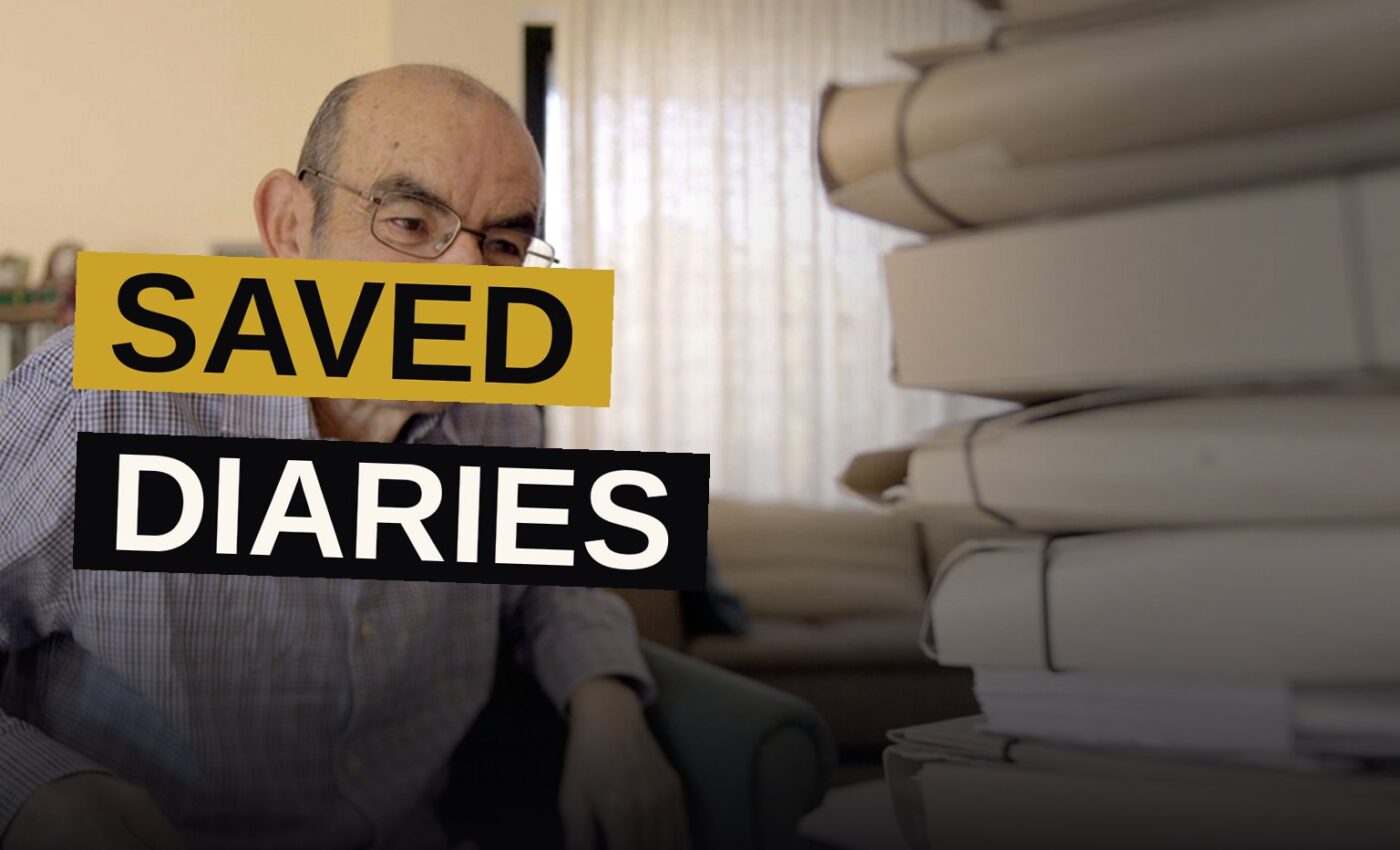
Raja Shehadeh has spent decades writing his own version of history. The Palestinian author, now 75, has kept diaries since 1967, the year Israel occupied the West Bank. He started at 15, just before the occupation began, and he has never stopped. His work captures a unique front-row seat to some of the most difficult moments in recent Middle Eastern history.
The diaries document his meetings with world leaders, his work as a human rights lawyer, and his role as legal advisor to the Palestinians during peace talks with Israel. They also record his anger at Palestinian leaders who signed a 1990s peace accord without stopping Israeli settlement expansion. Now, those records are being preserved in Scotland.
Shehadeh feared his archives, kept in his garage in Ramallah, were at risk from Israeli military operations. So he took part in a two-year, discreet effort to move them to safety. The University of Edinburgh now holds the archives, and the University of Exeter has published thousands of pages online.
Keeping a Diary Every Day
Shehadeh told NPR’s Daniel Estrin that keeping a diary has been a daily effort. He writes to understand what is happening around him and to record events as they unfold. The discipline helped him understand himself and the world around him.
He was feeling that a historic period needed to be documented. So he went about writing everything down, preserving whatever he could.
The Intifada Entries
Excerpts from Shehadeh’s diary describe Israel’s invasion of Ramallah at the height of the Palestinian Intifada in 2002. On April 2, he wrote:
“Last night was very noisy. I was awakened many times from the sound of the bombing and shooting…”
He described feeling like a prisoner in his house, in solitary confinement. He paced around the house, thinking of exercise, then heard news that the curfew had been lifted.
“I continued driving up to the center and then saw two big tanks- how big they look, like elephants in a zoo where they don’t belong, parked by our office blocking the street entirely.”
He also wrote about the satellite coverage of the conflict. “The satellite stations show the suffering of the Palestinians like a soap opera…” He criticized Palestinian leader Arafat, calling him a rebel rouser and a source of drama throughout the Arab world.
The Anger Over Peace Talks
Shehadeh’s diaries after the 1990s peace accord show a great anger. He was glad he did not publish those entries. He said the diary helped him vent frustration without getting into trouble.
“The leadership…didn’t realize that the settlements were the disastrous thing and that they had to be stopped, and no agreement should happen without all settlement activities stopped, and they didn’t do that,” he wrote.
The Fear of Destruction
Shehadeh’s fear for his archives is grounded in history. He recalled the Nakba, the Arabic word for “catastrophe,” referring to the displacement and dispossession of Palestinians when Israel was established.
“In 1948, they destroyed so many of the journals and private papers of Palestinians, and they were never found again,” he said. In 1982, in Lebanon, Israeli forces went to the Palestine Research Center in Beirut and took all the papers, journals and everything there, destroying them. In 2002, during the reinvasion of Ramallah, Israeli forces entered homes and destroyed private papers.
Moving the Archives to Scotland
In 2023, with the Gaza war and the destruction of so much of the archives in Gaza, Shehadeh became worried. He decided to preserve his diaries. The first step was digitizing the pages page by page with the cooperation of the University of Edinburgh and Exeter University.
Three people worked day and night to scan the diary according to the highest standard. The entire effort lasted two years.
What the Papers Show
The digitized pages are now available online through the University of Exeter. They include entries from the 1967 occupation, the Intifada, the peace process, and the wars that followed.
Shehadeh’s writing shows a man trying to make sense of chaos. He describes the physical presence of tanks in his neighborhood, the noise of bombing, the curfews that trapped him in his home. He also records his thoughts on leadership, on the media, and on the nature of the conflict itself.
The preservation effort was discreet. Shehadeh did not want the Israelis to know what he was doing. He feared they would stop him.
Key Facts Box
- Author: Raja Shehadeh
- Age: 75
- Books written: More than 20
- Diary started: 1967
- Archives moved to: University of Edinburgh
- Online publication: University of Exeter
- Digitization span: Part of a two-year effort
Timeline of Key Events
- 1967: Shehadeh begins his diary, just before Israel’s occupation of the West Bank.
- 1982: Israeli forces destroy papers at the Palestine Research Center in Beirut.
- 2002: Israeli forces invade Ramallah during the Intifada; Shehadeh documents the experience.
- 2023: With the Gaza war, Shehadeh decides to preserve his diaries.
- Now: Archives held at the University of Edinburgh; pages published online by the University of Exeter.
Shehadeh’s fear was not unfounded. The history of destroyed Palestinian papers is real.
The diaries are a record of one man’s attempt to understand a conflict from the inside. He kept writing, he kept saving, and his words are now safe.