
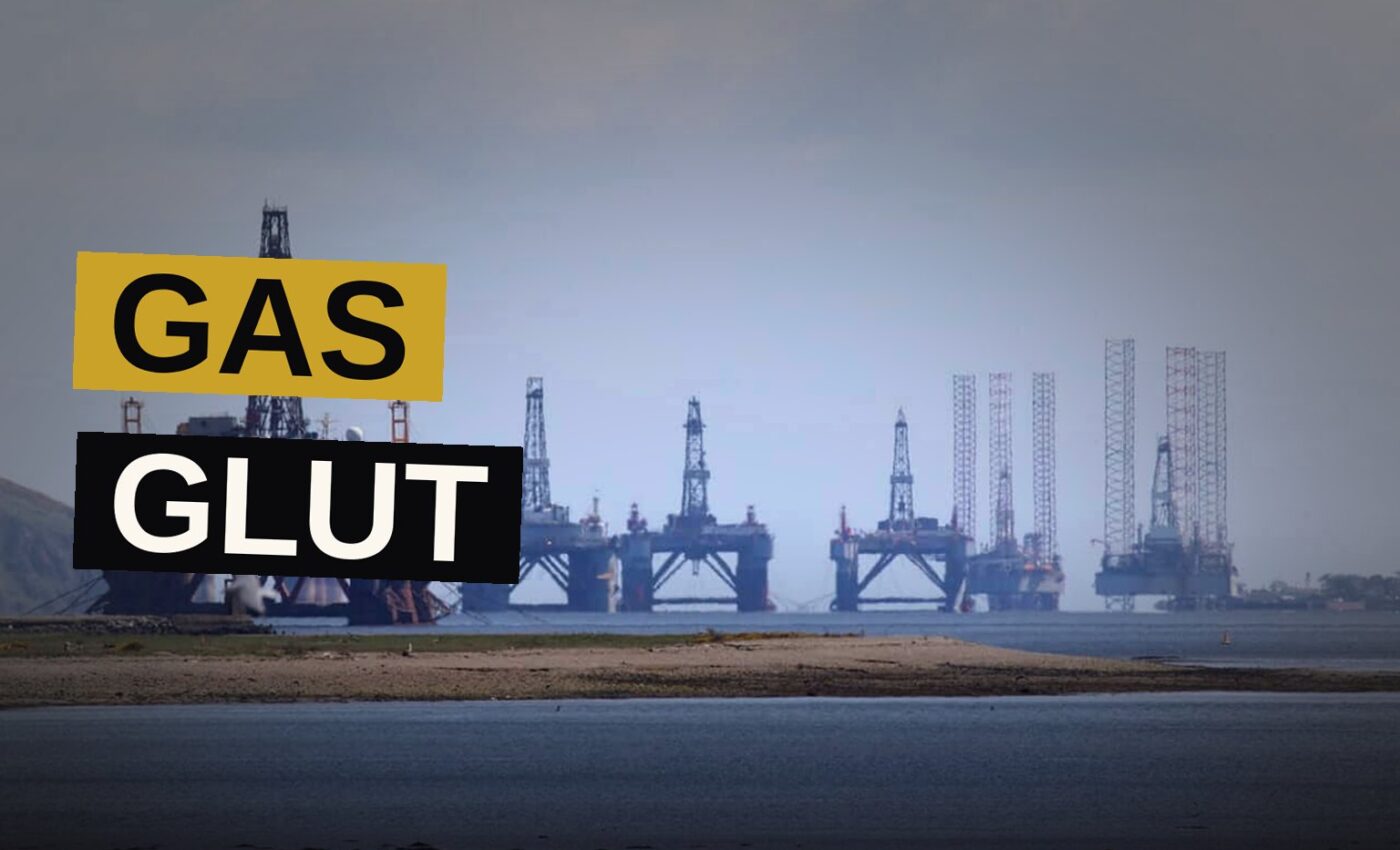
US natural gas prices fell on Tuesday despite an early advance, as domestic supplies remain well above average for this time of year. October Nymex natural gas (NGV26) closed down 0.059 (-1.98%) on the day.
The decline came even as forecasts for hotter weather across the US South threatened to boost demand from electricity providers running air conditioners. Prices gave up their early gains and settled lower, with the supply surplus outweighing the near-term weather boost.
The Supply Picture
As of August 28, US natural gas inventories were +5.2% above their 5-year seasonal average. That surplus is the main pressure on prices.
The US Energy Information Administration (EIA) projected on August 11 that storage levels will swell to 3,985 bcf at the end of October. That would be the highest level in 10 years and 5% above the five-year average.
Production is also climbing. Last Monday, the EIA raised its 2027 US dry natural gas production estimate to 116.0 bcf/day, up from the 115.3 bcf/day it projected in July.
On Tuesday, US lower-48 dry gas production was 113.9 bcf/day (+4.2% y/y), according to BNEF. That is a 4.2% increase over the same day last year.
The production picture matters because more gas flowing out of the ground adds to the already-elevated storage levels.
Weather and Heat Demand
Prices initially moved higher on Tuesday as forecasts turned hotter. The Commodity Weather Group said above-average temperatures are expected across the US South through September 17.
Hotter weather typically lifts natural gas demand because it pushes electricity providers to burn more gas to power air conditioning. That dynamic gave prices some early support before the supply surplus reasserted itself.
It was not enough to hold the gains. The market closed lower, with the supply surplus outweighing the near-term weather boost.
The weather forecast is a near-term factor, not a lasting one. September heat can drive air-conditioning load, but once temperatures moderate, that source of demand fades. Traders are weighing the current heat against the larger supply picture.
European Prices and the Strait of Hormuz
Natural gas prices also drew some early carryover support from Europe, where prices have rallied to a 3.5-year high.
European gas is soaring because sharply reduced supplies from the Middle East are keeping storage levels there well below normal. The closure of the Strait of Hormuz, tied to the US-Iran war, has cut off a major supply route.
That is a bullish factor ahead of winter, when European demand typically surges. But the support did not translate into a higher close for US prices on Tuesday.
The European situation is significant for global gas markets. Its effect on US prices on Tuesday was not enough to overcome the domestic supply surplus, which is the dominant factor in the market’s calculation.
Demand and Electricity Output
US gas demand is running strong. Lower-48 state gas demand on Tuesday was 76.1 bcf/day (+12.3% y/y), according to BNEF. That is a 12.3% increase over the same day last year.
Estimated LNG net flows to US export terminals on Tuesday were 19.8 bcf/day (+1.9% w/w), according to BNEF. That is a 1.9% increase over the previous week.
Electricity output is also up. The Edison Electric Institute reported last Wednesday that US lower-48 electricity output in the week ended August 29 rose +12.56% y/y to 96,357 GWh. Over the 52 weeks ending August 29, output rose +2.63% y/y to 4,375,966 GWh.
Strong electricity demand is a positive factor for gas prices. Power plants are among the largest consumers of natural gas, and higher electricity output typically means more gas burned for generation.
The demand data points in the same direction as the weather forecast. Hot weather drives air-conditioning use, which drives electricity demand, which drives gas consumption. All of that supported prices in early trading Tuesday.
The El Niño Risk
A bearish medium-term factor hangs over the market: speculation that a powerful El Niño weather system will bring warmer-than-normal temperatures to the Northern Hemisphere this fall and winter.
Warmer winters mean less heating demand. If El Niño delivers mild weather, the already-abundant supplies could pile up faster.
That prospect is weighing on the outlook for prices into the winter months.
The El Niño speculation is exactly that — speculation. But the market is pricing in the possibility, and it adds to the bearish case built on high storage levels.
What to Watch
The market is caught between two forces:
- Hot weather and strong electricity demand pushing consumption up now
- Abundant supplies and the prospect of a mild winter pulling prices down later
The EIA’s projection of 10-year-high October storage is the anchor for the bearish case. The El Niño speculation reinforces it. For now, supply is winning.
Traders will be watching weekly storage reports and weather forecasts for any shift in the balance. A hotter-than-expected September, or a colder-than-expected winter, could flip the dynamic quickly.
Here is how the key factors stack up:
- US storage levels at +5.2% above the 5-year average, with EIA projecting October storage at a 10-year high
- El Niño speculation pointing to a warmer-than-normal Northern Hemisphere winter, which would cut heating demand
- Hot US weather forecasts through September 17, which are supporting near-term electricity demand
- European gas prices at a 3.5-year high, providing some carryover support but not enough to lift US prices
- Rising US production, with the EIA raising its 2027 output estimate to 116.0 bcf/day
The data from BNEF shows production and demand both running above year-ago levels. Production was up 4.2% year over year on Tuesday, while demand was up 12.3%.
For the moment, the pressure on prices is clear. Abundant US nat-gas supplies are weighing on prices, and the storage surplus is the dominant factor in the market’s calculation.
Source: finance.yahoo.com
Get the Notebook.
The day's best stories and every fresh verdict, in plain English, in your inbox by seven. One email a day, no more.