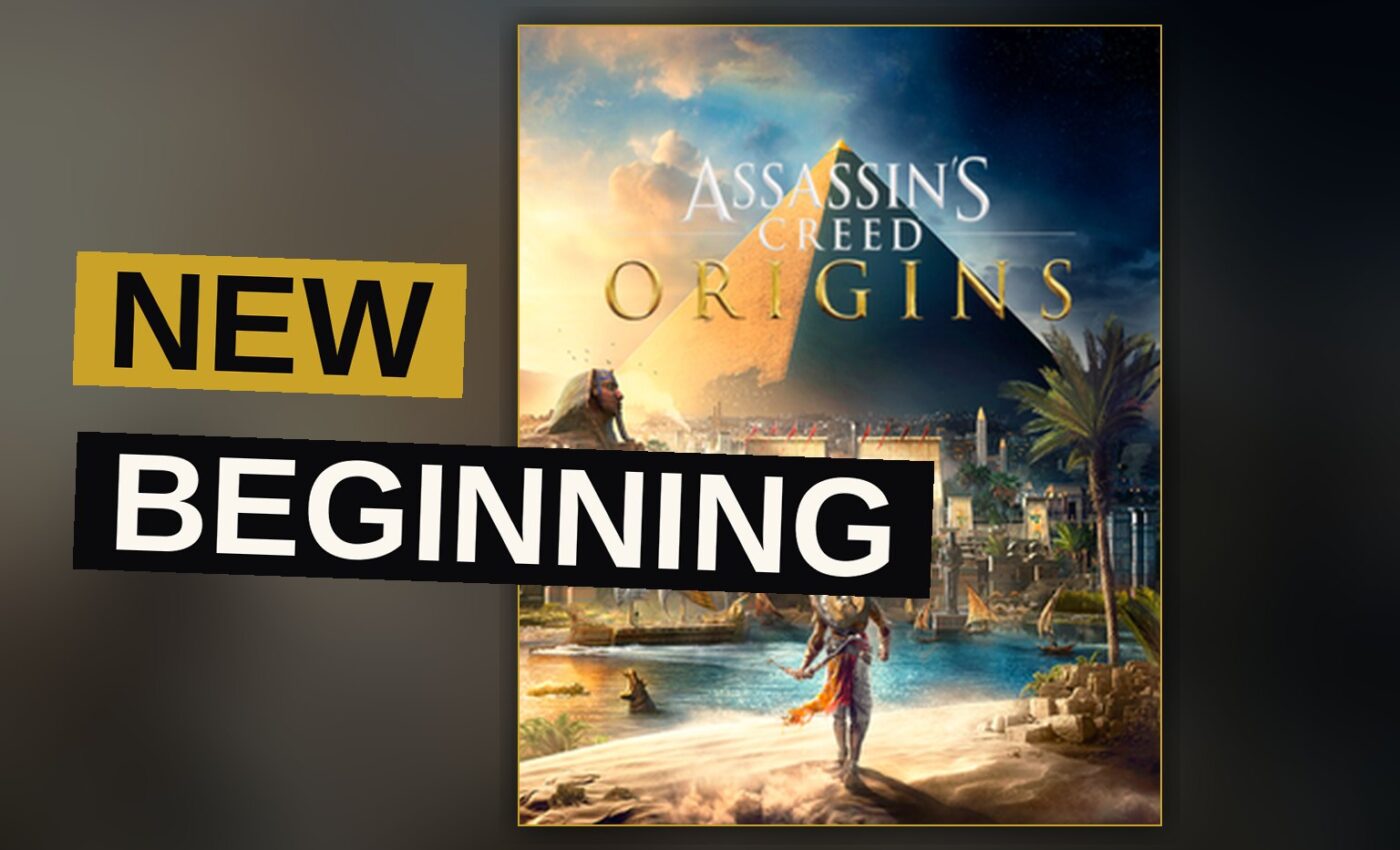
Assassin’s Creed Origins is the game that finally broke the series’ old formula, and it did so with a spear, a shield, and the entire country of Egypt as its playground. It is a bold, sprawling reinvention that trades the clunky, repetitive combat of earlier entries for a fluid, action-focused system that feels like it belongs in a modern action RPG. The shift is not just cosmetic; it is structural, and it gives the franchise a new lease on life.
The game casts you as Bayek, a Medjay — a sort of Egyptian sheriff — who is pulled into a conspiracy that will eventually birth the Assassin Brotherhood. The story is personal, driven by Bayek’s grief and his quest for vengeance, but it is also a slow-burning political thriller that weaves in real historical figures like Cleopatra and Julius Caesar. It is a dense, ambitious narrative that takes its time, and while the pacing can drag in the middle, the payoff is a genuinely compelling origin story for the series’ most iconic faction.
Trailer, via IGDBcom.
Bayek’s Toolkit and the New Combat
The most significant change in Assassin’s Creed Origins is its combat. Gone are the days of countering and waiting for an opening. Instead, the game adopts a hitbox-based system that rewards timing, positioning, and dodging. Bayek can wield a variety of weapons — swords, axes, spears, and bows — each with its own feel and moveset. The combat is weighty and satisfying, and landing a perfectly timed dodge or a charged heavy attack feels like a genuine skill, not a scripted animation.
The game also introduces a light RPG layer. Bayek levels up, earns skill points, and unlocks abilities across three distinct trees: Hunter, Warrior, and Seer. This system encourages experimentation, and it gives the player a sense of steady progression that the older games lacked. It is not a deep or revolutionary RPG system, but it is well-integrated and gives every encounter a little more stakes.
Egypt as a Living World
The setting is the star of the show. Assassin’s Creed Origins recreates Ptolemaic Egypt with astonishing fidelity. The map is vast, stretching from the lush banks of the Nile to the scorching sands of the desert, and it is packed with detail. You will find bustling cities like Alexandria and Memphis, quiet farming villages, and massive monuments like the Pyramids of Giza, which you can actually climb and explore.
The world feels alive in a way that previous entries did not. There are wild animals to hunt, bandits to fight, and a constant stream of side quests that are far more interesting than the filler missions of older games. The game’s version of Egypt is not just a backdrop; it is a character in its own right, and exploring it is the game’s greatest pleasure. The attention to historical detail is remarkable, and the game does an excellent job of making you feel like you are walking through a living, breathing ancient world.
Pacing Problems in the Narrative
If there is a weak link, it is the story’s pacing. Bayek is a strong protagonist — voiced with real conviction by Abubakar Salim — and his personal tragedy is the emotional core of the game. However, the main quest line often sends you on long, winding errands that feel disconnected from the central conspiracy. The game is at its best when it focuses on Bayek’s relationship with his wife, Aya, and his hunt for the masked order that killed his son. It is at its worst when it makes you chase a lead across half the map just to trigger a short cutscene.
The supporting cast is a mixed bag. Some characters are memorable, while others are forgettable. The game also has a tendency to introduce a historical figure, give them a brief quest, and then move on without giving them room to breathe. Still, the final act is strong, and it does a good job of tying the threads together and setting up the Assassin Brotherhood in a way that feels earned.
Technical Marvels and Cracks
Visually, Assassin’s Creed Origins is stunning. The lighting, the textures, and the draw distances are all top-tier, and the game runs smoothly on the PC, PS4, and Xbox One. The soundtrack, composed by Sarah Schachner, is a highlight, blending traditional Middle Eastern instruments with modern orchestration to create a score that feels both ancient and contemporary.
That said, the game is not without technical hiccups. There are occasional frame rate drops, especially in dense urban areas, and the game’s AI can be inconsistent. Enemies sometimes stand around while you assassinate their allies, and the game’s stealth mechanics are still a little loose. These are not game-breaking issues, but they are noticeable, and they prevent the experience from feeling entirely polished.
A Verdict on a New Beginning
Assassin’s Creed Origins is a successful gamble. It modernizes the series without losing its identity, and it tells a story that feels both intimate and epic. It is not a perfect game — the pacing is uneven, and the technical issues are real — but it is a confident, ambitious reinvention that sets a new standard for the franchise.
- Key Facts Box
- Platforms: PC, PS4, Xbox One
- Release Year: 2017
- Genre: Action RPG, Open World
- Main Protagonist: Bayek of Siwa
- Setting: Ptolemaic Egypt, circa 49 BCE
- Critical Score: 8.3/10
The game’s strengths far outweigh its weaknesses. The combat is a revelation, the world is a masterpiece, and the story, despite its slow burn, delivers a satisfying conclusion. If you are a fan of the series, this is a must-play. If you are new, it is a great entry point.
In short, Assassin’s Creed Origins is a triumph.