
Australia’s Answer, in Three Casks
The annual release of Baroque Whisky consists of just three casks, and that limited number is precisely what makes it stand out.
Australia’s top tier carries the name Exceptional Cask Collection. Every year, the three finest casks are bottled separately, each producing sixty individually numbered bottles. Together, that adds up to one hundred and eighty bottles in all. Once they’re gone, they don’t come back.
This company does not operate as a distillery in the conventional way. Instead, it functions as an Australian licensed alcohol manufacturer that designs each expression across its full life cycle, partnering with other houses and barrel makers throughout the process. Once the design work is complete, the company takes direct control of cask selection, aging and bottling.
The House Starts at the Record
While most whisky makers trace their origin to the moment the spirit is distilled, Baroque traces its own back to the moment the record was made.
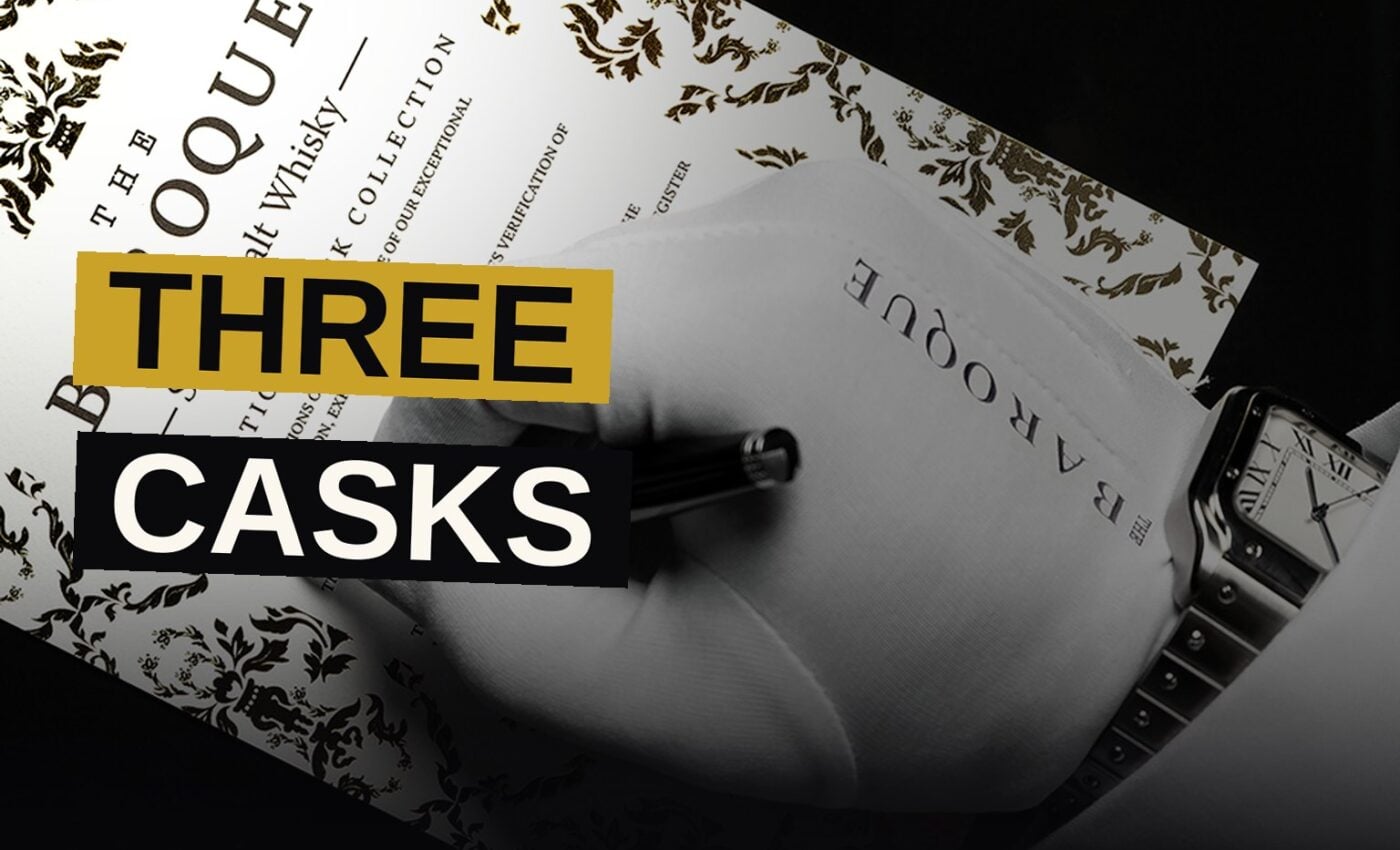
Someone writes a number into a register before a single bottle ever leaves Australia. That number remains answerable for twenty five years. A Certificate of Authenticity is completed by hand, and the number is kept in the house register for the entire duration of that period.
The method has been set down in print instead of being made into a story, according to J.E. Roberts, who holds the post of Director of Global Sales, Strategy, and Marketing.
A fixed sequence of stages defines how the house operates, moving from grain architecture and mash bill design to wort engineering, fermentation design, spirit cut architecture, cask strategy, and ending with expression architecture. Every stage comes with its own stated objective and check step. The company tracks diastatic power and phenol at the malt stage, specific gravity and turbidity at the mash stage, ester concentration during fermentation, and chemical analysis at the spirit safe.
There’s no chill filtering used anywhere. Every bottle comes at natural colour instead. The top tier sits at natural cask strength when it leaves the warehouse.
Oak Is Bought by Place, Not by Type
Oak is sold with a tale attached to it, while it is purchased by its kind. The market for Baroque goods depends on where the wood originated.
The casks come from specific regions rather than from any particular category. A butt that held sherry from Jerez, a barrel that held Cognac from the Charente, and a pipe that held Port from the Douro all leave distinct sets of wine remains behind in the wood. These remains form the foundation for the final blend.
“We believe appellation should be a fact, and a strategy,” Roberts says.
What follows is arithmetic. One cask yields what one cask yields.
The house portfolio’s choice of wood mirrors that method, drawing on French, Spanish, Hungarian and American oaks across a wide range, from virgin oak to first-fill ex-Sherry casks, split between Pedro Ximenez and Oloroso. It also leans on ex-Porto, including White, Single Quinta and Colheita, plus ex-white dessert wine barrels.
Each barrel is purchased with a specific source attached to it rather than just a general type. The contents of what the former tenant left behind in the wood are documented before the match is made.
“We spend more time finding oak than most houses spend making whisky,” Roberts says. “A rare American, French, Hungarian or Spanish oak cask, with genuine provenance, becomes the entire design of an expression. We build the whisky around the cask, never the other way around.”
The Barrel Is the Instrument
Single cask whisky’s allure often springs from an oversight rather than design. A barrel left to age in some forgotten corner, rediscovered years later, bottled with astonishment at what time had wrought.
In the Baroque approach, the house sets up the cask as the instrument and writes the spirit to fit it. Years before anyone gets to taste the outcome, the barrel is selected, and the reason for the selection can be stated plainly.
Just as much attention should be paid to the wood type as to the seasoning itself. American oak adds vanillin and coconut notes. French oak adds tannin and a finer spice. Spanish oak adds dried fruit depth and color.
If the wrong spirit fills the right barrel, the result tastes of wood instead of its own character. For that reason, Baroque makes the pairing choice during the design stage, not when the barrels are sealed up.
Casks Are Watched, Not Scheduled
Then comes the part that cannot be scheduled, only watched.
Barrels are inspected without regard for the calendar, with samples drawn, measurements taken and tastes made throughout the aging process. Where temperatures run high, the period during which a cask performs at its peak can begin and end within a single growing season.
“Our best three casks each year are committed to the Exceptional Cask Collection,” Roberts says. “We monitor and taste continuously so that we catch each whisky at its peak maturity rather than at a date on a calendar. The purpose of the collection is to share Ultra-Premium Australian Single Malt Whisky with the world.”
A yearly total of three casks is modest on purpose.
The explanation offered for the house’s refusal to blend at this level rests on how casks are brought together. They are joined deliberately, across double and triple cask expressions built from matched spirit. Where a cask holds enough strength to stand alone, it is released alone.
The Exceptional Cask Collection is where those bottlings go.
The Three Casks of the Release
This edition comes as a trio, with each barrel holding its own distinct quality.
- The first comes from a rare ex-Tennessee Whiskey cask of American oak at 61.13% ABV. It carries vanillin depth and charcoal softened character, with caramelized banana and warm spice across a deeply textured palate.
- The second is drawn from an ex-Antique Tawny barrel of French and American oak. That barrel spent decades holding fortified wine. It arrives with figs, walnut oils, dark chocolate and cigar box.
- The third comes from an ex-Meunier primary fermentation cask of French oak at 59.7% ABV. It is the set’s brightest voice. The notes are orchard fruit, red apple skin, poached pear and citrus blossom over a lasting body.
Each stopper is engraved with its edition, cask and bottling strength.
Pacult Tasted All Three in Wallkill
F. Paul Pacult evaluated all three bottlings.
Pacult conducted the tasting at the Spirit Journal offices in Wallkill, New York, over two days: 10 and 11 August 2026. He sampled the spirit neat on the first day, then again with water added to twenty per cent on the second, using a Spanish copita for both tastings.
He awarded five stars and his highest recommendation.
He found “integration and laser beam-like concentration, without ever being heavy handed.”, and he closed his remarks by calling it a “splendid, sophisticated single malt whisky.”.
Pacult has his own visual assessment of what each edition should look like, and that personal color note sits beneath each bottle.
A Small Number, On Purpose
A small release by any standard is what one hundred and eighty bottles amounts to.
Each cask is meant to stand on its own once it has reached the point where the house considers it ready. That readiness is not accidental; it is deliberate. The Exceptional Cask Collection was created precisely to hold those individual bottlings.
Blended expressions remain part of the larger portfolio, with spirit from matching sources combined across double and triple cask builds on purpose. The top tier, however, sets itself apart by reserving its place for casks that stand on their own without needing any assistance.
The method used is made public, and its stages carry names. The check steps are laid out plainly. Oak is purchased by appellation, and the pairing is settled upon during the design phase itself.
For a quarter century, the register preserves its number. Until the whisky reaches its height, the cask contains it. Then the bottle holds the finished product.
The cask shapes the whisky, not the other way around. It was selected prior to a single taste being taken, and the reasoning behind that choice was made plain from the start. That is the approach, and it stands as the response.
Source: imbibemagazine.com