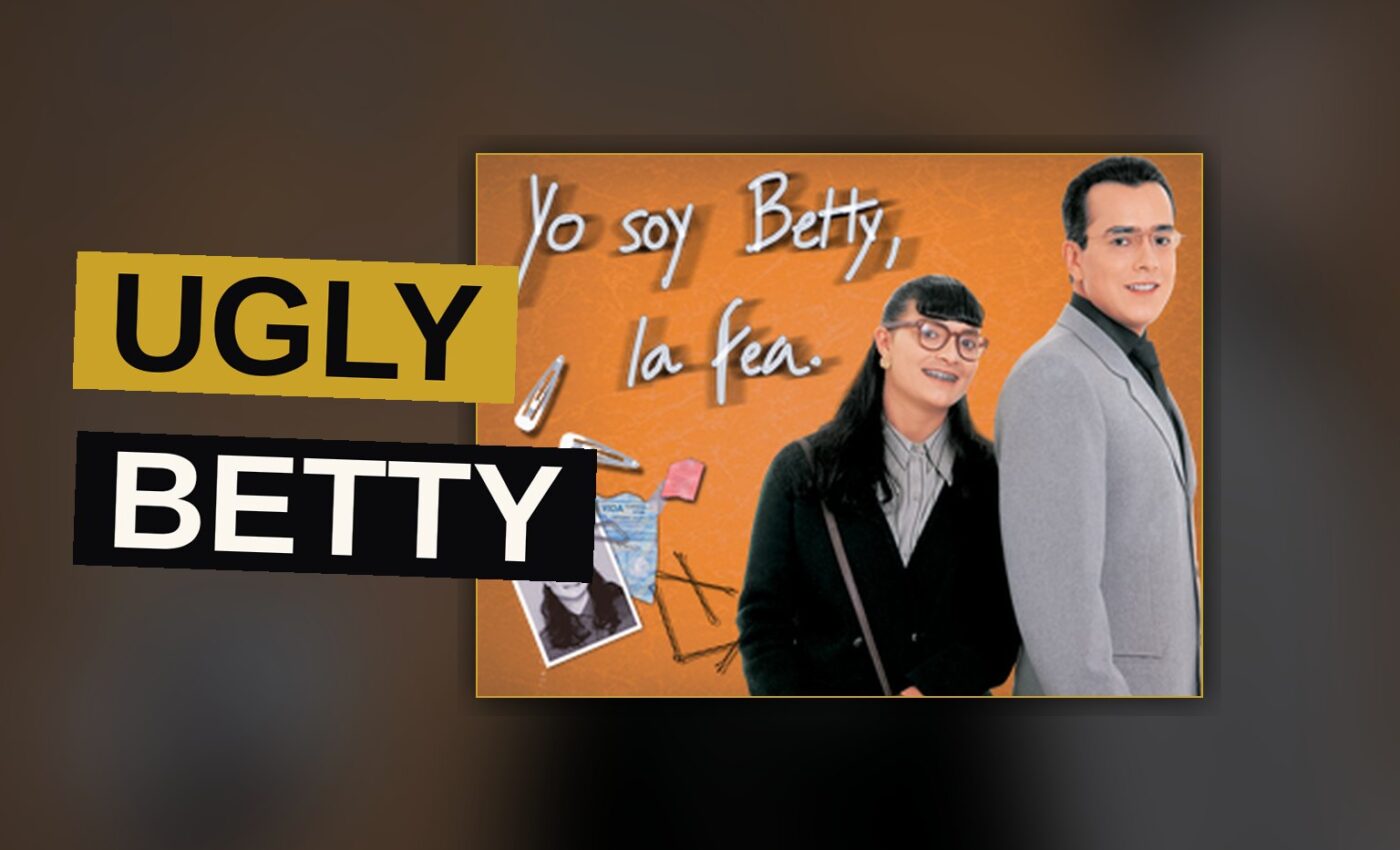
Yo soy Betty, la fea premiered in Colombia in 1999, and it changed what telenovelas could do. The show follows Betty, a young woman who is considered ugly by her family, her coworkers, and nearly everyone around her. She is hired as a secretary at her father’s company, where she is treated as invisible until her intelligence, kindness, and determination slowly earn her respect. The series ran for five seasons, and it became one of the biggest hits in Colombian television history. Its success spread across Latin America and beyond, inspiring remakes and adaptations worldwide.
The show’s premise is simple, but its execution is anything but. Yo soy Betty, la fea takes a familiar trope—the girl who is overlooked because of her appearance—and turns it into a character study about self-worth, ambition, and the institutions that reward conformity over talent. Betty is not a victim waiting to be rescued. She is a protagonist who fights for recognition through her work, her wit, and her refusal to accept the roles others have assigned her.
The Character of Betty
Betty is not a tragic figure. She is funny, resourceful, and deeply committed to her job. The show’s early episodes establish her as a woman who is constantly underestimated. Her father hires her as a secretary because he feels sorry for her, not because she is qualified. Her coworkers treat her as a joke, a punchline, and a reminder of what they are not. The show’s humor comes from watching Betty navigate a world that refuses to see her value, while she continues to deliver results.
The performance is central to the show’s appeal. The actress plays Betty with a naturalism that makes her relatable. There is no histrionic acting here. Betty’s reactions are measured, her frustration is quiet, and her triumphs are earned through persistence rather than spectacle. This restraint is what makes the show work. It is a comedy, but it is also a drama about dignity, and the actress carries both tones with equal conviction.
The Workplace as a Battleground
The office setting is a constant source of conflict. Betty is placed in a role that is beneath her abilities, and the show spends considerable time showing how she outperforms her colleagues without ever being recognized for it. Her supervisor is a man who believes women should be secretaries and nothing more. He assigns her menial tasks and ignores her suggestions, even when they solve problems that he has failed to address. The show’s satire of workplace sexism is sharp, and it is delivered through everyday interactions rather than grand speeches.
The show also explores the concept of beauty as a form of currency. Betty is told she is ugly, and she is expected to accept that label without question. The show challenges this by showing Betty’s intelligence, her creativity, and her emotional depth. These qualities are not visible to the people around her because they are blinded by her appearance. The show’s message is that beauty is not a requirement for success, but it is a barrier that must be overcome.
The Romance That Isn’t Romantic
The show’s romantic subplot is a slow burn that runs throughout the series. Betty falls in love with a man named Armando, a handsome lawyer who is initially dismissive of her. Their relationship develops gradually, with Armando eventually seeing Betty as a person rather than an object of pity. The show handles this arc with subtlety, avoiding the clichés of the romantic comedy genre. The romance is not the main plot, but it adds texture to Betty’s journey.
The chemistry between the actors is genuine. They play a couple who are opposites in many ways, yet they find common ground in their shared values. The show’s handling of Armando’s character arc is particularly strong. He begins as a shallow man who is interested in Betty only as a conquest, and he ends as someone who respects her fully. The transformation is believable because it is earned through scenes of tension, dialogue, and small moments of tenderness.
The Humor That Sticks
Yo soy Betty, la fea is a comedy, and its humor is consistent throughout. The show’s jokes come from the absurdity of its premise. Betty is constantly asked to fetch coffee, clean the office, and answer the phone, even though she is clearly capable of doing far more. The show also satirizes the way people talk about women. Coworkers make cruel comments about Betty’s appearance, and the show presents them as normal behavior. This is not a light-hearted comedy. It is a comedy that exposes the cruelty of everyday life.
The show’s tone is consistent, and it never loses its footing. It balances the serious themes of self-worth with moments of levity. The humor is earned through the characters’ situations, not through forced gags or slapstick. The show trusts its audience to understand that the jokes are part of a larger point about how people are judged.
The Five Seasons
The show’s structure is episodic, with each season focusing on a different aspect of Betty’s life:
- The first season introduces the central conflict and sets up the workplace dynamic.
- The second season expands the cast and introduces new antagonists.
- The third season deals with personal relationships, including Betty’s growing confidence.
- The fourth season raises the stakes by introducing professional competition.
- The fifth season brings everything to a conclusion.
Each season builds on the last, deepening the themes of self-worth and ambition. The show does not rush its story. It allows characters to grow naturally, and it lets the audience see the consequences of Betty’s actions over time. The pacing is deliberate, which gives the show a sense of continuity that many telenovelas lack.
The Legacy of the Show
Yo soy Betty, la fea has had a lasting impact on television. Its success led to international adaptations, including Ugly Betty in the United States. The show’s influence can be seen in other telenovelas that followed, which adopted its blend of humor and social commentary. The show’s themes of self-worth and ambition resonated with audiences across Latin America and beyond.
The show’s success was built on its ability to connect with viewers on a personal level. People saw themselves in Betty’s struggle, and they rooted for her to succeed. The show’s message that intelligence and effort matter more than appearance was powerful, and it struck a chord with audiences who felt marginalized.
The Critical Reception
Critics praised the show’s writing, direction, and performances. The show’s handling of its themes was widely acknowledged. Its portrayal of workplace sexism was particularly noted for its honesty. The show’s ability to balance humor with social commentary was also highlighted. The show’s popularity was a reflection of its quality, and its success was a validation of its approach.
The show’s critical reception was strong, and it remains a benchmark for telenovelas. Its influence can be seen in the shows that followed, and its legacy is secure in the annals of Latin American television.
The Final Season
The fifth season brought the show to a close. It resolved the main conflicts and tied up the loose ends. The final episode gave Betty the recognition she deserved, and it showed that her efforts had been worthwhile. The ending was satisfying, and it left viewers with a sense of closure.
The show’s finale was a fitting end to a series that had spent five years building toward this moment. It honored the characters and the themes that had defined the show from the beginning.
Yo soy Betty, la fea is a remarkable achievement in telenovela storytelling. It took a simple premise and turned it into a profound exploration of identity, ambition, and the institutions that judge people based on appearance. The show’s humor, its performances, and its themes all contribute to a viewing experience that is both entertaining and thought-provoking. It is a show that deserves its reputation as a landmark of Latin American television.
The show’s influence is still felt today, and its legacy is secure. It is a show that anyone can enjoy, and it is a show that rewards repeated viewings. It is a show that stands the test of time.
The show’s score is 8.4 out of 10.
Get the Notebook.
The day's best stories and every fresh verdict, in plain English, in your inbox by seven. One email a day, no more.