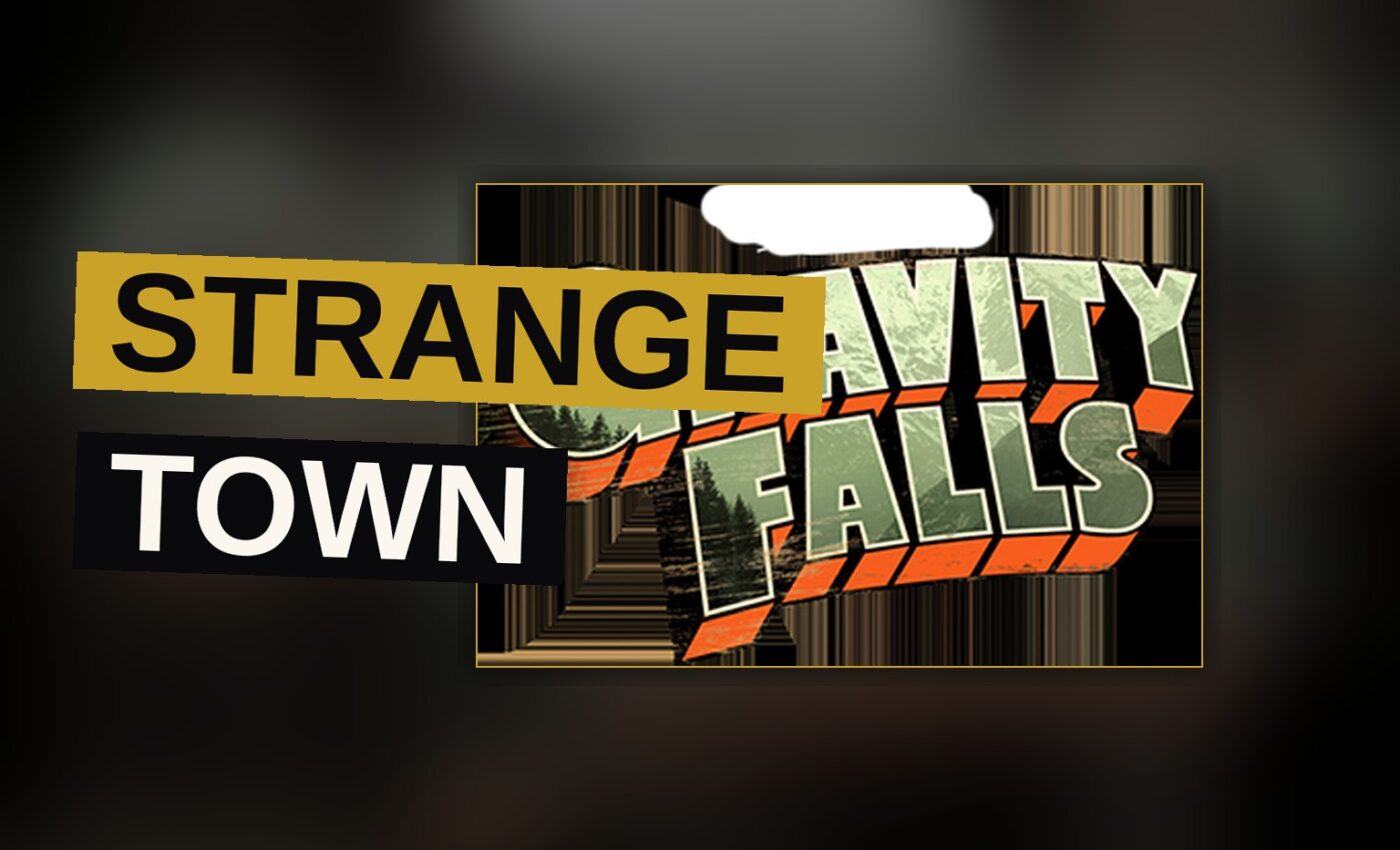
Gravity Falls is a show about a summer spent in a town full of strange people and stranger secrets, and it turns out that’s enough to carry a whole season. The show follows Dipper Pines and his cousin Mabel as they spend their summer in the small town of Gravity Falls, Oregon, staying with their great uncle Stan Pines, who runs the local tourist trap. What starts as a simple family vacation quickly becomes a quest to uncover the mysteries of the town, and the show handles that transition with a confidence that few animated series manage.
The premise is simple, but the execution is anything but. Gravity Falls blends horror, comedy, and mystery into a show that feels both accessible and layered. It’s a show about friendship, family, and the strange things we find when we look closely at the world around us. And it does all of that without ever losing its sense of wonder.
Trailer, via Disney Channel Animation.
Dipper and Mabel
At the center of Gravity Falls is the relationship between Dipper and Mabel. Dipper is the analytical one, always looking for patterns and clues. He’s the one who notices the weird signs and symbols around town, and he’s the one who wants to know why things are the way they are. Mabel, on the other hand, is the warmhearted one, always ready to embrace the weirdness of their surroundings.
Their dynamic drives the show. Dipper wants answers, and Mabel wants fun, and the tension between those two impulses is what makes the show work. They bicker and argue, but they always come back to each other. That bond is tested throughout the season, especially when the supernatural elements of the town start to affect them personally. Their shared curiosity about the town’s mysteries also brings them closer together, even as those mysteries threaten to pull them apart.
The show also spends time exploring how the cousins relate to their uncle Stan. Stan is a con man who runs the Mystery Shack, and he’s mostly interested in making money and avoiding responsibility. He doesn’t want to get involved in the supernatural events happening around him, but he can’t help being dragged into them anyway. His interactions with the kids provide some of the show’s best comic moments, but they also reveal a deeper affection beneath his gruff exterior.
The Mystery Shack and Its Residents
The Mystery Shack is the show’s central location, and it’s packed with odd characters. There’s Soos, the maintenance guy who’s always getting into trouble; Pacifica Northwest, the spoiled heiress who’s obsessed with social status; and Sheriff Blubs and Deputy Durland, the bumbling law enforcement officers who can’t catch a break. Each of these characters gets their own moments to shine, and the show uses them to create a rich sense of community.
The town itself is a character too. It’s a place where the mundane and the bizarre exist side by side. There are talking animals, magical portals, and ancient spirits lurking just below the surface. The show never explains everything, and that refusal to fully explain the world around the characters is part of what makes it so compelling. The audience is left wondering, just as Dipper and Mabel are, about the nature of the town and its inhabitants.
The show also explores the idea of tourism as a kind of performance. The Mystery Shack is a tourist trap, and Stan performs the role of a friendly host. But there’s a tension between that performance and the reality of what happens behind the scenes. The show hints at the darker side of running a business built on deception, and it suggests that Stan’s desire to keep things normal might be tied to a fear of what he might discover if he stopped pretending.
The Writing Style
Gravity Falls is a show that rewards attention. It’s packed with Easter eggs, callbacks, and hidden meanings, and the show encourages viewers to pay close attention to details. The dialogue is sharp, and the jokes land consistently. The show also has a knack for building suspense, and it knows when to hold back information to keep the audience engaged.
The humor is a particular strength. The show manages to balance slapstick physical comedy with clever wordplay and observational humor. It’s funny without being mean, and it respects the intelligence of its audience. The jokes are often layered, with punchlines that work on multiple levels. The show also uses visual gags effectively, with the animation itself contributing to the comedy.
The show’s tone is also notable. It’s dark in places, dealing with themes like death and loss, but it never loses its warmth. Even in its darkest moments, the show maintains a sense of hope and wonder. That balance is difficult to achieve, and Gravity Falls pulls it off with ease.
The Art Direction
The animation in Gravity Falls is distinctive. It uses a style that blends hand-drawn backgrounds with more detailed character animation, giving the show a look that feels both retro and modern. The color palette is bright and saturated, with a lot of greens, oranges, and purples. The backgrounds are often rendered with a sense of depth and texture, and they’re filled with small details that reward close inspection.
The show also uses lighting effectively, with shadows and silhouettes adding to the mood. The overall effect is a world that feels alive and specific. The town of Gravity Falls isn’t just a setting; it’s a character in its own right, with its own history and atmosphere.
The show also pays tribute to classic cartoons and horror films. The style draws on influences ranging from Scooby-Doo to Twin Peaks, and it references a wide range of pop culture. These references aren’t dropped casually; they’re woven into the fabric of the show, often serving as clues or plot points. The show also uses music and sound design to enhance its atmosphere, with a score that shifts from playful to ominous as needed.
The Music and Sound
The show’s soundtrack is a mix of original songs and licensed tracks. The main theme, “Stan’s Theme,” is a catchy tune that captures the show’s blend of mystery and whimsy. Other songs, like “The Deep Web Song” and “The Love Song,” are performed by the characters themselves and become part of the narrative. The show also uses licensed tracks from bands like The Aquabats and The Black Keys, which adds a sense of authenticity to the show’s rock-and-roll aesthetic.
The music is used effectively to set tone and drive emotion. It builds suspense during the show’s more dramatic moments, and it provides levity during the lighter ones. The show also uses silence well, letting moments breathe and allowing the audience to feel the weight of a situation. The sound design is similarly precise, with effects that are specific to the show’s world, like the sound of the portal opening or the rustling of the forest.
The Themes
Gravity Falls deals with a range of themes, but a few stand out. The show is about the nature of truth and the difficulty of knowing the world around us. It asks whether there are limits to what we can understand, and it suggests that sometimes the strangest things are the closest to the truth. The show also explores the idea of legacy and the stories we tell about ourselves.
There’s also a strong focus on the importance of friendship and family. The show suggests that the people we care about are often our greatest allies, even when the world around us is falling apart. The show also touches on the theme of acceptance, encouraging viewers to embrace the weirdness of life rather than running from it.
The show also deals with the concept of identity. Characters are often forced to confront what they believe about themselves and what others expect of them. The show suggests that identity is fluid and can change over time, and it celebrates that change rather than fearing it. This theme is particularly evident in the treatment of Pacifica, who is initially presented as a villain but is later revealed to have her own insecurities and desires.
The Legacy
Gravity Falls was created by Alex Hirsch, who wrote and directed much of the show. It premiered in June 2012 and ran for two seasons, with a total of 40 episodes. The show was widely praised by critics and audiences alike, and it developed a dedicated fanbase that continues to engage with the show’s mythology online.
The show’s influence can be seen in subsequent animated series, which have adopted its blend of mystery and humor. Its approach to storytelling, with its interconnected mythology and recurring characters, has been emulated by shows in the same genre. The show also spawned a large amount of fan fiction and analysis, with fans continuing to explore its mysteries years after its conclusion.
The show’s finale, “Weirdmageddon,” resolved many of the season-long mysteries but left others open. This ambiguity has allowed fans to continue theorizing about the show’s universe, and the show’s online presence remains active. The show’s success also led to a feature film, which expanded on the show’s world while maintaining its tone.
Comparing the Seasons
| Season | Focus | Key Mystery | Tone |
|---|---|---|---|
| Season 1 | Introduction to the town | The Journal and the Author | Light, curious |
| Season 2 | Expansion of the mythology | The interdimensional beast | Darker, more complex |
Season 1 establishes the world and introduces the core mysteries. It sets up the show’s recurring villains, like Bill Cipher and the Time Baby, and it introduces the idea that the town has a history that goes beyond the present day. The tone is light and playful, with a focus on discovery.
Season 2 deepens the mythology. It introduces new threats, like the interdimensional beast, and it expands the scope of the show’s world. The tone becomes darker, with more emphasis on conflict and danger. The season also explores the consequences of the characters’ actions, showing how their choices affect the world around them.
The Final Verdict
Gravity Falls is a masterclass in animated storytelling. It balances humor, drama, and mystery in a way that few shows manage, and it does so with a consistent level of quality across its entire run. The show is endlessly rewatchable, with new details emerging with each viewing.
The show’s strengths are numerous. Its writing is sharp, its animation is distinctive, and its music is memorable. The show also succeeds in creating a world that feels lived-in and specific, populated by characters who are easy to care about. It’s a show that respects its audience’s intelligence while still entertaining them.
The show’s weaknesses are minimal. Some episodes rely too heavily on sight gags or filler content, and the pacing can occasionally drag. However, these moments are rare, and they’re outweighed by the show’s strengths.
The show’s ending is divisive. Some viewers felt it resolved too much, while others felt it left too much unresolved. Regardless, the finale delivers on the emotional beats that matter most, and it leaves the door open for continued speculation.
Gravity Falls is a show that deserves its reputation. It’s a landmark of modern animation, and it stands as a model for how to build a mythology that rewards both casual viewers and obsessive fans. It’s a show that’s funny, scary, and deeply moving, and it earns its place as one of the best animated series of its era.