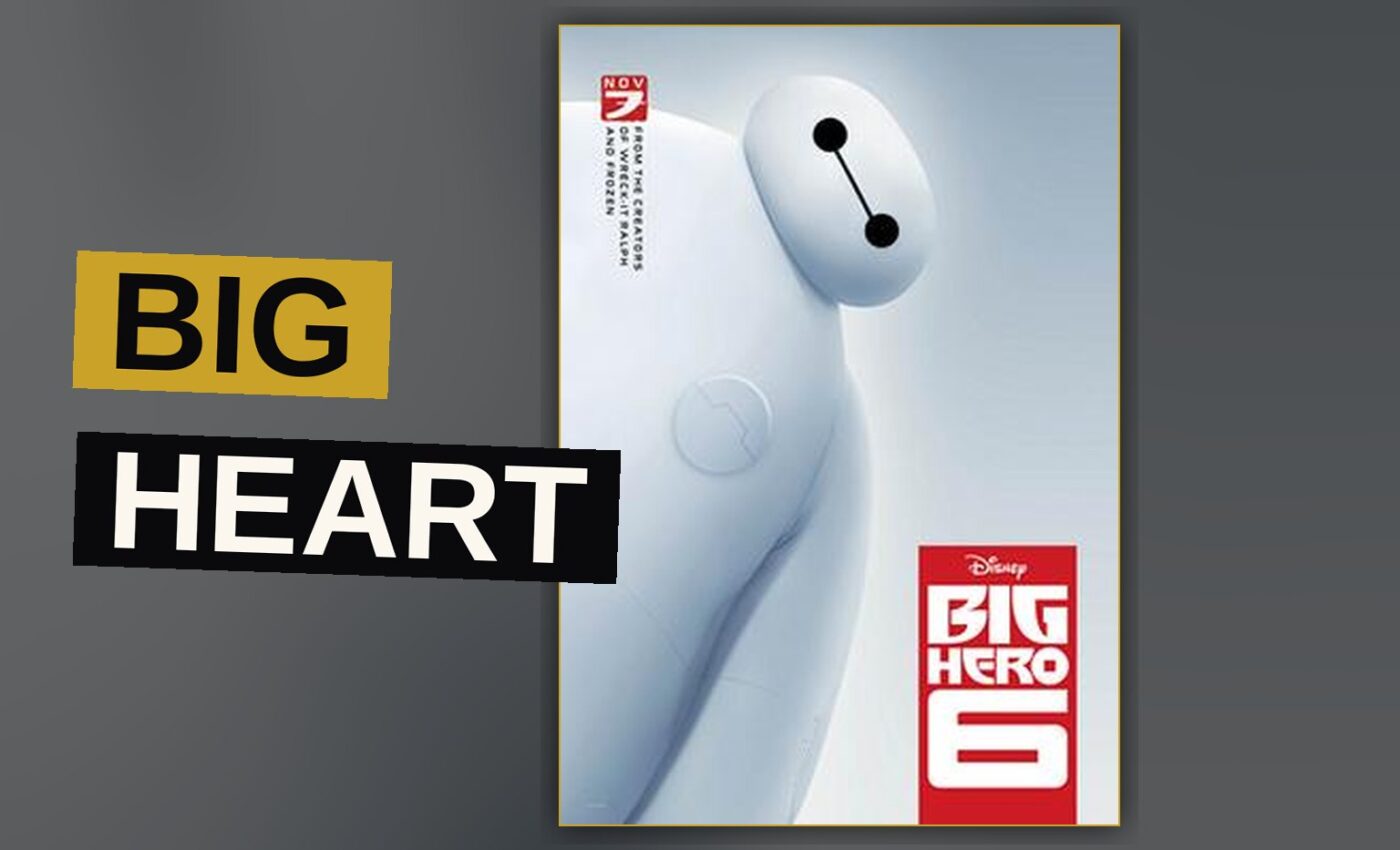
Baymax is the reason anyone will see Big Hero 6 twice. The soft, round robot who heals the broken pieces of a boy’s heart is the film’s true hero, and he earns that title without ever saying a word. But the movie around him is a mixed bag of big ideas, clumsy plotting, and pure Pixar magic.
The story follows Hiro Hamada, a teenage genius whose city of San Fransokyo is ruled by robots and ruled by grief. His older brother Tadashi dies in a fire, and Hiro retreats into a world of video games and revenge. Then he discovers Baymax, a health-care robot built by Tadashi’s lab, and the two of them join a ragtag team of misfits to stop a masked villain named Yokai from destroying the city. It sounds like a standard superhero origin, and it mostly is, but the film finds room to breathe in its quieter moments.
Trailer, via Disney UK.
Baymax and the Team
Baymax is the star. He is a walking teddy bear with a medical degree, programmed to care for others until he can’t stand it anymore. His scenes with Hiro are the film’s emotional core, and they land because the animators treat him with genuine respect. He is not a joke or a prop; he is a character with a soul.
The rest of the team is less memorable. Fred is a goofy tech enthusiast, Goob is a sidekick, and the twins Honey Lemon and Wasabi add color without much depth. The villain Yokai is a shadowy figure whose motives are vague, and the climax feels rushed. But the film’s strength is in its relationships, not its action beats.
“I’ll always remember you, my friend.”
The City of San Fransokyo
The setting is a blend of San Francisco and Tokyo, a city of neon towers and secret labs. It is a beautiful place, full of detail, and the animation is stunning. The film uses the city as a character, a place where technology and tradition clash, and that tension drives the story forward.
The film’s pacing is uneven. The first act drags as we get to know Hiro’s world, and the middle stretches thin as the team bounces between fights and expositional speeches. But the final act picks up, and the payoff is worth waiting for.
Comedy and Tone
The film leans heavily on humor, and some of it lands. The jokes about technology and family are sharp, and the film’s willingness to make fun of itself is refreshing. But the tone shifts often, moving from tragedy to slapstick to suspense in a single scene, and that inconsistency can be jarring.
The film also has a dark edge. Hiro’s grief is real, and the film does not shy away from the pain of loss. That honesty grounds the comedy and the action, even when the plot gets messy.
The Animation and Music
The animation is top-tier. The characters are expressive, the action is fluid, and the city is alive. The film uses light and color to tell us how Hiro is feeling, and that visual storytelling is effective. The music, led by the score, carries the emotional weight when the dialogue falters.
The film is rated PG, and it earns that rating. There are moments of violence and sadness, but nothing too extreme for a family audience. The film trusts its viewers to handle real emotions, which is rare in children’s entertainment.
What Works
The film’s best moments are its quiet ones. A hug between Hiro and Baymax, a memory of Tadashi, a moment of kindness from a stranger. These are the scenes that stick with you, not the explosions.
The film also has a message about community and acceptance. Hiro learns that he is not alone, and the team learns that their differences make them stronger. That message is delivered with sincerity, not preachiness, and it resonates.
What Doesn’t Work
The villain is a weak link. Yokai is a force of destruction, but we never understand why he acts the way he does. The film sets up a mystery about his identity, but it resolves it quickly, leaving the audience wanting more.
The plot is also convoluted. The film introduces a device that controls the city’s power grid, and the team spends the second half trying to stop it. The explanation is rushed, and the stakes feel arbitrary. It is a shame, because the setup was promising.
The Legacy
Big Hero 6 was released in 2014, and it has since become a beloved entry in the Pixar canon. Its success spawned a TV series and a theme park attraction. But the film stands on its own, and it remains a solid, if flawed, adventure.
The film’s biggest achievement is Baymax. He is a character who could have been a sideshow, and instead he became the center of the story. That is a rare feat, and it is the reason the film succeeds.
Final Score
Big Hero 6 is a film with a heart of gold and a brain that sometimes forgets to follow it. It is funny, sad, and occasionally brilliant. It deserves a place in the Pixar lineup, even if it is not the studio’s best work.
The film’s score reflects that mixed picture. It is a solid, enjoyable ride with a few bumps along the way.
- Title: Big Hero 6
- Release: 2014
- Director: Don Hall and Chris Williams
- Rating: PG
- Score: 7.7 out of 10
It is a film that will make you laugh, make you cry, and make you want a robot friend of your own. It is not perfect, but it is close.