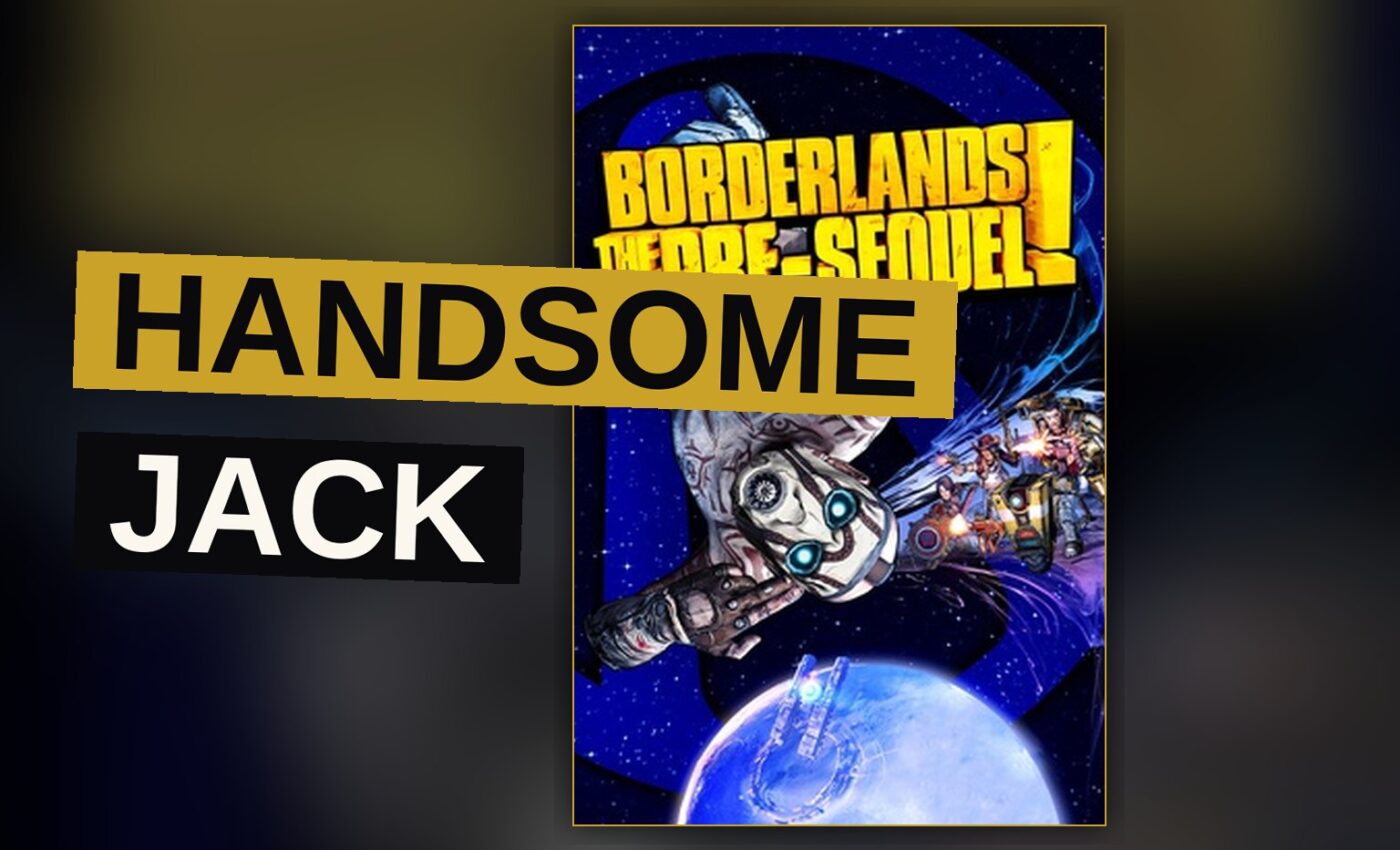
Borderlands: The Pre-Sequel lands on PS3, PS4, Linux and Android as a strange middle chapter for Gearbox’s shooter-looter series. It takes place between the events of Borderlands and Borderlands 2, and it wants to be a new story while also serving as a bridge. That split ambition shows in almost everything it does.
Trailer, via IGDBcom.
The Setting
The game drops players on Pandora’s moon, Promethea, a cold, dusty wasteland that feels far removed from the desert heat of the main series. The moon is run by the Crimson Raiders, led by Handsome Jack before he becomes the villain everyone knows. The setting is a clever trick — it lets Gearbox lean into Jack’s early days without repeating the same dusty vistas that defined the earlier games.
The world itself is smaller than Borderlands 2‘s Sanctuary or Borderlands 3‘s New Eden. There are fewer open areas, and the verticality is limited compared to later entries. Instead, the game leans on tight corridors and vertical fights, which changes the feel of combat.
Combat and Class Changes
Combat is the heart of Borderlands, and The Pre-Sequel makes a bold move: it adds a new class, the Commando, and overhauls the existing Vault Hunters. The Commando plays like a tankier version of the original Soldier, with a melee focus and a turret ability. The other classes get new skills and a fresh set of gear.
The changes mostly work. The Commando fills a niche the game didn’t have before, and the respec system means players can change their build mid-game without starting over. The skill trees are dense enough to reward exploration, though some abilities feel underpowered compared to what came before.
The gun variety is still the star. The game introduces new weapon types, and the loot drops remain unpredictable. Finding a rare sniper rifle or a unique shotgun still feels like a small victory.
Story and Voice Work
The story follows Jack’s rise through the ranks of the Crimson Raiders. It’s a quieter narrative than the bombastic arcs of the mainline games, but it has a strong cast. Troy Baker voices Jack, and his performance carries scenes that would otherwise feel thin.
The game also introduces a young Roland, voiced by Nolan North, who serves as a foil to Jack’s ambition. Their scenes together are the best the game offers, giving the story a human core even when the action gets loud.
The writing isn’t perfect. Some lines land flat, and the pacing dips in the middle act. But the central relationship between Jack and Roland holds the whole thing together.
Performance Across Platforms
| Platform | Performance |
|---|---|
| PS3 | Steady, but dated visuals |
| PS4 | Smooth, improved graphics |
| Linux | Stable, solid performance |
| Android | Limited frame rate, touch controls |
The PS4 version runs the best. It handles the game’s dense combat without trouble, and the visual improvements are noticeable. The PS3 version is playable but shows its age, especially in busy fights.
The Linux version performs well, though it lacks the polish of the console releases. The Android port exists but is a scaled-back experience, best suited for quick sessions rather than full playthroughs.
Missions and Side Content
The main campaign is shorter than Borderlands 2. It moves quickly through Jack’s ascent, hitting its beats without lingering. The side content, however, is where the game shines. There are plenty of optional missions, hidden chests and secret areas to find.
The best side content is the arena-style arenas scattered across the moon. These arenas offer waves of enemies and a boss fight at the end, rewarding players who want a harder challenge. They’re a nice addition to the usual grind.
Comparing the Classes
| Class | Role | Strength | Weakness |
|---|---|---|---|
| Commando | Tank | Melee focus, turret ability | Low ranged damage |
| Soldier | Damage Dealer | High fire rate | Less mobility |
| Hunter | Support | Shields and healing | Fragile |
| Siren | Mixed | Teleport, shock damage | Limited direct damage |
Each class plays distinctly enough that players won’t feel like they’re playing the same character twice. The Commando’s melee focus is a departure from the standard Vault Hunter builds, and it gives players a reason to try a new approach.
What Works, What Doesn’t
The game succeeds when it commits to its setting and characters. The moon’s harsh environment and the political drama between Jack and Roland give the story a weight that the shooting alone couldn’t carry. The combat is fast and satisfying, and the loot loop remains addictive.
It stumbles when it tries to be too much at once. The smaller scope means there’s less room for the kind of sprawling exploration that made Borderlands 2 memorable. Some missions feel rushed, and the pacing suffers for it.
The Android port is a mixed bag. It’s a convenient way to play, but it doesn’t offer the same depth as the console versions. Players looking for a full experience should stick with PS4 or Linux.
Borderlands: The Pre-Sequel is a competent, occasionally brilliant entry in a series known for its chaos. It doesn’t reinvent the wheel, but it doesn’t need to. Its strengths — the story, the combat, the loot — are enough to justify a return trip to Pandora’s moon.