
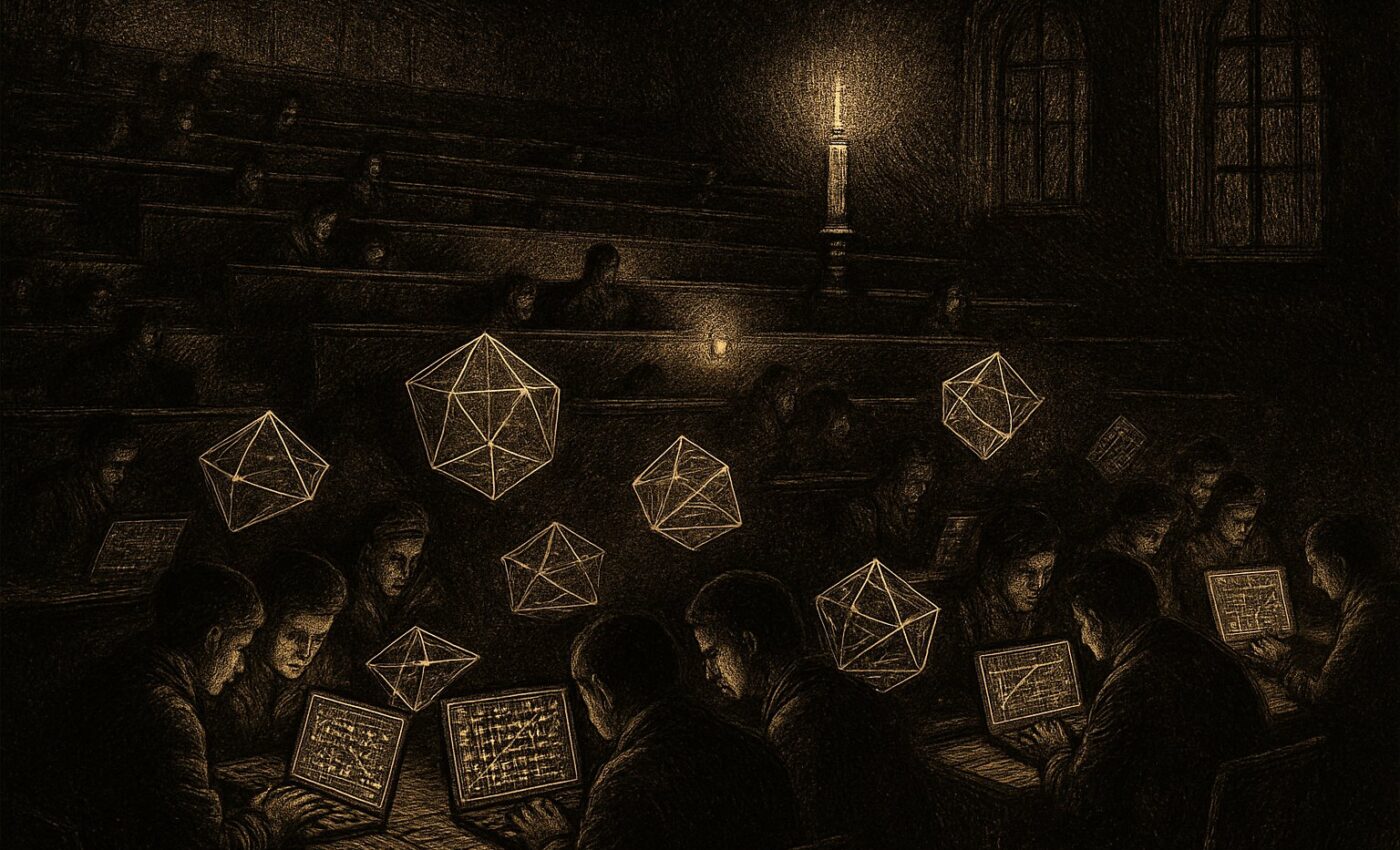
A hackathon built around advanced mathematics is coming to Caltech this fall. The event, called Caltech Mathathon – first hackathon ever devoted to research level mathematics, will bring a hundred teams together to work on open problems in pure mathematics using the newest AI systems.
The California Institute of Technology will host the gathering from October 30th to November 1st. Teams will be given the newest AI systems and 40 hours to solve open conjectures and build new theories. More than $2 million in AI credits will be offered to those taking part.
New Ground in Mathematics
The event points to a run of recent AI results in pure mathematics as its reason for being. On May 20, 2026, an old conjecture about points set apart on a level surface, each kept the same distance from its neighbors, was disproved, closing a question that had stood open for 80 years.
On August 1, 2026, researchers said they built the first working example of a kind of group that had never before been built, closing a question that had stood open for 27 years. On August 23, 2026, a paper claimed a sphere of the sixth order could carry a particular form long wanted by researchers, a question open for 78 years — though the finding has not yet been checked by others in the field.
| Result | Years Open | Confirmed by others |
|---|---|---|
| Points set apart on a level surface, disproved | 80 years | Not stated by the source |
| First working example of a rare kind of group | 27 years | Not stated by the source |
| Sphere of the sixth order shown to carry a wanted form | 78 years | Not yet |
That pace is the point.
What Teams Will Do
The event asks two questions. First, how much can AI make faster the path from an idea to a published, checked result? Second, what part does a researcher play once AI can solve conjectures faster than people can?
Teams will not just turn in answers. They will defend their results before leading researchers, who will judge how well each team understands what it built or solved. Prizes will come in two rounds: one at the event itself, for the most promising and clearly explained results, and a second round later, once the wider community of researchers has had time to check the work.
Quick Facts
- Dates: October 30th to November 1st
- Place: California Institute of Technology
- Teams taking part: a hundred
- Time limit: 40 hours
- AI credits offered: more than $2 million
- Prize rounds: two — one at the event, one afterward
Whether the format changes how mathematics research gets done, or simply tests how far current AI systems can go under time pressure, may not be clear until the second round of prizes is decided.
Source: mathathonchallenge.com