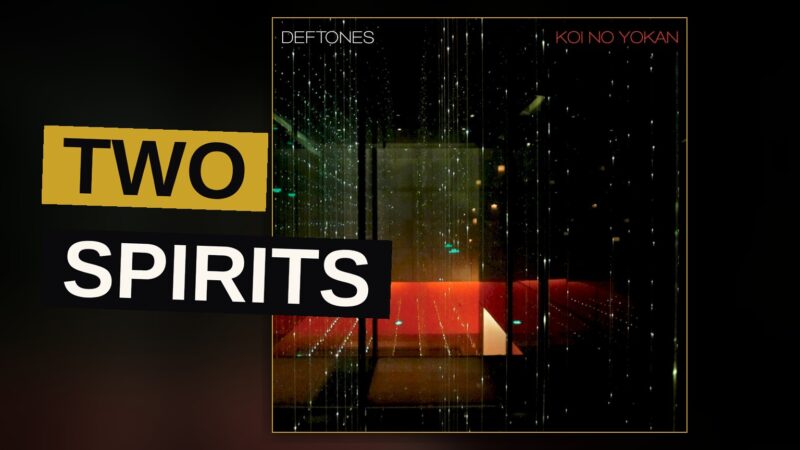
Deftones have spent three decades refusing to sit still. On their ninth album, Ohms, they finally sound like a band that has stopped looking over its own shoulder. The record is a deliberate collision of their two most distinct eras: the lurching, metallic aggression of their late-90s breakout and the hazy, melodic experimentation that defined their later work. It is heavy, but not in the way that simply means loud. It is heavy in the way that means something is being worked through.
The band reunited with the producer who helmed their classic records Around the Fur and White Pony. That pairing alone signals intent. The result is an album that strips away the digital gloss of recent efforts and finds the band digging their hands back into the dirt. The guitars drive the record with riffs that feel tectonic, while the vocals float above the wreckage, alternating between serrated screams and aching melody. It is a record about tension, release, and the space between the two.
Genesis Opens the Assault
The album opens with “Genesis,” a track that does not ease the listener in so much as drop them into the deep end. It builds from a tense, coiled riff into a chorus that hits with the force of a wave breaking. The vocal shifts from a whisper to a roar without warning, and the rhythm section locks in with a precision that gives the chaos a spine. It is a mission statement: this is a band that knows exactly what it is doing.
“Ceremony” follows and leans harder into the melodic side of the band’s personality. The track is built on a shimmering guitar line that could have come from their later records, but it is anchored by a chorus that lands with real weight. It is one of the most immediate songs here, the kind of track that rewards repeat listens without ever feeling like it is trying too hard to be a single.
“Urantia” keeps the momentum moving. It is a mid-tempo cut that lets the band stretch out, with the riffs locking into a groove that feels almost hypnotic. The lyrics are elliptical, but the emotion lands regardless. The song does not break new ground, but it does not need to. It is a reminder that Deftones can make a straightforward heavy song feel like something more.
Error and the Middle Stretch
“Error” is where the album starts to show its full range. The track opens with a clean, almost delicate guitar line before the band kicks in with a wall of noise. It is a study in contrast, moving between moments of quiet introspection and bursts of violence. The production gives the song room to breathe, letting each element sit in its own space without muddying the mix. It is one of the strongest tracks here, a perfect example of the band’s ability to make aggression feel cinematic.
“The Spell of Mathematics” is the longest track on the record, and it earns its running time. It starts with a slow, brooding build before erupting into a chorus that is as close to anthemic as this band gets. The song shifts through several distinct movements, each one building on the last. It is a track that rewards patience, and it stands as one of the most ambitious pieces the band has written in years.
“Pompeji” is a curveball. It is the most atmospheric track on the record, leaning heavily on texture and mood rather than brute force. The vocals are pushed to the front of the mix, and the result is a song that feels almost like a dream sequence in the middle of a nightmare. It may not hit as hard as the tracks around it, but it provides a necessary shift in pace. The album would feel relentless without it, and the breather makes the heavier moments land with more force.
This Link Is Dead and the Back Half
“This Link Is Dead” snaps the album back into focus. It is the most straightforwardly aggressive track here, with the riffs hitting like a sledgehammer. The song does not waste time on preamble; it gets in, delivers its payload, and gets out. It is a reminder that, for all their experimentation, Deftones can still out-muscle almost anyone in their lane.
“Radiant City” is the hidden gem of the back half. It is a sleek, propulsive track that finds the band operating at full efficiency. The chorus is immediate, the groove is infectious, and the song feels like it could go on for another five minutes without overstaying its welcome. It is the kind of track that makes you want to hit repeat before it has even finished.
“Headless” closes out the main body of the album with a slow, sludgy crawl. It is the heaviest song here in terms of pure weight, with a riff that feels like it is being dragged through mud. The vocal performance is a standout, moving from a desperate croon to a full-throated scream with unsettling ease. It is a dark, claustrophobic track that leaves the listener feeling appropriately drained.
Ohms Closes the Record
The album closes with its title track, “Ohms.” It is a fitting end to the record, pulling together the threads of everything that came before it. The song is built on a massive, cyclical riff that feels both ancient and immediate. The chorus is one of the most memorable moments on the album, a hook that burrows into the brain and refuses to leave. It is a statement of purpose, a final declaration that this band is still capable of surprising people.
The title track also serves as a thesis for the album as a whole. It is heavy, but it is not just heavy for the sake of being heavy. There is a purpose behind every note, a sense that the band is working through something real. The song ends not with a bang, but with a slow fade, as if the band is letting the listener down gently after putting them through the wringer.
The Critical Response
Ohms is a return to form, but that undersells it. It is not a nostalgia trip or a rehash of past glories. It is a band taking the lessons of their entire career and applying them to a single, focused statement. The album is lean, with no filler and no wasted motion. Every track earns its place, and the running order is carefully constructed to keep the listener engaged from start to finish.
The production is a major part of why the record works. The band has a live, immediate sound that has been missing from their recent work. The drums crack, the guitars have weight, and the vocals sit perfectly in the mix. It is a record that sounds like a band playing together in a room, not a collection of parts assembled in a studio.
The critical response has been overwhelmingly positive. The album holds a Metacritic score of 87/100, which the aggregator classifies as universal acclaim. Critics broadly praised Ohms as a focused, powerful return to form that blends Deftones’ heavier early sound with the melodic experimentation of their later career. The album’s total running time is 46 minutes. It is a record that rewards attention, revealing new details with each listen.
The album’s track listing runs in the following order:
| # | Track |
|---|---|
| 1 | Genesis |
| 2 | Ceremony |
| 3 | Urantia |
| 4 | Error |
| 5 | The Spell of Mathematics |
| 6 | Pompeji |
| 7 | This Link Is Dead |
| 8 | Radiant City |
| 9 | Headless |
| 10 | Ohms |
- “Genesis” sets the tone with a coiled, explosive opener
- “Ceremony” delivers the most immediate hook on the record
- “The Spell of Mathematics” is the most ambitious track here
- “Radiant City” is a hidden gem in the back half
- “Ohms” closes the album with a statement of purpose
Deftones have made a career out of defying expectations. Ohms is another chapter in that story, a record that looks both backward and forward without ever feeling stuck in either direction. It is abrasive, destructive, and alluringly beautiful, often within the same song. There is a profound purpose and longing behind every punch the band throws, and that is what elevates this record above mere heaviness.
It is a masterclass in grandiose ferocity, an album that harks back to the urgency of the band’s early days while still sounding like a group that has grown and evolved. It is crushingly heavy at times, but there is a cerebral knottiness to the arrangements that rewards close listening.
This is a band at the height of its powers, making music that matters.
Get the Notebook.
The day's best stories and every fresh verdict, in plain English, in your inbox by seven. One email a day, no more.
- Genesis5:17
- Ceremony3:27
- Urantia4:30
- Error4:50
- The Spell of Mathematics5:27
- Pompeji5:25
- This Link Is Dead4:37
- Radiant City3:35
- Headless4:59
- Ohms4:10