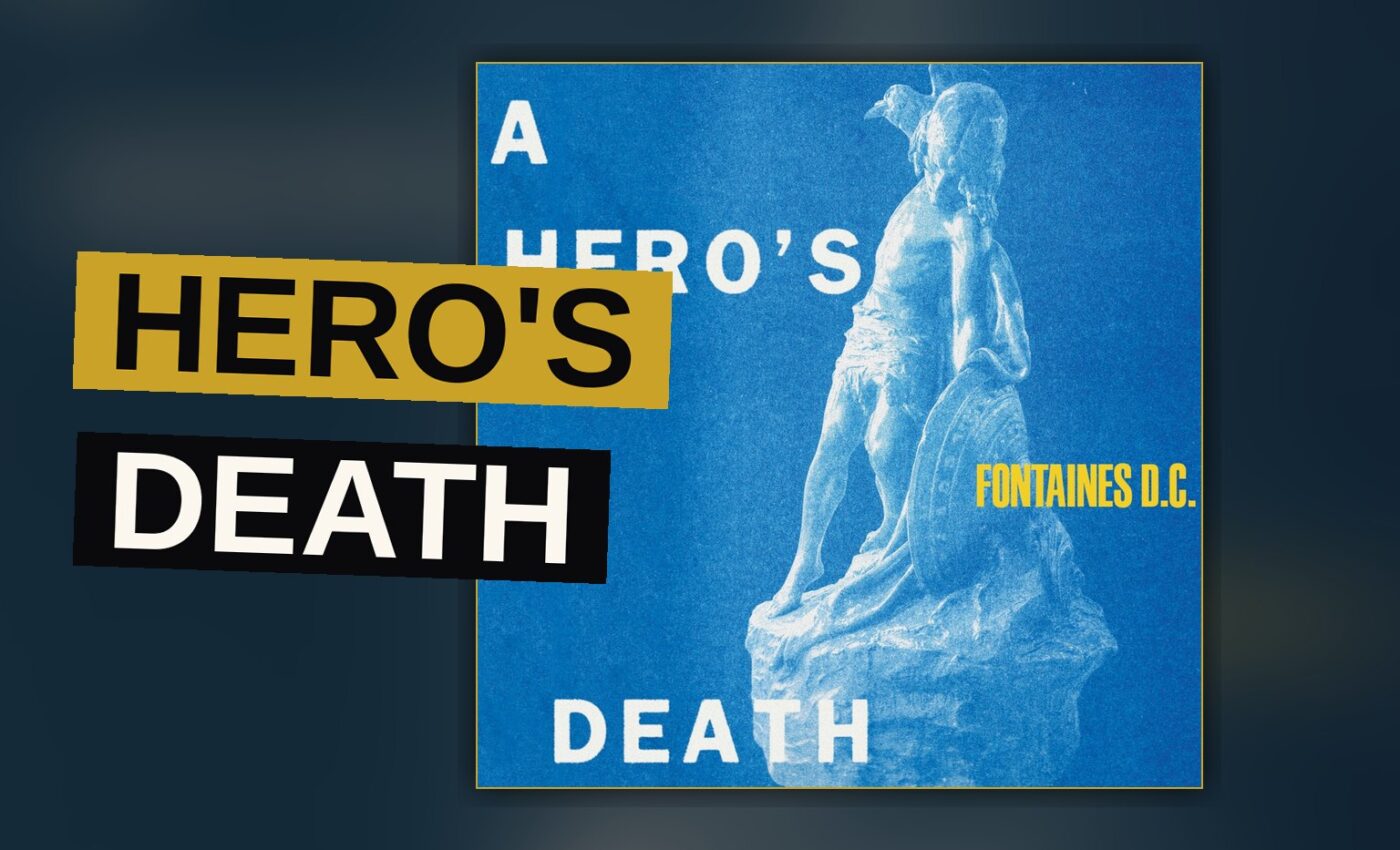
Fontaines D.C. are not interested in making things easy. On their second album, A Hero’s Death, the Dublin five-piece have traded the straight-ahead punk snap of their debut for something murkier, slower, and far more complicated. This is a record about feeling out of place, about the grind of touring, about love as a burden and a lifeline. It is also, quite deliberately, a difficult record. The band have said they wanted to challenge themselves and their audience, and they have.
The result is a triumph. A Hero’s Death is a confident, restless album that rewards patience. It does not hit you in the face; it settles into your chest. Across 46 minutes and 11 tracks, the band stretch their sound into new shapes — brooding post-punk, motorik chug, even something approaching balladry — while keeping the sharp, literate songwriting that made them one of the most vital young bands in Europe. This is not a record that screams for attention. It earns it.
Opening with a statement
“I Don’t Belong” announces the record’s central tension immediately. Over a lurching, hypnotic bassline, the vocalist delivers a mantra that feels both defiant and exhausted. It is a statement of independence that reads as loneliness. The song builds slowly, layering guitars and a driving rhythm until it erupts into a chorus that is less a singalong than a declaration of war on comfort.
It is a bold way to start. Most bands would lead with their most immediate hook. Fontaines D.C. lead with their thesis.
The emotional core
“Love Is the Main Thing” follows, and it is the album’s emotional core disguised as a pop song. The title sounds simple, but the track is anything but. The vocal is strained, almost desperate, as the singer wrestles with the idea that love — romantic, familial, artistic — is the only thing that matters, and the only thing that hurts. The production is dense, with a shoegaze-tinged haze that swallows the melody before letting it surface again.
The nervy middle
“Televised Mind” picks up the pace with a taut, nervy riff that recalls the band’s earlier work, but the mood is darker. This is a song about media saturation, about the numbing effect of constant information. The delivery is clipped and sardonic, spitting lines about being glued to the screen with a sneer that suggests the singer is not exempt from the criticism. It is one of the most directly angry moments on the record.
“A Lucid Dream” shifts gears again, offering a moment of relative calm. The track is built on a gentle, circling guitar line and a vocal that is more melodic than anything the band have attempted before. It feels like a sigh after the tension of the first three songs. “You Said” follows, and it is the album’s most straightforwardly romantic moment — or as romantic as Fontaines D.C. get. The lyrics are tender but wary, recounting a conversation that carries more weight than either speaker admits. The track builds to a cathartic, wordless chorus that feels like a release.
“Oh Such a Spring” is a curveball. It is the shortest track on the album, and it leans into a folk-tinged simplicity that the band have never shown before. It is a quiet, almost pastoral interlude, with the voice pushed to the front over sparse acoustic guitar. It works because it is unexpected. Just when the record feels like it is settling into a groove, Fontaines D.C. pull the rug out.
The centerpiece
“A Hero’s Death” is the record’s centerpiece. It is also its most controversial moment. Over a slow, almost funereal beat, the vocalist delivers a spoken-word mantra that has become the album’s calling card. It is a line that could read as hollow optimism, but in context it feels hard-won. The song is built on repetition, with the band locking into a hypnotic groove that never quite resolves. It is not a single. It is not meant to be. It is a statement of intent, and it is the sound of a band refusing to give their audience what they expect.
“Living in America” is the most overtly political track here, and one of the most powerful. The title is a nod to the American dream, but the song is a critique of it. Over a driving, tense rhythm, the singer paints a picture of a country that promises everything and delivers nothing. The chorus is delivered with a mix of awe and disgust that captures the album’s ambivalence toward success and ambition. It is also one of the most immediate tracks on the record, with a hook that sticks after a single listen.
“I Was Not Born” continues the theme of displacement. The track is slower, more atmospheric, with a vocal that feels detached and weary. The singer describes not being born for the life he is living, a line that speaks to the alienation of touring and the strange, rootless existence of a working band. It is a quiet, unsettling song, and it is all the more effective for it.
Sunny and No
“Sunny” is the album’s most deceptively cheerful moment. The title suggests warmth, and the track does have a brighter, more open sound than much of the record. But the lyrics are anything but sunny. The delivery is sardonic, almost mocking, as the singer addresses the pressure to be positive in the face of despair. It is a clever, slippery song that refuses to sit still.
The album closes with “No,” a slow, brooding dirge, with the word “no” repeated like a mantra. The track builds gradually, adding layers of guitar and percussion until it reaches a climax that feels both cathartic and unresolved. It is a bold way to end an album — no big finale, no triumphant resolution, just a stubborn refusal to give in. It is the sound of a band drawing a line in the sand.
The verdict
A Hero’s Death is not an easy album. It is slow, it is moody, and it demands attention. But it is also a record of real power and ambition. Fontaines D.C. have made a second album that does not repeat the formula of their debut, and that takes real courage. The songs are stronger for it. The band have emerged as frontrunners among their peers, and this record is the proof.
The production is dense and atmospheric, with the band’s signature guitar interplay pushed to the fore. The vocals are nasal and distinctive, and they are used to full effect here — sometimes sneering, sometimes tender, always compelling. The lyrics are sharp and literate, full of memorable phrases that stick in the mind long after the record ends.
The album is not without its weaker moments. The middle stretch, between “A Lucid Dream” and “You Said,” can feel like it is treading water, and some listeners will find the slower pace monotonous. But these are minor quibbles. The record’s ambition is its strength, and its willingness to take risks pays off.
The record’s mood shifts from insouciant nihilism to full-blown rage to radical empathy, and it never feels forced. Memorable tunes and unforgettable phrases erupt like brush fire over its 46 minutes. This is a record that stares life in the face. It is heady, funny, and fearless.
- “I Don’t Belong” — a thesis statement that sets the tone.
- “Love Is the Main Thing” — the emotional core.
- “Televised Mind” — the angriest moment.
- “A Lucid Dream” — a welcome breather.
- “You Said” — the most romantic track.
- “Oh Such a Spring” — a curveball that works.
- “A Hero’s Death” — the centerpiece.
- “Living in America” — the most political track.
- “I Was Not Born” — quiet and unsettling.
- “Sunny” — deceptively cheerful.
- “No” — a stubborn, ambitious closer.
A Hero’s Death is a resounding victory. It is a difficult record, but a powerful one. Fontaines D.C. have delivered a second album that confirms their place at the front of the pack. It is not always easy to listen to, but it is always worth it. 9/10.
- I Don’t Belong4:31
- Love Is the Main Thing3:54
- Televised Mind4:10
- A Lucid Dream3:54
- You Said4:37
- Oh Such a Spring2:33
- A Hero’s Death4:18
- Living in America4:57
- I Was Not Born3:49
- Sunny4:53
- No5:09