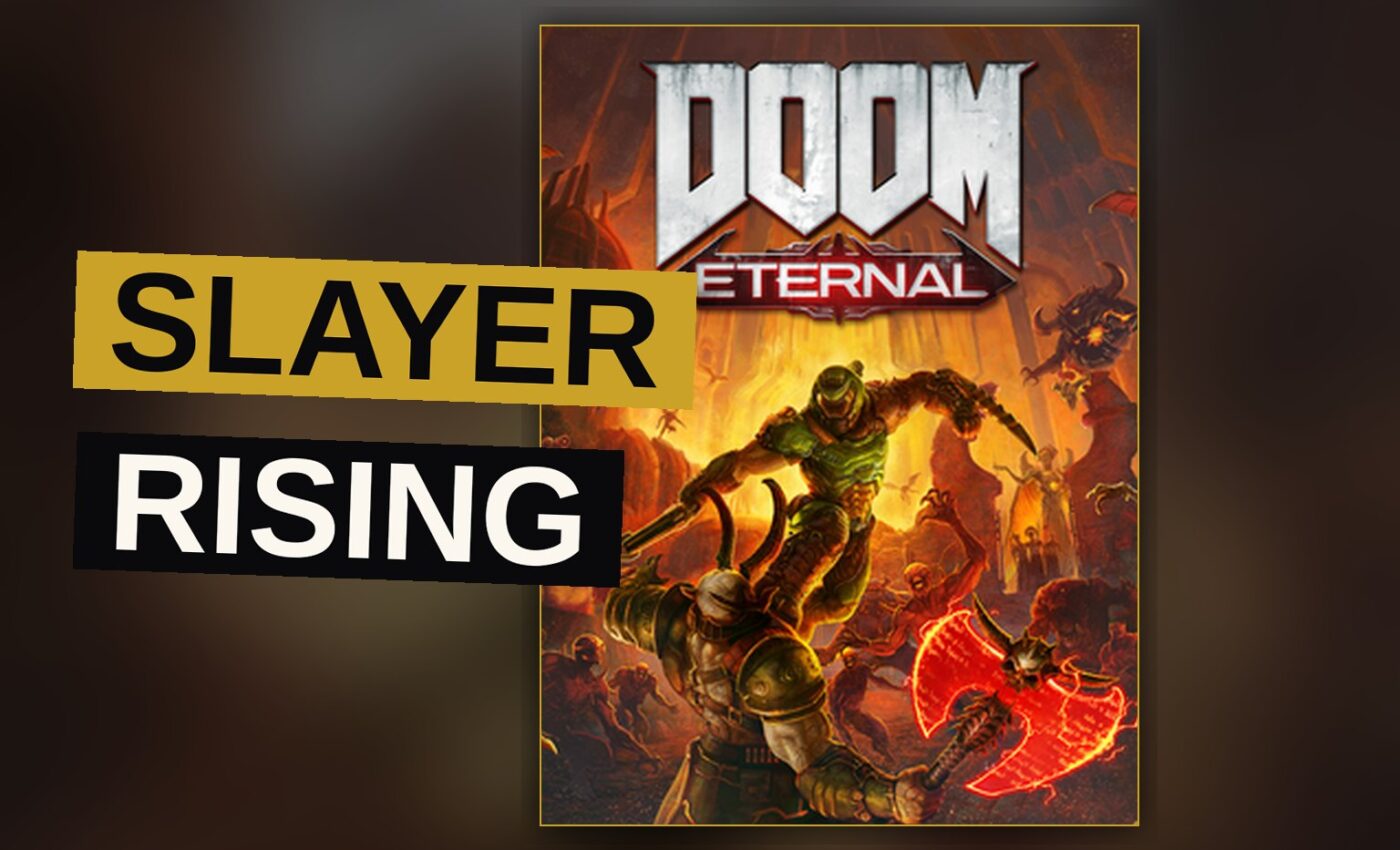
Doom Eternal arrived on PC, PS4, Xbox One and Switch in 2020, and it turns the reboot’s brutal rhythm into something closer to a puzzle than a shooter. Id Software has built a game where staying alive depends on constant movement, and standing still gets the Slayer killed fast.
Trailer, via ベセスダ・ソフトワークス.
The Resource Loop
The core idea is simple to state and hard to master. The saw produces shells, glory kills produce health, and the flame belt produces a guard buff. Combat becomes a spinning plate act where the player balances three resources at once, switching weapons and tools on the fly rather than settling into one gun.
That loop rewards boldness over caution. Retreating to a corner to fire slowly at demons no longer works, because shells run dry and health never returns on its own.
The Slayer’s Weapons
The weapon and mod variety gives every encounter multiple solutions. Some of the standout tools:
- The Super Shotgun’s meat hook, which pulls the Slayer straight into a target
- The Ballista weapon’s long-range mode, built for picking off tough enemies
- The saw, which turns any weak enemy into a shell drop
- The Crucible blade, saved for the toughest fights
- The Slayer’s dash, used to avoid incoming fire and close distance at once
Mastering all of them is close to necessary by the middle of the game, since higher difficulties throw enemy combinations that punish a player who leans on one weapon.
The Platforming Sections and Slayer Gates
Between fights, Doom Eternal slows down for platforming stretches that ask for precise jumps, dashes and wall climbs. These sections split opinion. They break up the combat pace, but they also stop the momentum the shooting builds so carefully.
The level design supports both parts of the game well enough, even if the platforming never reaches the polish of the combat arenas. Extra fights called Slayer Gates offer some of the hardest challenges in the game, gating extra collectibles behind combat that demands full command of the resource loop. They are not required to finish the campaign.
Here is a rough sense of how the campaign’s structure grows across a typical playthrough:
| Stage | Focus | Difficulty Curve |
|---|---|---|
| Early campaign | Weapon introductions | Gentle |
| Mid campaign | Combat arenas open up | Rising sharply |
| Slayer Gates | Master challenges | Peak |
| Late campaign | Story and boss fights | Sustained high |
| Extra Life mode | Post-campaign replay | Highest |
The table reflects the general shape of the difficulty, not a fixed count of levels, since the campaign mixes story missions with side content throughout.
Performance and Story
PC, PS4 and Xbox One versions run smoothly during even the busiest fights, holding up under screens packed with demons and incoming fire. The Switch version, built by Panic Button, trims visual detail to keep the frame rate steady, and it holds its own as a handheld version of a fast, demanding shooter.
The story leans further into lore than the 2016 game did, adding ancient guardian forces, hell priests and a wider mythology around the Slayer. Some players will welcome the expanded world-building. Others may find it gets in the way of the pure demon-killing the series is known for. The tone stays confident throughout, never apologizing for the over-the-top violence or the metal soundtrack driving each fight.
Where It Falls Short
The platforming sections, while functional, occasionally run too long, breaking up combat stretches that are clearly the stronger half of the design.
Some fights during the back half of the campaign also lean hard on enemy numbers, which can feel like difficulty through wearing the player down rather than smarter design. None of that weakens the strength of the combat system itself.
Doom Eternal succeeds because its central idea is bold and fully committed to. The resource loop forces constant decision-making, the weapon roster gives real choice in how to solve encounters, and the difficulty curve keeps testing that mastery all the way through the Slayer Gates and into Extra Life mode. Across PC, PS4, Xbox One and Switch, Doom Eternal delivers on the promise the 2016 reboot made, and pushes the formula somewhere sharper and more demanding.
Get the Notebook.
The day's best stories and every fresh verdict, in plain English, in your inbox by seven. One email a day, no more.