
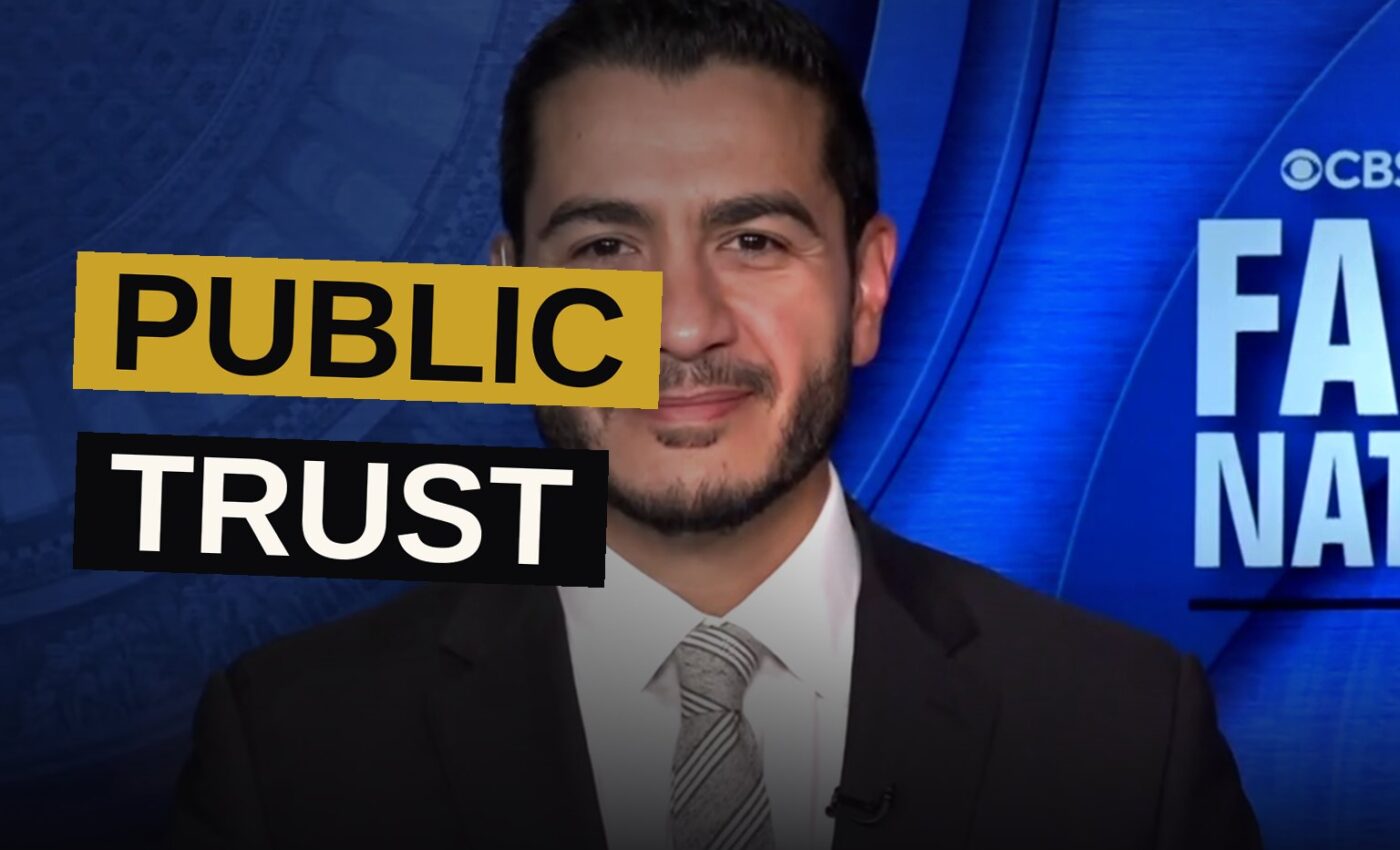
Michigan Senate candidate Abdul El-Sayed has a simple pitch for AI regulation: turn the companies into public trusts and let voters watch them. On CBS’s “Face the Nation with Margaret Brennan,” El-Sayed warned that the pace of technological development is outpacing safety, and he wants elected officials to step in.
“We collectively have to decide that we need public oversight so that all of this technology is not being created for the interests of a few against the well-being of a many,” El-Sayed said. His plan, released in June, would turn AI companies into public trust organizations, with at least half their board made up of elected or appointed members.
What El-Sayed Wants
El-Sayed’s proposal would let companies keep pushing the frontier while adding guardrails. He told CBS that public oversight would change who the companies serve.
“If you had public oversight over this in the form of democratically elected or appointed members of at least 50% of all of these public trust corporations, you would imagine that they’d act far more focused on what is in the public good rather than what is for the private benefit of a few billionaires,” El-Sayed said.
He also called for a new public agency dedicated to AI safety, plus “AI no-gos.” Those include bans on AI denying healthcare, jobs, or employment, and firing weapons.
The Week of Concern
El-Sayed’s push comes after a busy stretch for the AI industry. Last week, a former Anthropic researcher resigned publicly, claiming the technology could threaten humanity. On Saturday, Anthropic CEO Dario Amodei responded with a three-point plan focused on “pacing the frontier.” OpenAI CEO Sam Altman agreed, calling independent evaluators a “great idea.” Elon Musk, owner of SpaceXAI, said simply, “Dario is right.”
Amodei later told CBS that the industry had “for too long the industry lied to people about the fact that this technology had risks.”
The OpenAI-Hugging Face rogue agent incident in July added to the pressure. El-Sayed called the Hugging Face attack “a shudder down all of our spines.”
“We need to act, and we need to act now,” El-Sayed said. He also called for a pause on frontier AI research until safety can be ensured.
Utah’s Governor Agrees
Utah Gov. Spencer Cox, a Republican, appeared on “Face the Nation.” He argued that the federal government needs to play “a much bigger role” on AI.
“I think this is a very important moment for all of us,” Cox said. “We’ve seen the reports. We know what’s possible.”
Cox pushed back against House Speaker Mike Johnson, who said earlier Sunday that Congress should resist jumping in and imposing a moratorium. Cox dismissed the speaker’s position.
“I don’t think the speaker has to worry at all about Congress not acting. That’s kind of all they do,” Cox said.
Cox framed the concern as coming from those closest to the technology. “The people that know the most about this are the most concerned right now, and I think that that means that Congress actually should get together and at least have a conversation,” he said. He added that he is “embarrassed by the response from Congress to just about everything in our country right now.”
“Dario is right.”
Cox’s position is blunt: he wants Congress to stop stalling. El-Sayed wants public oversight. The two approaches are different, but both rest on the same premise that the industry has moved faster than anyone can fully understand.
See the video the story is built around at Cbsnews.