
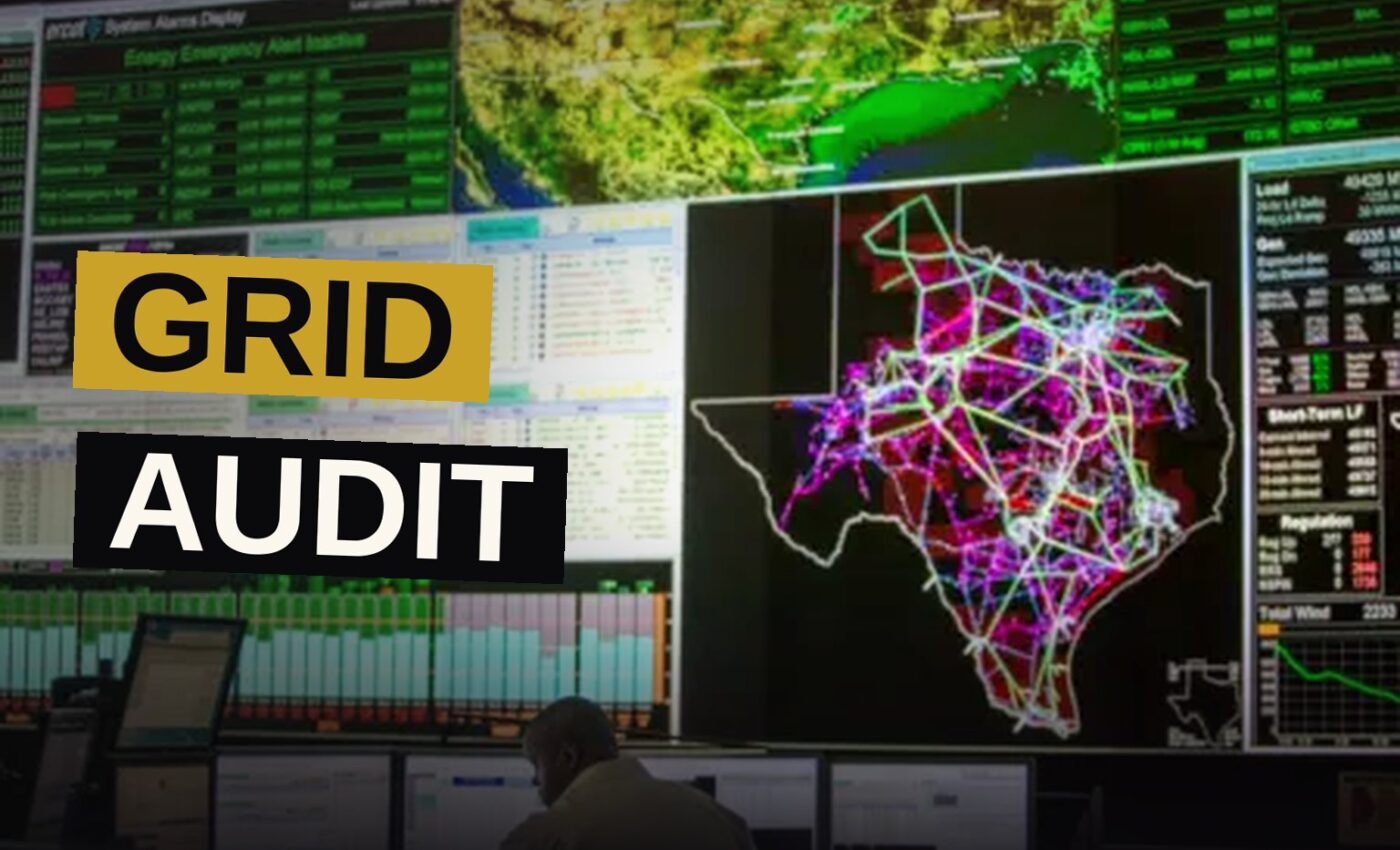
Gov. Greg Abbott wants to know exactly what Texas’ data centers are consuming, and he’s ordering the state’s power managers to find out. The Electric Reliability Council of Texas, or ERCOT, plans to survey more than 400 data centers’ water and energy use next week as part of an audit ordered by Abbott. The move pauses power grid connections for some large data centers until the audit is complete, putting the state’s biggest tech tenants under a microscope that has never looked this closely.
The survey covers 461 data centers across the state, split between large and medium operations. Large data centers are projects requesting at least 75 megawatts of power from the Texas grid — enough to run 18,750 Texas homes during a hot summer day or cold winter night. Medium data centers request between 25 and 75 megawatts. ERCOT says data centers have until mid-October to answer roughly 130 questions covering financial assistance, power self-sufficiency, water and cooling, community impact, and ownership.
Chad Seely, a senior vice president with ERCOT, told the Public Utility Commission of Texas on Friday that the agency will work with a consultant to present its findings to the governor, the commission, and lawmakers. He also promised a public “report card” on any deficiencies in company responses.
“We’ll also be able to have essentially a report card where we think that there are deficiencies in responses and be able to make that public as well,” he said.
Survey Scope at a Glance
The survey’s reach is notable. Roughly 461 data centers are involved, split between large and medium operations. The questions cover everything from how much water a facility uses to whether it can run on its own power during a crisis. Companies get to keep their answers private, but the aggregate picture will be public.
Seely described the dashboard approach as a way to track progress in real time. Data centers will have until Sept. 23 to respond to verification questions, though they may request extensions.
| Survey Type | Count | Power Request |
|---|---|---|
| Large data centers | 247 | ≥ 75 megawatts |
| Medium data centers | 214 | 25–75 megawatts |
| Total surveyed | 461 | — |
The Two Parts of the Audit
The audit has two parts. First, ERCOT must verify that Batch Zero projects are actually ready to build. That means asking for leases, property deeds, and permits. Second, the agency runs an interconnection study to determine how much electricity each large data center can actually receive.
Abbott’s order has paused power grid connections for some large data centers until the audit is complete. That pause matters for companies that need to start building before they can tie into the grid.
Batch Zero Preliminary Numbers
On Friday, ERCOT also gave preliminary estimates for Batch Zero, a group of data centers and other large energy consumers being evaluated for grid connection. The agency said 362 large energy consumers had been approved for inclusion in the Batch Zero study, representing requests for 191.8 gigawatts of power — roughly double the amount of energy used to power the entire state during record-breaking demand.
According to the agency, 373 projects were excluded from Batch Zero. Those projects were requesting more than 300 gigawatts of electricity from the grid.
Seely warned that the number of projects included in Batch Zero is subject to change.
“We are going through dispute processes,” he said. “These numbers will change.”
Verification Timeline
ERCOT is already planning to take this step as part of an “interconnection study” to determine how much electricity each large data center project could actually receive. Now the verification process has to come first. The agency has sent requests for information to 231 large energy consumers included in Batch Zero as part of the “verification” process.
Data centers will have until Sept. 23 to respond to these questions, though they may request an extension. ERCOT will create dashboards that track how many data centers have responded to its community impact survey and verification review. The agency will also release blank templates of the surveys on its website.
“We’ll be able to come back throughout the coming months and give you all kind of a real-time update on the progress of both these work streams and identify any issues,” Seely told the commission Friday.
What Comes After September
The state’s power grid managers plan to present the final results of the audit in December. That timeline gives companies several months to answer questions and address any deficiencies.
The public report card on deficiencies is the clearest sign yet that this audit is serious. A company whose answers fall short could see its deficiency made public, and that could affect future negotiations with the state.
Why This Matters
This is a big deal for an industry that underpins modern business. Data centers run the servers behind everything from online shopping to cloud storage to financial transactions. They use enormous amounts of power and water, and they often sit in regions that already struggle to meet peak demand.
The survey’s scope — over 461 data centers, 130 questions, a public report card on deficiencies — carries real weight. The pause on grid connections adds urgency. A company that needs to start building before it can connect to the grid now faces a waiting period while ERCOT verifies its paperwork.
The verification process itself is a practical hurdle. Asking for leases, property deeds, and permits is standard, but doing it for hundreds of projects at once is a logistical challenge. Seely’s warning that the numbers will change suggests the final Batch Zero list may look quite different from the initial estimate.
The Coming Months
The coming months will show whether the audit produces meaningful changes or simply generates paperwork. The December presentation will be the moment of truth.
The dashboards tracking survey responses and verification progress will offer early signs of how companies are handling the workload. A steady stream of completed surveys suggests cooperation; a slow trickle might suggest pushback.
The public report card on deficiencies will be the most visible outcome. Any company named in that report will face public exposure of its shortcomings.
Final Word
Abbott’s audit is a response to a growing problem. Data centers are increasingly central to the Texas economy, and their appetite for power is not going away. The state needs to understand what it is getting into before it connects another megawatt.
The survey is a reasonable first step. Asking data centers to account for their water, power, and community impact is fair. Requiring verification before connecting to the grid is sensible. Making the report card public is aggressive.
The December presentation will answer the question. Until then, companies are busy answering questions, and the state is busy watching them answer them.
This is a story about power, water, and transparency. It is also a story about the state’s relationship with an industry that has become essential to its economy. The survey is the tool, and the audit is the test. The results will shape how Texas treats its data centers for years to come.
Get the Notebook.
The day's best stories and every fresh verdict, in plain English, in your inbox by seven. One email a day, no more.