
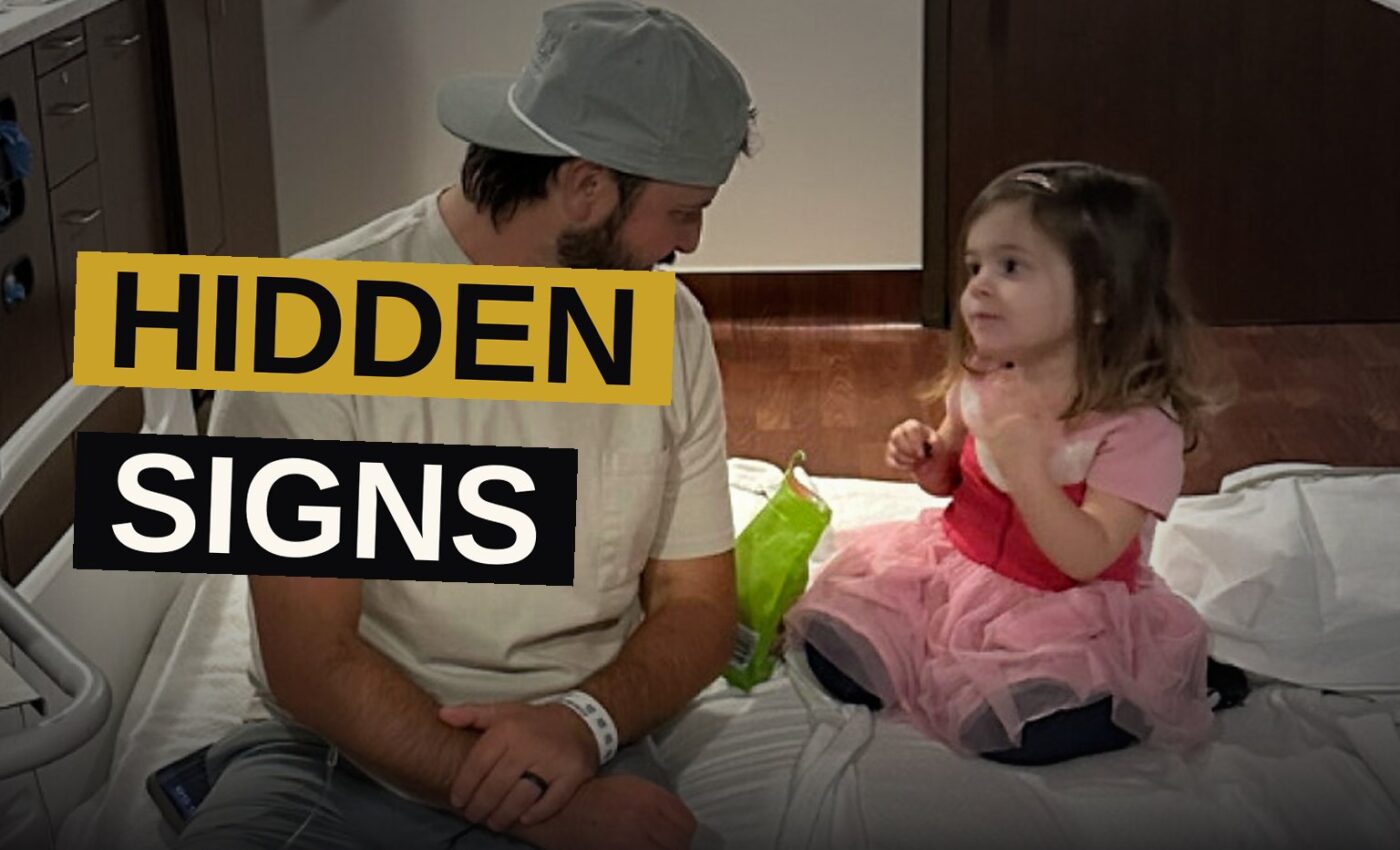
Reese Willard, a 40-year-old father from Dallas, Texas, started noticing something strange in late 2025. Extreme fatigue set in, followed by trouble falling asleep. At first, he and his wife, Sarah, did not think much of it. Weeks passed, and more symptoms followed: night sweats, rapid weight loss, bleeding gums, and a general decline in health. The couple pressed on, assuming they were dealing with minor complaints.
It was then that the marks showed up. Large, dark marks after a hike of 27 miles that greatly exceeded what normal exercise should have caused. That is when Reese finally sought medical care. The news from the doctors changed their lives overnight.
From Fatigue to Bruises
The story begins with a simple complaint that grew serious fast. Reese first noticed the fatigue and sleep trouble in late 2025. At the time, neither he nor Sarah suspected anything serious. They waited a few weeks, and when more symptoms surfaced, they sought help from ChatGPT.
A temporary but uncertain diagnosis was given by the AI. Reese grew a collection of red dots across his body. Sarah placed a glass against the skin to check for blanching, snapped a picture, and sent it to ChatGPT for analysis. The AI concluded that the spots resembled petechiae — small, pinpoint red, purple, or brown marks resulting from minor bleeding due to broken capillaries.
The husband and wife were relieved, believing the matter to be of no serious concern and moving on from it. Then, six weeks later, the real trouble came.
The Hike That Changed Everything
A lover of outdoor activity set off on a hike covering a distance of 27 miles. Upon returning, he bore upon his legs, arms, and torso an abundance of “fist-sized bruises all over his body, but they were way beyond what that level of activity would have caused.”, which had appeared upon him during his journey.
Sarah posted images of the bruising on a ChatGPT thread, and the AI responded that Reese needed to get urgent care at once. On July 2026, Sarah detailed the encounter in a post on her TikTok, saying: “As he left for Urgent Care, I felt like life was about to change and that I needed to ‘prepare.’ I called to warn my sister. I started cleaning, wrapping up work, running errands, etc.”
“I bought our daughter a new toy to cheer her up even though nothing had happened yet.”
Hospital Reports Reveal the Diagnosis
Reese’s complete blood count came back wildly off balance at the hospital, and his platelet count had fallen to 5,000. That prompted an immediate admission so doctors could run further tests for a conclusive diagnosis. Sarah posted a screenshot of her text exchange with Reese on TikTok, where he told her about the results, and she responded with dismay.
On the following morning, medical staff informed him that 87% of his white blood cells were myeloblasts — a frequent sign of leukemia. A bone marrow biopsy was performed. The findings confirmed the diagnosis: acute myeloid leukemia (AML), a common form of blood cancer where the bone marrow produces an excessive number of abnormal blood cells.
The National Cancer Institute estimates that AML carries a 33.4% 5-year survival rate and causes an estimated 11,500 fatalities in 2026.
The Fight Begins
After the diagnosis, Reese was transferred to Baylor University Medical Center to begin intensive chemotherapy. “AML is so aggressive that they usually have to stabilize the patient and begin treatment immediately,” Sarah told Newsweek.
Once they had all the details, Sarah had to quickly arrange childcare and coordinate with her employer to support Reese. The hospital became her “second home,” where she could “abandon all responsibilities and focus on” him.
Severe Complications Set In
Sarah was told that septic shock from E. coli poisoning the bloodstream is one of the gravest complications that can arise from leukemia. On Thanksgiving, that complication struck Reese, who fell into septic shock and was rushed to the ICU.
“The ICU, on Thanksgiving, was like The Twilight Zone,” she continued. “The waiting room was full of strangers with tears on their faces, in hope or despair. All of our complex realities intertwined, silently, in an ICU waiting room.”
Two days after Reese’s recovery began to show signs of progress, it stalled again. A breakdown in communication on the ward meant a dose of medication was missed while Sarah had retired to a hotel room for some rest.
Remission Comes at Last
Before Christmas 2025, they sought a second opinion at MD Anderson Cancer Center. There they learned that Reese was “in complete remission and no stem cell transplant was needed.”. He kept up his consolidation therapy at Baylor, getting four more rounds of chemotherapy along with several platelet and blood transfusions.
Reese got to ring the bell on May 17, 2026. In speaking with Newsweek, he advised people facing this diagnosis to concentrate on their mental state and not dwell on the “why me?” thoughts, since each day brings its own distinct battle that demands full attention.
The Cost of the Battle
The timeline of major events shows how quickly the diagnosis unfolded:
- Late 2025: Reese starts experiencing fatigue and difficulty sleeping.
- Six weeks later: He develops fist-sized bruises after a 27-mile hike.
- Hospital admission follows the urgent care visit.
- Thanksgiving: He goes into septic shock and is taken to the ICU.
- Just before Christmas 2025: MD Anderson confirms complete remission.
- May 17, 2026: He rings the bell at Baylor after consolidation therapy.
What This Story Shows
This case serves as a warning that certain diseases can arrive without clear symptoms. The patient’s tiredness, night sweats, and unexpected bruising might easily have been passed off as small troubles for weeks. He did not look for medical attention until bruises showed up following a 27-mile hike.
The couple turned to ChatGPT for early guidance, and the AI offered a temporary diagnosis that was far from certain. They found relief when the tool suggested the petechiae was harmless, but that reassurance did not last. During the hike, the true severity of the problem became apparent, prompting immediate action from the couple.
Sarah had to go back to a hotel to rest after a serious problem arose during Thanksgiving. The issue involved a failure to give a medication, which happened because of a breakdown in communication.
Reese’s treatment has reached its conclusion, and it ended in triumph. Complete remission has been confirmed, and there was no need for a stem cell transplant. He finished his consolidation therapy, and the bell rang on May 17, 2026, signaling the close of the most demanding part of his course of treatment.
For anyone facing this diagnosis, the advice is straightforward: focus on your mental state. Try not to dwell on the “why me?” thoughts because each day will be a different battle that needs your undivided attention.
Reese’s experience demonstrates how someone pushes forward when their health is on the line. Despite being told his condition carried a 11,500 risk of death within 2026, he survived.