
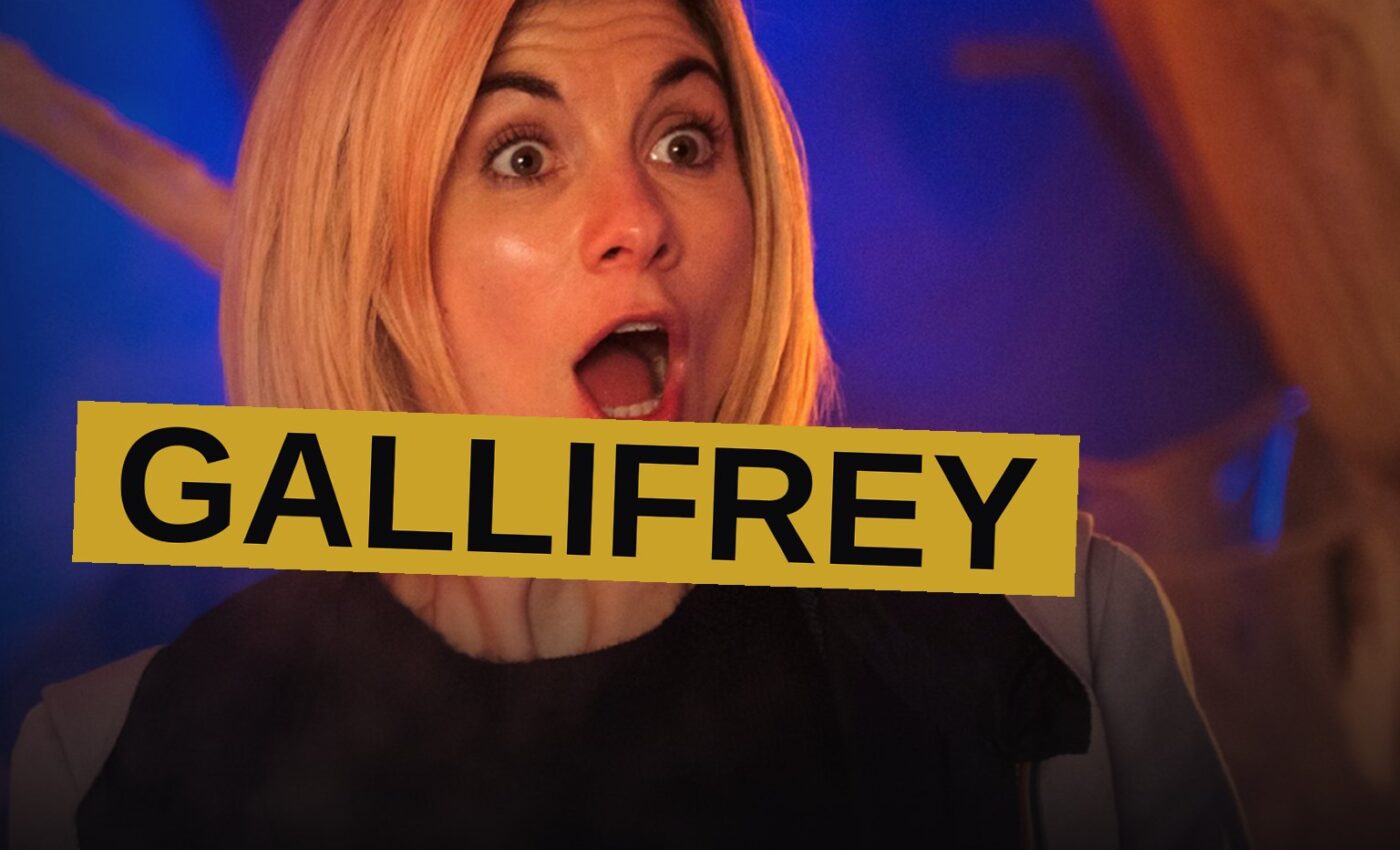
The Timeless Child has earned the forgiveness of Doctor Who viewers, but a choice made during Jodie Whittaker’s era remains far more difficult to pardon.
A new essay argues that the destruction of Gallifrey — the Doctor’s home planet — was a bigger mistake than the show’s controversial backstory rewrite. The piece, titled “I Can Forgive Doctor Who’s Timeless Child, But Jodie Whittaker’s Era Committed A Bigger Sin,” makes the case that the era undid years of storytelling with a single offscreen event.
The revelation about the Doctor’s origins, which turned out to be poorly executed despite being well-intentioned, came from the Timeless Child twist. By contrast, the second destruction of Gallifrey had no such excuse at all.
The Timeless Child Had A Good Idea Behind It
During the Whittaker era, the show rewrote its own backstory with a reveal about the Timeless Child. The buildup led to a change in how the Doctor’s origins were understood, with the character no longer being said to come from Gallifrey originally.
Critics and fans alike have spent years picking apart the twist’s problems. But the essay notes that the intention behind it was commendable: it wanted to reignite the Doctor’s aura of mystery.
“The basic idea of the Timeless Child is also simple enough to forgive,” the piece reads, “with the contention coming almost entirely from the twist’s awkward execution and lack of payoff.”
Even if you disagree with the Timeless Child concept, it’s worth noting that there was a decent idea behind it.
Steven Moffat Built His Whole Era Around Gallifrey
The sting of Gallifrey’s second destruction comes from looking at what happened earlier. When Doctor Who returned with Russell T Davies in 2005, he brought back the Time War — a huge temporal war that left the Doctor as the last surviving Time Lord.
For many years, that origin story turned the Doctor into a solitary, all-powerful wanderer of the galaxy, and it proved highly effective. However, when Steven Moffat assumed the role of showrunner after Davies, he realized the “woe is me, last of the Time Lords” formula could not last forever.
Moffat made plans to bring Gallifrey back.
“It’s not overstating things to suggest that Steven Moffat’s entire era was built around the grand return of Gallifrey,” the essay argues.
Every long-term thread led back to the Doctor’s old planet. The crack in the wall in episode one was a gateway to Gallifrey. “Silence Will Fall” was a reference to Gallifrey’s return through that crack. The Doctor’s name was the password to bring Gallifrey back. Trenzalore was the place where Gallifrey could be found.
Doctor Who’s biggest ever episode was the one where the climax happened, the 50th anniversary show that was built around the full story of the Time War’s secrets and how the Time Lords lived through it.
After the restoration, the new Gallifrey was visited during the era that followed. Moffat more or less left his successor to unwrap the gift of what Doctor Who could be with Gallifrey back in the picture.
Gallifrey’s Second Death Happened Offscreen
The present was never unpacked. The Whittaker era brought about the complete ruin of Gallifrey, and it happened unseen on screen.
A longtime enemy of the Doctor destroyed a world and its inhabitants in a fury. The information passed by as a minor detail rather than a central plot thread. Then came the final blow: the Doctor discovered that Gallifrey was not her true home planet at all.
“It wasn’t even your real home planet anyway.”
The essay is blunt about the failure: “The Timeless Child was a well-intentioned idea poorly executed, but Gallifrey’s second death was an error from concept to completion.”
The whole story arc that Moffat built up over years, along with the events of the 50th anniversary, were made meaningless. Every bit of it got thrown away in a single dismissive gesture, simply because the Master threw a tantrum.
The essay at minimum proposes that Gallifrey might have come crashing down because of a long-running major storyline spanning several seasons. Instead, it became nothing more than a footnote.
What Did Doctor Who Actually Gain?
The essay fails to identify a single advantage in wiping out Gallifrey yet again. The Timeless Child revelation already carried immense weight on its own, and the Doctor’s home planet. And Whittaker’ never adopted the Time Lord Victorious persona in her performance either.
It wasn’t necessary for Doctor Who to make Thirteen the last surviving Time Lord in order to develop her character.
It is worth comparing the two storylines. The Timeless Child was an ambitious idea that stumbled in how it was carried out. Gallifrey’s second death appears to have had no discernible reason behind it whatsoever.
Whittaker’s Era Was A Period Of Transition
It’s worth noting that the essay doesn’t blame Whittaker herself. The actress was never anything less than brilliant in the role, the piece says. The problems came from creative choices, an altered aesthetic, and changes behind the scenes.
Doctor Who went through a time of change during this era. Its look, its way of telling stories, and the very foundation of its mythology were all altered together. There were bright spots among those changes, the essay notes, though not everyone noticed them at the time.
The era never fully made it through its transitional period. The destruction of Gallifrey remains the clearest instance of a choice that left the show worse off.
The Case For Forgiveness
The essay’s core claim rests on size: one turn that altered history. That turn was poorly carried out and never delivered on its promise, yet the basic notion behind it — bringing back mystery for a figure grown too well known — still held up.
Gallifrey’s second death was different. It didn’t just rewrite history. It erased the work of an entire era of storytelling. It made the 50th anniversary feel hollow. It removed one of the show’s most important locations without giving the audience anything in return.
That arc took years to build.
Gallifrey’s offscreen destruction didn’t continue that arc. It cut it off.
A Debate That Will Continue
The show’s current era is described by the essay as “the doldrums.”. People will probably keep arguing about where things went off track for many years to come.
Fans may continue to argue over the Timeless Child, but the essay makes a strong argument that the real offense was how Gallifrey was treated. A twist that you dislike can be set aside or rewritten. A world erased from sight, with years of stories suddenly worthless, is more difficult to excuse.
A ruling serves as a warning that in Doctor Who, as with any long-running tale, the choices that seem largest at the time don’t always carry the greatest weight. Occasionally it’s the quietest brush-off that causes the worst harm.
Those who followed Moffat over many years as he built toward Gallifrey’s return, only to see it undone in a single wave of the hand, will find the wound slow to mend. The Timeless Child can be forgiven, but the second death of Gallifrey is a harder pill to swallow.
Source: screenrant.com
Get the Notebook.
The day's best stories and every fresh verdict, in plain English, in your inbox by seven. One email a day, no more.