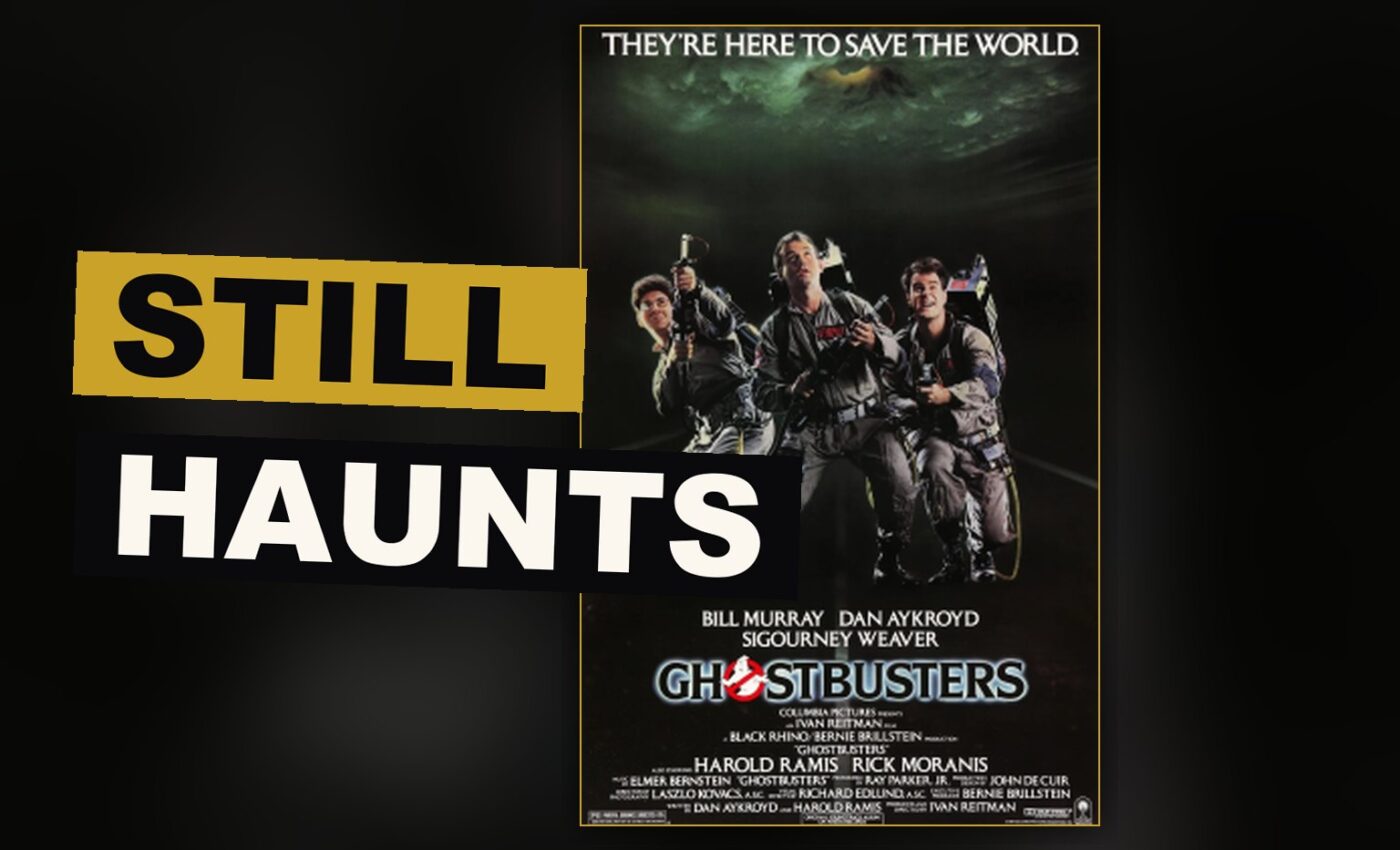
Four people carrying odd devices on their backs walked into a haunted city in 1984 and walked out with one of the biggest comedies of the decade. Ivan Reitman’s “Ghostbusters” mixes fright, comedy and effects work into a film that still holds up decades later.
The Setup
Three researchers lose their post at a university and decide to start a business catching ghosts in New York City. The founding group of three carries the film through sheer force of timing and delivery, and a fourth member joins soon after to round out the team. A woman named Dana Barrett, a musician whose apartment becomes the center of a strange threat tied to an old and terrible being, gets drawn into their world when something moves into her home.
The Lead Performance
The lead plays his part as a man who barely believes in his own business. He delivers lines as though he finds the whole idea as silly as the audience might. That attitude is what makes “Ghostbusters” work as comedy first and fright film second. His partner, who also helped write the story, plays the true believer of the group, while a third member plays the quiet researcher who explains the rules of the story without delaying anything.
Here is what makes the four leads work as a team:
- One supplies the wit that keeps the film from taking itself too seriously.
- Another supplies the belief and the technical talk that holds the story together.
- A third supplies calm knowledge, grounding the wilder ideas in something like sense.
- The fourth supplies an ordinary man’s point of view, joining the team because it pays, not because he believes.
Effects That Still Work
The effects, from a green ghost that haunts a hotel to a giant white creature that rises over the city, were built by hand rather than by computer. They look dated in places, but the design ideas remain strong enough to last. The giant creature scene turns a joke into a true set piece, staging an attack on New York City that plays as both funny and striking.
A neighbor of Dana’s, played by a comic actor, turns into a demon figure later in the story, and this side tale ties the comedy back to real stakes.
The Music and the City
New York City itself acts almost like a character. The team drives a converted car through real streets, storms a hotel, and eventually goes to the top of an apartment building for the final scene. The film’s song, performed by Ray Parker Jr., became a hit on its own and is now tied forever to the movie’s identity.
Where It Falls Short
The story is thin. Once the setup is in place, the film relies on the cast’s loose, easy energy more than a tightly built script, and some parts move slowly before the final act of aid at the end. Dana Barrett mostly waits to be saved rather than driving events herself. Newer viewers used to faster modern pacing may notice the rough spots in the production more than audiences did in 1984.
None of that takes away from the film’s core appeal.
A Lasting Hit
“Ghostbusters” led to sequels, a cartoon and a new version years later, but the original still stands as the one that set the idea in place. Its mix of horror film imagery and easy, friendly comedy became a model that later films tried, with mixed luck, to copy. Watching it now, the appeal has less to do with the ghosts and more to do with a cast playing off one another in a truly funny script.
The film earns its name as a classic not because every part is smooth, but because the parts that work — the cast, the effects, the song, the city itself — work so well together that the weak spots barely matter.
“Ghostbusters” remains one of the great comedies of the 1980s, a film that turned a story about catching ghosts into a display for a group of gifted performers. It has aged in some technical ways, but its humor and its lead performances still land.