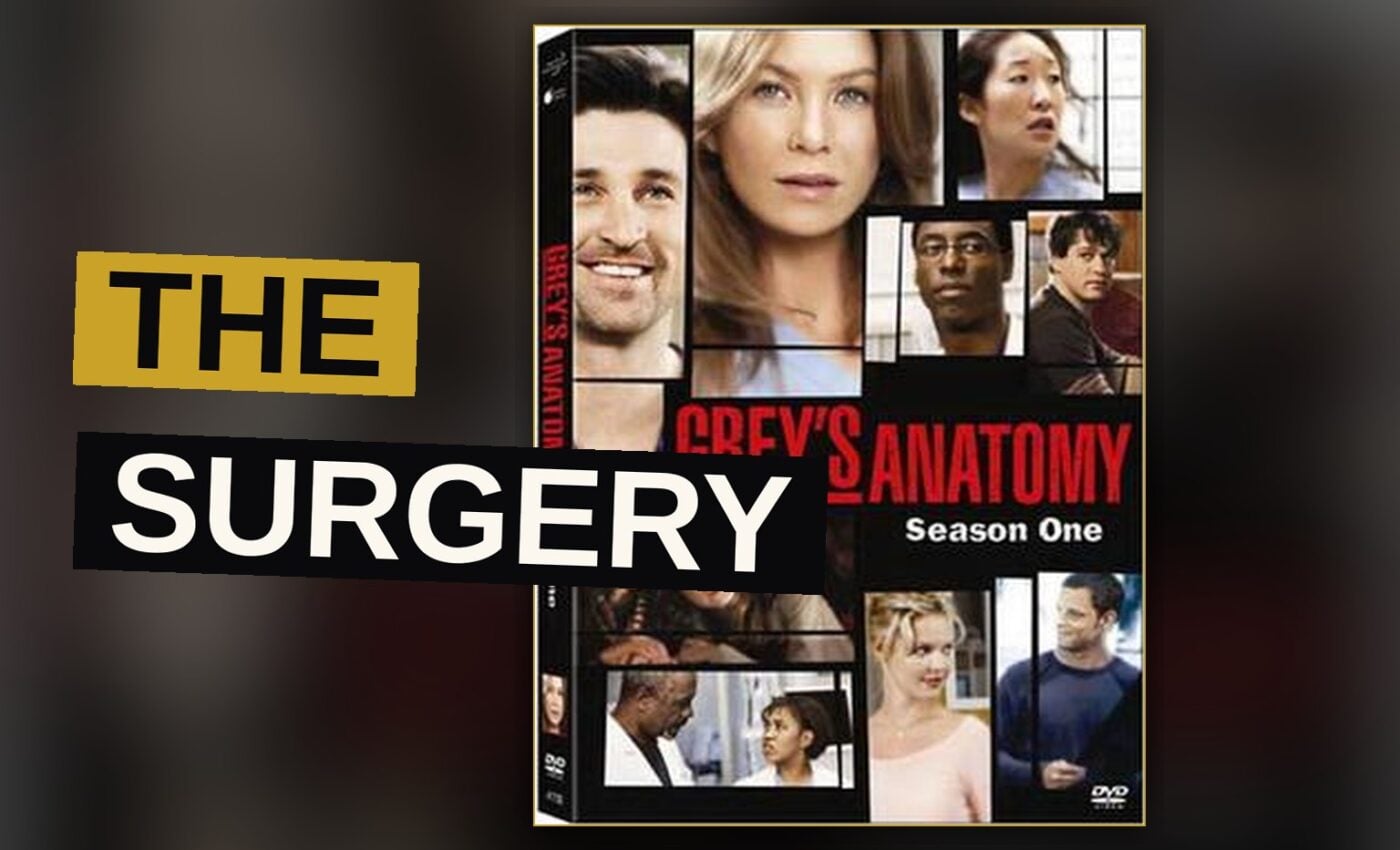
Grey’s Anatomy premiered in 2005, and it changed what a medical drama could do. Shonda Rhimes built a show about young surgeons in Seattle, but it became a cultural engine that ran for two decades. The pilot introduces Meredith Grey, a first-year surgical intern at Seattle Grace Hospital, and her cohort of brilliant, messy, deeply competitive peers.
The show’s early engine is the hospital itself. Seattle Grace is a pressure cooker of life-and-death cases, and Rhimes uses each episode to test her characters with impossible choices. The medicine is fast, the dialogue is faster, and the emotional stakes are always personal. It is a soap opera in scrubs, but it is a remarkably well-built one.
Trailer, via OTT Flix.
Interns of 2005
The original cast is the show’s strongest asset. Ellen Pompeo plays Meredith with a guarded vulnerability that anchors the chaos around her. Sandra Oh as Cristina Yang delivers the show’s sharpest, most precise performance — a surgeon who treats feelings like a disease she must cure. Katherine Heigl, T.R. Knight, Justin Chambers and Chandra Wilson fill out a team that feels like a real, fractious family.
The relationships are not gentle. Meredith and Derek Shepherd, played by Patrick Dempsey, begin with a one-night stand that becomes a years-long entanglement. Their romance is the spine of the early seasons, but the show is smarter when it lets the friendships carry the weight. Cristina and Meredith’s bond — dark, loyal, unsentimental — is the true love story.
Cases at Seattle Grace
The cases are never just medical. A patient with a rare condition becomes a mirror for a character’s private trouble. A trauma arrives just as an intern is about to confess a secret. Rhimes uses the hospital as a stage, and the gore is real but never gratuitous. The surgeries are filmed with a kinetic energy that makes the anatomy feel urgent.
The show also handles death with unusual honesty. Major characters die, and the aftermath is not tidied up by the next episode. The grief lingers, and the writing respects it. That willingness to let pain sit on screen is why Grey’s Anatomy feels weightier than most network dramas of its era.
Meredith’s Voiceover
Voiceover is the show’s signature device. Meredith narrates each episode, framing the chaos with a quiet reflection. It should feel like a crutch, but it often lands as the show’s conscience. The narration ties the medical drama to a larger idea about resilience, love, and the cost of caring.
The dialogue is punchy and quotable. Lines like “Pick me, choose me, love me” became part of the cultural vocabulary. The show is not subtle about its emotions, but it earns them through performance and pacing.
Two Decades On
Grey’s Anatomy is long-running, and the quality dipped and rose with the cast changes. The early years are the peak. The show lost some of its sharpness when key actors left, and later seasons rely on a rotating door of new interns who rarely match the original spark. Yet the show never lost its core identity. It remains a melodrama with a surgical precision for emotional payoff.
Rhimes built a franchise, but the original series is her clearest statement. It proved that a network drama could be both wildly popular and critically respected, and it opened the door for her later work on shows like Scandal, which she created, and Bridgerton, where she served as a producer.
“Pick me. Choose me. Love me.”
That single line, delivered by Meredith to Derek in the second season, captures the show’s entire approach. It is direct, desperate, and utterly sincere. The show never apologizes for its own intensity, and that confidence is why it endures.
Final Cut
Grey’s Anatomy is not perfect television. It is repetitive, occasionally overwrought, and its later seasons cannot match the first five. But the early run is a masterclass in serialized storytelling. The show builds a world, populates it with people you care about, and then breaks your heart with them.
It is a show about work and love and the impossibility of having both without damage. The hospital is just a setting. The real surgery is on the characters, and the knife is always sharp.
The score is the published audience score of 8.2/10.