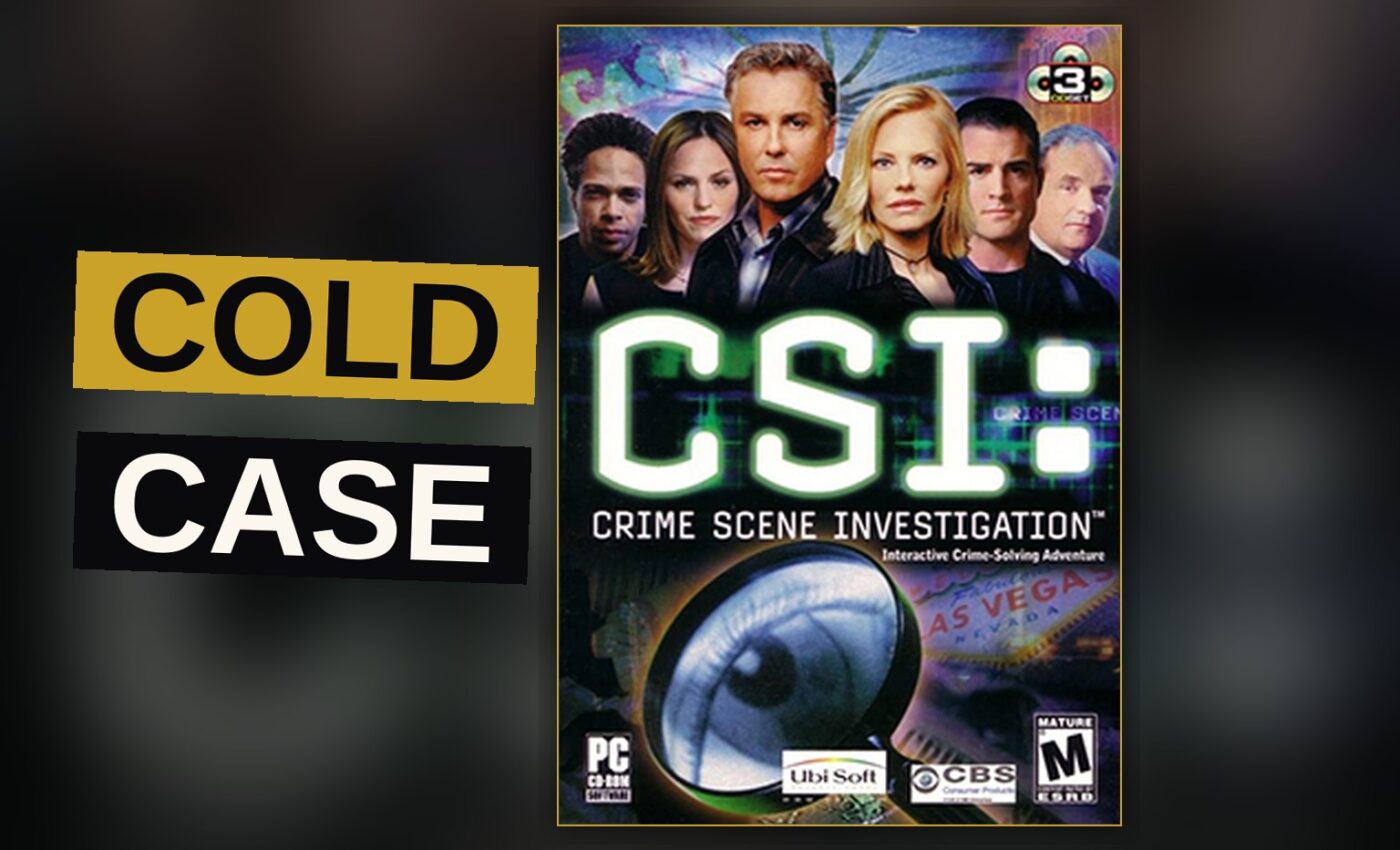
CSI: Crime Scene Investigation premiered in 2000 and changed what television drama could look like. Anthony E. Zuiker’s creation took the police procedural and gave it a cold, clinical sheen. The show followed a team of Las Vegas forensic scientists who solved murders with microscopes and ultraviolet light, not gunfights and interrogations.
The formula was simple. A body appears. The team processes the scene. They find a hair, a fiber, a drop of blood. The science points to a killer.
Trailer, via Classic TV Zone.
Inside the Las Vegas Lab
The cast anchored the series. William Petersen played Gil Grissom, the night-shift supervisor who preferred bugs and books to people. Marg Helgenberger played Catherine Willows, a former stripper turned CSI. George Eads played Nick Stokes, the earnest Texan. Jorja Fox played Sara Sidle, the moral center. Gary Dourdan played Warrick Brown, the gambler with a conscience.
They were not cops in the traditional sense. They did not chase suspects down alleys. They knelt over carpet fibers and tested blood spatter patterns. The show made laboratory work look heroic.
A Visual Signature That Stuck
The show’s look was its real star. The camera swooped inside a bullet wound. It followed a single drop of blood as it fell through the air. It rendered a body in translucent layers, showing the path of a knife through skin and bone. These shots were called “fly-throughs.” They became the show’s signature.
The style influenced everything that followed. Every crime show after CSI: Crime Scene Investigation wanted the same glossy, hyper-detailed aesthetic. The show also popularized the use of pop songs over montages of evidence collection. The Who’s “Who Are You” opened every episode.
The Science Question
The show faced criticism from the start. Forensic scientists noted that real lab work takes weeks, not hours. The show compressed timelines and inflated the role of its characters for dramatic effect. It also created the “CSI effect.” That was the term for jurors who expected forensic proof in every trial because they had watched the show.
The show’s priorities were clear from its framing. It was entertainment first, education second. The science was real enough to feel authentic, but the pacing was pure television. It never pretended to be a documentary. It was a fantasy about order and certainty in a messy world.
Episodic Structure and Repetition
Each episode followed the same shape. A cold open showed the crime. The team arrived. They divided the work. A suspect emerged. A twist came near the end. The science revealed the truth. The show rarely serialized its stories in the early seasons. That changed later, but the early years were pure case-of-the-week television.
The format was reliable and predictable. Viewers knew the formula by season three. The ratings stayed high. The show became a cultural fixture. It made forensic science a household word.
Lasting Influence
CSI: Crime Scene Investigation did not invent the procedural. It did reinvent it for the modern era. The show made science feel cool. It made Las Vegas feel like a character. It launched a franchise that included CSI: Miami, CSI: NY, and CSI: Cyber. None of them matched the original.
The show also changed how actors played detectives. The quiet, analytical style of Grissom became a template. The loud, emotional cop was out. The thoughtful observer was in. That shift lasted for years.
Final Score
The show has aged unevenly. The visual effects that looked groundbreaking in 2000 now seem dated. The dialogue can feel stiff. The science has been questioned repeatedly. The show remains a landmark of television history. It is not the best drama ever made. It is not even the best procedural ever made. It is something rarer. It is the show that changed the rules.
CSI: Crime Scene Investigation earns a score of 7.6 out of 10.
- Premiere: 2000
- Network: CBS
- Creator: Anthony E. Zuiker
- Seasons: 15
- Lead Actor: William Petersen
- Signature Song: “Who Are You” by The Who
- Score: 7.6/10