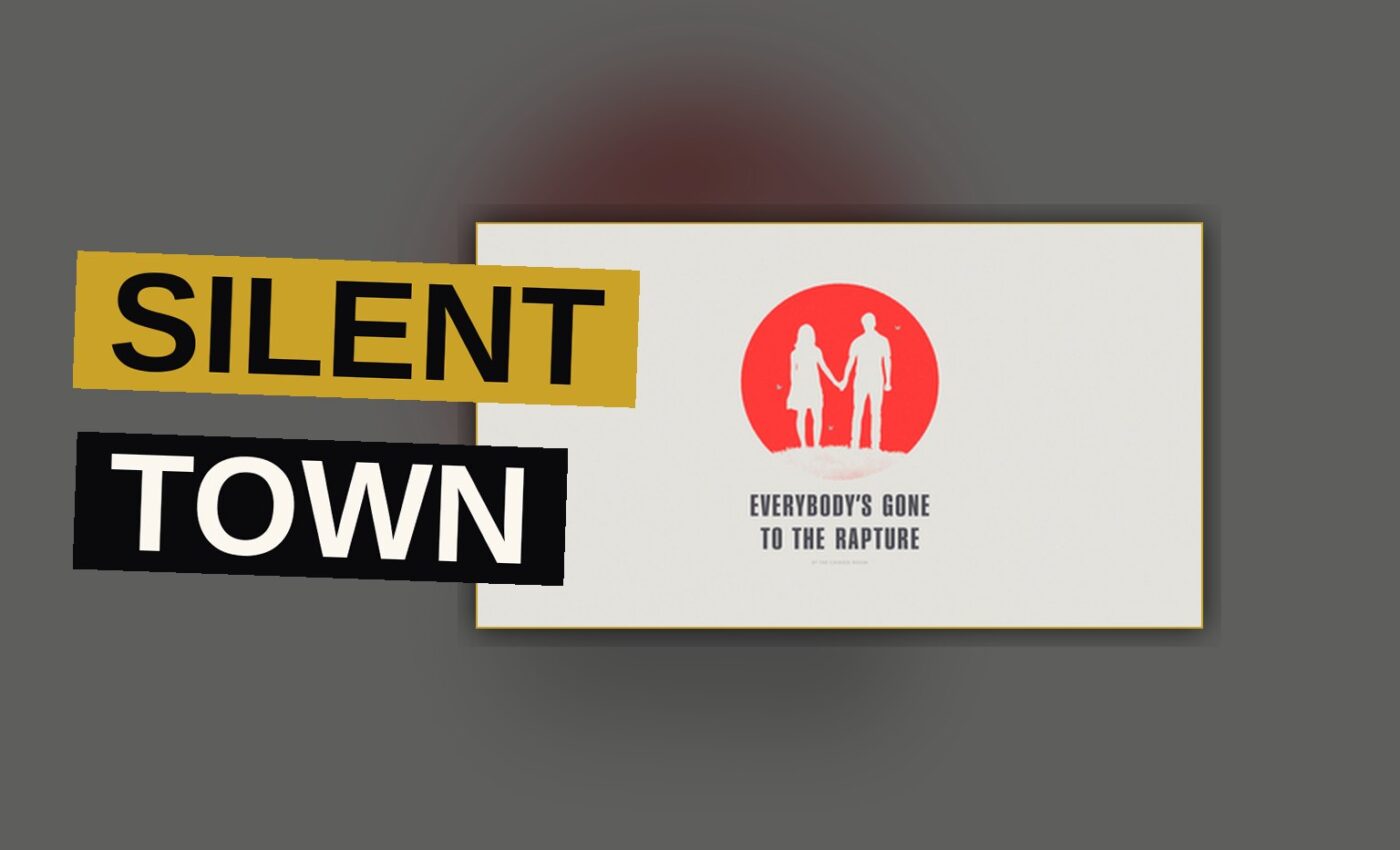
Everybody’s Gone to the Rapture asks players to listen. That’s the whole premise: a quiet, open-world mystery set in a small English village where everyone has vanished, and the only clues are the recordings left behind. The game is a walking simulator dressed as a horror story, and it succeeds because it trusts the player to fill in the gaps.
The setup is simple. You play as a “ghost,” a disembodied presence that can hear thoughts and memories of the people who once lived in the village of Yaughton. You move through the town, activating audio logs that replay conversations, monologues, and fragments of memory. The goal is to piece together why everyone disappeared, but the game never explains it directly. Instead, it offers a series of impressions, images, and silences.
Trailer, via IGDBcom.
The Village of Yaughton
The setting is the star. The village is a dense network of streets, houses, and landmarks, each holding a handful of audio points. The game encourages exploration by scattering clues across the map, but it never forces you down a linear path. You can wander freely, and the world feels lived-in: there are empty beds, half-eaten meals, and notes scribbled on walls.
The design is a grid of interconnected locations, and the game rewards curiosity. Each house, each field, each hillside holds a snippet of story. The village itself is the puzzle, and solving it means finding the right combination of voices to unlock the full picture.
Sound Over Sight
The audio is the real engine of the experience. Voice recordings are triggered by proximity, and they play over headphones in a way that makes the world feel haunted. Characters speak in hushed tones, arguing, grieving, or simply talking about daily life. The sound design is subtle, but it builds tension slowly.
The music is sparse and effective, a droning ambient score that shifts subtly depending on where you are. In an empty field, it’s quiet and open. Near a house, it thickens with dread. The sound design is the reason the game works at all, and it deserves credit for carrying a story that could easily collapse into abstraction.
Reading Between the Lines
The narrative is fragmented, and that’s intentional. The game presents memories out of order, forcing players to piece together chronology and context. This isn’t a story you can summarize easily; it’s a story you have to assemble in your head.
The best moments come from juxtaposition. One character’s despair is echoed by another’s optimism, and the game never resolves these contradictions. You’re left with a sense of loss, but also a sense of wonder at the lives that were lived. The ending, when it comes, is deliberately vague. It doesn’t offer closure, but it offers a final image that lingers.
Technical Notes
On PS4 and PC, the presentation is clean but unremarkable. The graphics are functional, with detailed textures and a muted color palette. The frame rate holds steady during movement, though loading times between zones can be noticeable. Performance is solid, and the game runs without major technical issues.
The controls are minimal. You walk, look, and listen. There’s no combat, no puzzles, no obstacles. The lack of friction is refreshing, but it also means the game relies entirely on its content. If the writing fails, nothing else can save it.
Ranking the Key Elements
- Audio Design — The standout feature, with recordings that feel genuinely evocative.
- World Building — A dense, believable village that invites genuine exploration.
- Story Structure — Fragmented and rewarding, but occasionally frustrating.
- Visual Presentation — Competent but forgettable.
- Length — Short enough to be accessible, long enough to be immersive.
The game’s strengths and weaknesses are closely linked. Its refusal to explain everything is both its greatest virtue and its biggest flaw. Some players will find the ambiguity frustrating; others will find it poetic. The game asks for patience, and it rewards it.
Final Word
Everybody’s Gone to the Rapture is a game about absence, and it finds its power in what it leaves out. The village is a place where people once lived, and now they don’t. The ghosts you hear are echoes, not answers. The game doesn’t resolve the mystery of the disappearance, but it makes the mystery feel personal.
It’s a game that respects the player’s time, even when it doesn’t respect the player’s desire for answers. The ending is a quiet moment, not a revelation. It’s a game that stays with you after you put it down, not because it explained everything, but because it made you feel something.
The score is 7.9 out of 10.