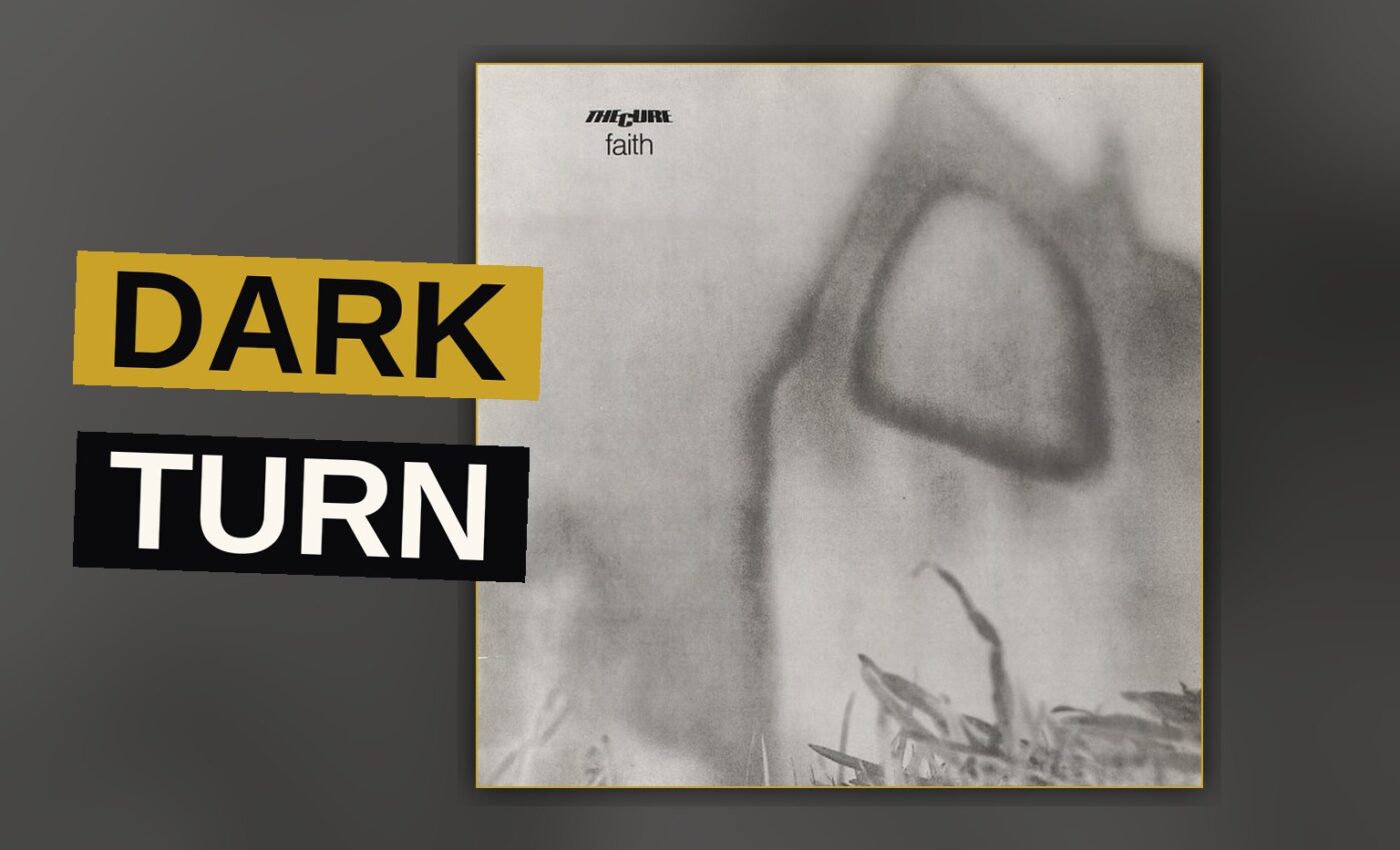
Faith is The Cure’s fourth studio album, released in 1981, and it marks a clear turning point for the band. Where their earlier work leaned on post-punk energy and angular guitar lines, this record trades sharp edges for a darker, more melodic sound built around Robert Smith’s voice and the band’s growing command of atmosphere. The result is a record that feels less like a punk band and more like a band trying to build a world of its own.
The Holy Hour Opens The Record
The album opens with “The Holy Hour,” a slow-burning track that sets the tone immediately. It’s not a rush to get somewhere, but a deliberate descent into a mood that stays with the listener throughout the record. The song builds slowly, layering texture over texture until the final minute arrives with a sense of release that feels earned rather than forced.
Primary And Other Voices Carry The Middle
“Primary” follows, and it’s the track that best captures the album’s new direction. The melody is immediate, the arrangement is cleaner, and the song feels like a statement of intent — this is the Cure sounding like a band that knows exactly what it wants to be. “Other Voices” is more atmospheric, drifting along with a vocal delivery that feels almost conversational, a welcome contrast to the more direct attack of “Primary.”
All Cats Are Grey And The Funeral Party
“All Cats Are Grey” is the longest track on the record, and it earns that length. It moves through several distinct movements, building from a sparse opening into something more expansive before settling back down. The song shows the band’s range, moving from intimate to grand without losing its focus. “The Funeral Party” closes this stretch with a more somber feel, its title suggesting mourning even before the music begins. It’s a solid, if somewhat predictable, entry in the sequence.
Doubt And The Drowning Man
“Doubt” is a brief interlude, more sketch than fully formed song. It’s not bad, but it doesn’t leave much of an impression either — a pause between the album’s stronger moments rather than a destination in itself. “The Drowning Man,” by contrast, is one of the record’s high points. Its title suggests struggle, and the song delivers on that promise, building tension before resolving into a release that feels cathartic rather than rushed.
Faith Closes The Record
The title track “Faith” runs over six minutes and closes the album on a note of resolution. It’s the most extended statement of the record, and it asks listeners to sit with the band’s ideas rather than simply pass through them. The song doesn’t rush to a conclusion; it lets the mood breathe, and that patience pays off.
What Stands Out
Three tracks stand apart from the rest:
| Track | Length | Role |
|---|---|---|
| Primary | 3:39 | Statement of intent |
| The Drowning Man | 4:50 | High point |
| All Cats Are Grey | 5:28 | Range |
The Verdict
Faith isn’t a perfect record, but it’s a significant one. The weaker tracks — “Doubt,” “The Funeral Party” — exist mainly to separate the stronger material, not to detract from it. The album’s best songs — “Primary,” “The Drowning Man,” “All Cats Are Grey” — demonstrate a band finding its voice with confidence, and the record as a whole stands as a clear marker of where The Cure was headed.
- The Holy Hour4:27
- Primary3:39
- Other Voices4:24
- All Cats Are Grey5:28
- The Funeral Party4:14
- Doubt3:11
- The Drowning Man4:50
- Faith6:44