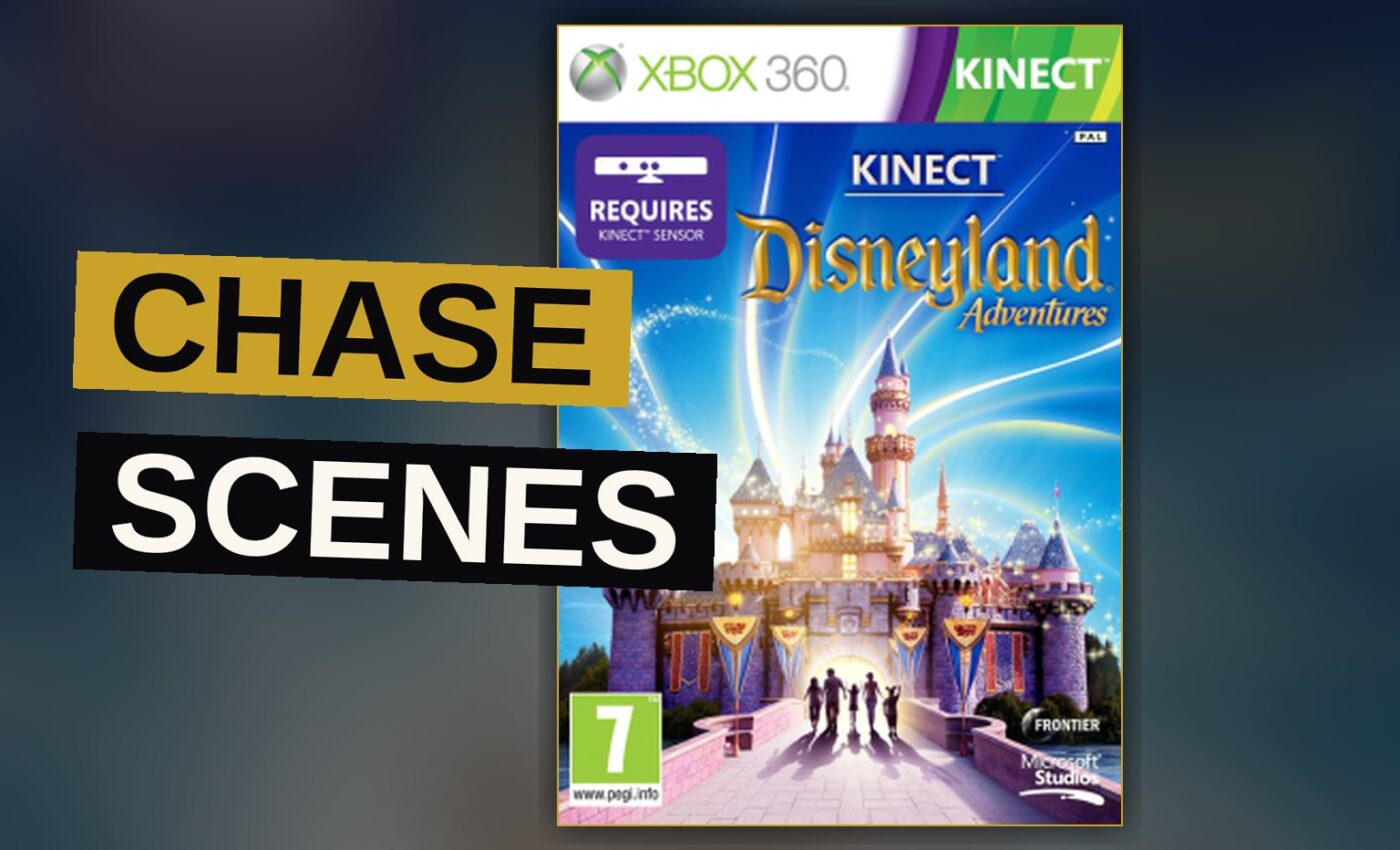
Disneyland Adventures asks players to step into the park itself and walk through its streets, ride its attractions, and chase down characters for photo ops. It sounds simple. It plays less so.
Trailer, via Inside the Magic.
Walking Through Main Street
The game opens on Main Street, U.S.A., and the pacing there is deliberate. Players move at a steady clip through crowds of other guests, stopping to watch parades or grab a bite at a food cart. The park is rendered with care, and the attention to detail shows in the way sunlight glints off the storefront windows or the way steam rises from a restaurant grill.
But the scale of the crowd can feel overwhelming. Passersby bump into players, jostle them, and occasionally stop dead in the middle of the street, blocking the path forward. The camera struggles to keep pace, especially when players try to weave through a dense group of guests, and the result is a slow shuffle that feels less like walking and more like wading through a busy market square.
The game rewards patience. Stopping to watch a parade or a character appearance pays off in small ways, but the reward is small. It is pleasant, but it is not urgent.
The Rides and Their Queues
The attraction queue system is where Disneyland Adventures starts to show its cracks. Each ride has a separate entrance, and players must walk across the park to find the right one, sometimes passing through several zones to get to a single ride. The game does not mark these paths clearly, and the map screen offers only vague hints about where a queue might be found.
Waiting in line is a central part of the experience. Queues are long, even during quiet hours, and the game does not explain why. Characters stand near the queues, offering small conversations, but the dialogue is thin and repeats quickly. The wait is rarely broken by anything new.
Once aboard a ride, the experience improves. The Matterhorn, Space Mountain, and Pirates of the Caribbean all offer smooth animation and decent music, though the camera often lags behind the action, leaving players staring at scenery rather than following the path of the ride. The drop on the Tower of Terror is timed well, and the ride through the haunted mansion is atmospheric, but neither lasts long enough to justify the trip to the queue.
The Chase Scenes
The game’s signature mode, the chase scenes, is where Disneyland Adventures tries hardest to distinguish itself from a standard tour of the park. In these sequences, players follow a character across the park while avoiding obstacles and solving puzzles along the way. The goal is to reach the character before time runs out.
These scenes are fast and chaotic. Players must dodge pedestrians, avoid falling objects, and leap over gaps in the pavement. The controls are tight, and the difficulty ramps up quickly, demanding quick reactions and careful timing. It is the best-designed part of the game, but it is also limited. There are only a handful of chase scenes, and once completed, they offer little reason to return.
The puzzles within these scenes are simple. They involve finding a key, pushing a box, or turning a crank, and none of them require much thought beyond trial and error. The reward for completing a chase is a photo with the character, which can then be shared online or saved to the game’s gallery. The photo function is basic, allowing players to frame the shot and adjust brightness, but nothing more.
The Park Layout and Its Limits
The park is large, and the game encourages exploration. Side streets, hidden shops, and secret gardens are tucked away throughout the world, rewarding players who wander off the main path. These areas are charming, but they are also empty. Few characters populate them, and the game does not give players a reason to return once they have been discovered.
The game also includes a mode where players can build their own attractions and rides, placing them around the park as they see fit. This mode is creative, but it lacks depth. The tools are limited, and the finished products look similar to each other, with little room for personalization beyond color and shape. It is a nice addition, but it does not extend the game’s lifespan significantly.
| Mode | Focus |
|---|---|
| Standard Tour | Walk through the park, visit attractions, meet characters |
| Chase Scene | Chase a character across the park, solve puzzles, take a photo |
| Build Mode | Place attractions and rides in the park |
Sound and Performance
The soundtrack is cheerful, drawing on familiar Disney themes and original compositions that echo the park’s atmosphere. The sound effects are detailed, with footsteps, chatter, and the distant hum of rides blending together into a constant background hum. The audio quality is good, though it can become repetitive after extended play.
Performance varies by platform. On PC, the game runs smoothly, with few hitches and a stable framerate. On Xbox 360 and Xbox One, the game stutters more frequently, particularly during crowded scenes or chase sequences, where the frame rate dips and the game slows to a crawl. The load times are long, especially when moving between zones, and the game often takes several seconds to transition from one area to another.
The multiplayer support is light. Players can share photos and compete in some chase scenes, but the feature is underdeveloped, offering little beyond a simple leaderboard. There is no chat function, and players cannot interact directly with each other in the park. The game is designed primarily for solo play, and the multiplayer elements feel tacked on rather than integrated.
Where It Falls Short
The camera remains the game’s biggest problem. It drifts, it lags, and it often fails to show what is ahead, forcing players to guess where the next obstacle might appear. The collision detection is inconsistent, with players bumping into invisible walls or sliding past characters they were meant to talk to. These issues persist throughout the game, and they are not fixed by patches or updates.
The park is also strangely empty. Despite the crowds on Main Street, the rest of the park feels abandoned. Rides sit idle, shops close early, and characters disappear when not needed for a chase scene. This creates a dissonant experience, where the player is surrounded by life and activity on one street and then plunged into silence on the next.
Final Word
Disneyland Adventures is a mixed bag. Its chase scenes are the highlight, offering fast, frantic gameplay that stands apart from the slow, wandering tour of the park. The park itself is beautiful, but it is also frustrating, with a layout that is difficult to navigate and a camera that fights the player at every turn. The multiplayer is thin, and the build mode is underdeveloped. Taken as a whole, the game is a pleasant diversion rather than a deep experience.
Get the Notebook.
The day's best stories and every fresh verdict, in plain English, in your inbox by seven. One email a day, no more.