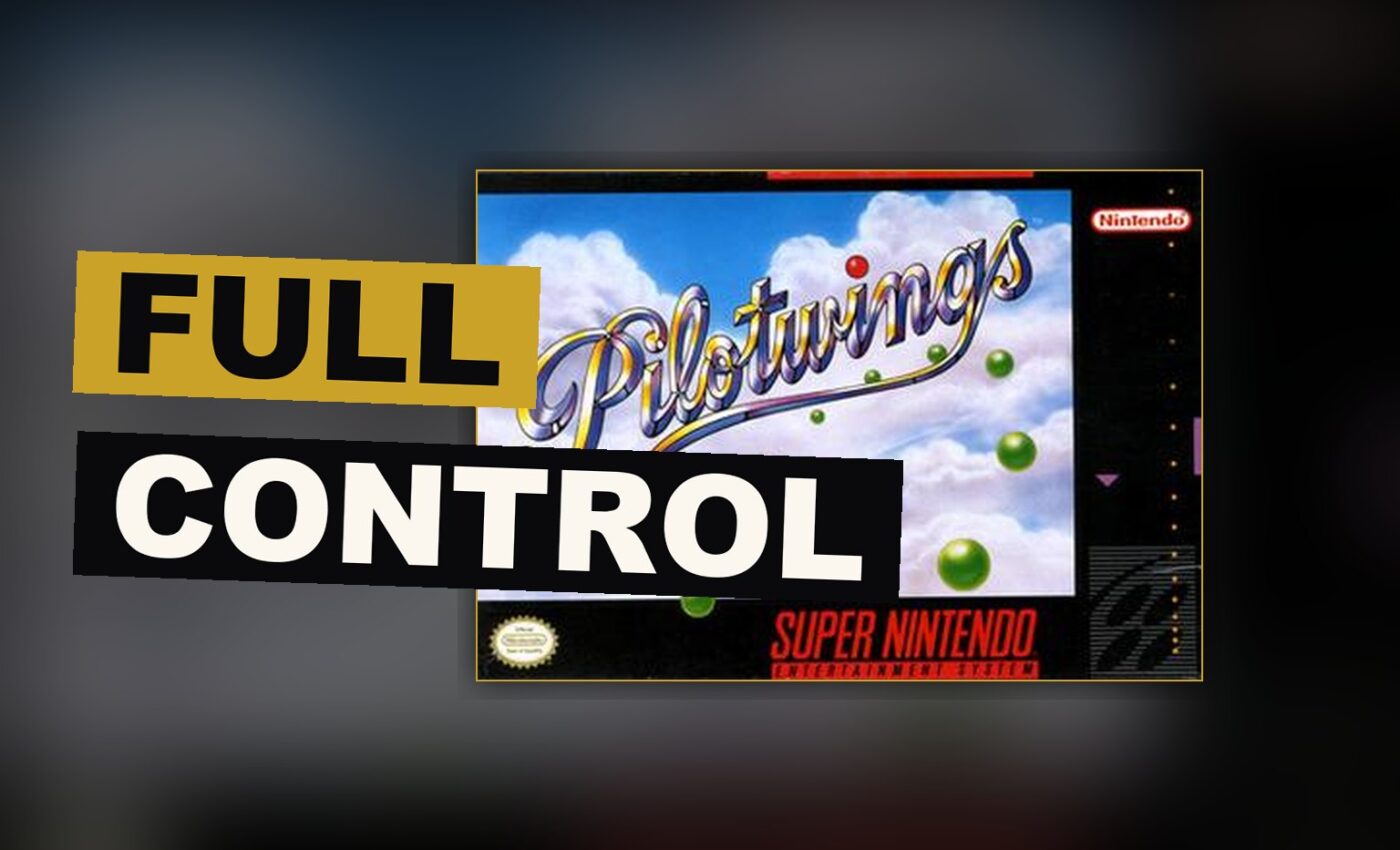
Pilotwings puts players behind the controls of a light aircraft, an aircraft without an engine, a worn wing, and a personal rocket device, and asks them to land, rise, and fall through the air toward a pilot certificate. The SNES launch title trades action for calm, exact flight tasks. It is one of the earliest games to show off the console’s Mode 7 graphics, and that technical trick still shapes how the game feels today.
Mode 7 and the Sense of Height
The turning, scaling ground below each vehicle gives Pilotwings a sense of height and distance that few 1990 games could match. Buildings, open ground, and drop points shrink and grow as players rise and fall. That effect was a selling point at launch, and it remains the game’s most noted feature.
The other side of that coin is repetition. Pilotwings uses Mode 7 to serve a small set of repeated tasks rather than an open world. The effect grows thin sooner than the mechanical variety does, since each lesson depends on the same graphic trick, and the SNES hardware behind it does not change from one task to the next.
Four Ways to Fly
Pilotwings splits its lessons across distinct vehicles, each with its own feel and scoring rules.
- Light Aircraft — landing accuracy and smooth turns are the focus.
- Aircraft Without an Engine — rising air and steady descent control take the place of an engine entirely.
- Worn Wing — players must catch rings and rising air currents to stay up.
- Personal Rocket Device — staying still in open air with full control tests patience.
Falling tasks sit alongside these four as extra challenges, rewarding players who can guide a falling body into small landing marks.
Controls and Difficulty
The controls demand a light touch. A hard turn or a badly judged drop costs points, and the game is strict about rough landings. Early lessons are gentle enough to teach the feel of each vehicle, but later certificate tests raise the stakes and punish small mistakes.
Difficulty rises quickly once the early lessons end. Some tasks take several tries before their timing becomes clear, but each one settles into a fair order that can be learned soon after. Once that order is understood, the sense of control is satisfying, particularly with the rocket device, where staying fixed in one spot with full command feels like a real skill.
Comparing the Four Vehicles
| Vehicle | Skill Tested | Difficulty | Standout Feature |
|---|---|---|---|
| Light Aircraft | Landing accuracy | Moderate | Clear introduction to the controls |
| Aircraft Without an Engine | Rising air and descent control | High | No engine, pure physics |
| Worn Wing | Timing of rising air currents | High | Rings to catch along the way |
| Personal Rocket Device | Staying still in open air | High | Hardest, most rewarding |
The table shows a game that draws out a single idea, flight lessons, across enough variety to hold attention for a while, even if none of the four vehicles alone carries the whole game.
Sound and Presentation
The soundtrack is bright and simple, matching the game’s light, teaching tone. Sound effects for engines, wind, and the drop of a landing pack are plain but clear, giving players useful feedback during hard turns. Presentation is neat, with simple menus and readable instructions between lessons.
Pilotwings offers little story or progress beyond earning certificates and chasing higher scores. That gives it some replay value for players chasing perfect runs, but the game can feel thin once the novelty of Mode 7 and the certificate tests has passed. There isn’t much reason to return once every vehicle has been mastered.
Pilotwings remains a strong technical example for the SNES, and its flight lessons are still pleasing in short doses. It is not built for long sessions, and its content is limited next to later games in the series, but the mix of careful controls and Mode 7 graphics still holds up as an unusual, if modest, piece of early SNES history.