
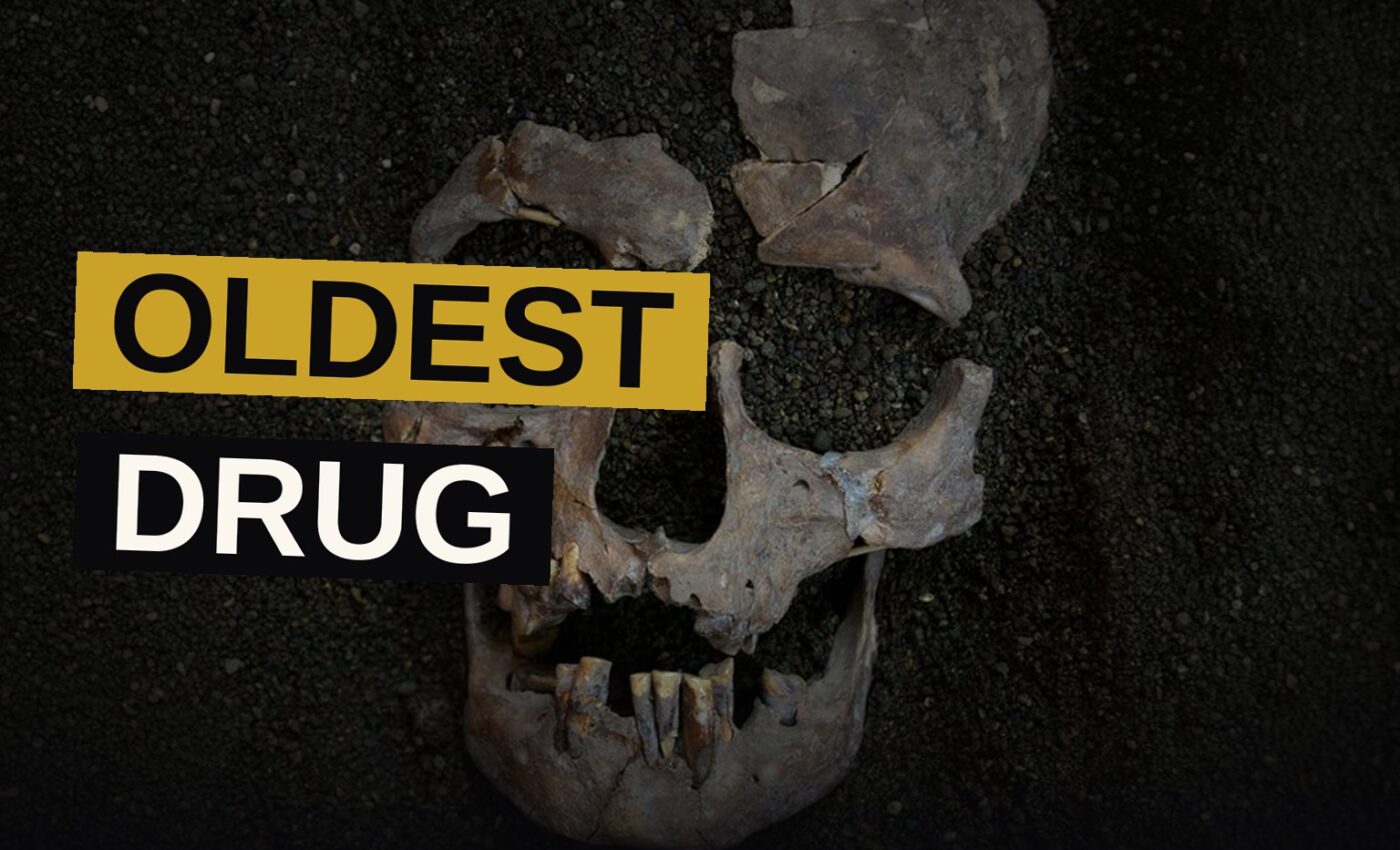
Researchers have found evidence of the world’s oldest known habitual drug use, dating back 25,000 years, on an island in Indonesia. Ice age hunter-gatherers there used betel nuts to relieve their toothaches by sucking on them. The study, released Wednesday (Sept. 9) in Science Advances, extends the timeline for such behavior by thousands of years. It also demonstrates that the habit began well before farming transformed human society.
The two skeletons and their teeth
The remains of two individuals were discovered on the island of Sulawesi, though their lifetimes were separated by a gap of thousands of years.
A man who passed away sometime between the ages of 40 and 50 lived approximately 25,000 to 16,000 years ago. That span of time falls within the Last Glacial Maximum, which marked the coldest point of the last ice age, even though Sulawesi itself was not blanketed by ice then.
According to the study, the second person, whose sex remains unknown, lived on Sulawesi somewhere between 7,600 and 6,300 years ago. They were roughly the same age at death as the first individual.
Researchers discovered deep marks in the teeth of these two ancient hunter-gatherers. The marks were caused by repeatedly sucking on betel nuts (Areca catechu), palm seeds containing a neuroactive substance, probably used to ease toothache pain.
Why betel nuts numb the mouth
When chewed along with slaked lime, or calcium hydroxide, betel nuts release a stimulant compound known as arecoline. That early technique of sucking on betel nuts would have simply deadened the mouth instead of producing any real sensation.
The new study shows that these hunter-gatherers suffered such extensive dental wear that they must have chewed betel nuts nearly without pause for their entire lives. Yet the numbing nuts did not produce the intended lasting relief. In fact, the research suggests they may have worsened any painful tooth cavities by worsening them over time.
“The more they sucked on the nut to relieve toothache, the worse that the damage to their teeth became,” study first author Adam Brumm, an archaeologist at Griffith University in Australia, told Live Science.
As the grooves deepened further, one particular specimen’s damage eventually revealed the tooth’s inner pulp cavity.
“It would have been excruciatingly painful,” Brumm said.
How the researchers tested their theory
Once the probable source of the grooves was identified, the team checked if sucking on betel nuts — a habit that had not been observed before — produced a neuroactive effect.
The frog eggs, engineered to carry human nerve receptors, showed a reaction that could be traced to the nervous system. Afterward, examination of the teeth produced evidence of betel nut consumption.
“It now seems probable that betel chewing as we know it evolved from a much simpler, older practice of just sucking on the intact nut.”
A long history of plant-based drugs
Brumm noted that while a 2017 study revealed Neanderthals employed poplar (genus Populus) bark for its pain-killing effects (poplars hold salicylic acid, an ancestor of the active ingredient in aspirin), it marks the first known instance of a plant-derived drug being used regularly.
Plant-based drugs have been used in many other prehistoric societies:
- 10,000-year-old traces of the pollen of a psychedelic cactus have been found in Peru.
- 13,000-year-old residues of alcoholic beer have been found in Israel.
A prehistoric archaeologist from the University of Valladolid in Spain, who was not involved, said that the new study gives “particularly compelling and direct evidence for the antiquity of drug use,”.
Betel nut use today
In certain regions of South Asia and Oceania, betel nut, which is also called areca nut, remains popular among people who use it for its effects. Now, rather than being consumed on its own, betel nut is combined with slaked lime to create a mixture that produces a stimulating sensation when chewed.
The chewable plug, known as a quid, has a strong hold on its users, and it is consumed by roughly 600 million people across the globe. The substance within it, arecoline, carries a cancer risk, and the quids are frequently combined with tobacco, which leads to many users being found to have mouth cancer.
It is suggested that the practice of combining slaked lime with betel nuts began much later, around the time of the [[Neolithic]], or “New Stone,” Age, roughly 4,000 years ago on Sulawesi, when slaked lime started being added to pottery to stop it from shrinking and cracking during firing.
“It now seems probable that betel chewing as we know it evolved from a much simpler, older practice of just sucking on the intact nut,” the researchers wrote in the new study.
Brumm explained that the betel-sucking man came before the Neolithic period both on Sulawesi and in the Fertile Crescent, where agriculture first appeared some 12,500 years ago.
Drug use before farming
The question of whether psychoactive drugs came before or after farming has long been a subject of debate among archaeologists. Brumm now says that the new discovery demonstrates that such drug use occurred thousands of years earlier than previously thought.
According to Brumm, it appears that people across all age groups used this remedy for toothache during prehistoric times, though the telltale grooves were only noticed in adults who had grown habituated to the practice.
The study is a “fantastic piece of research,” Guerra Doce said.
An authority on how ancient people used plants to alter their minds, Guerra Doce has made a specialty of the subject. “In the specific case of betel nuts, the findings are especially significant because they also reveal the prehistoric roots of a deeply established cultural practice in Southeast Asia and the Pacific,” is what she said.
What the study reveals about prehistoric life
The research shows that the ancient inhabitants of Sulawesi understood that their surroundings offered both sustenance and healing, and that they explored their natural world to discover these benefits.
The find reveals that people living through the ice age were doing more than merely staying alive. They were actually testing the plants they found, putting them to uses that went well beyond eating and simple healing.
That both people bore deep grooves points to a repeated habit rather than a single event. The habit endured across thousands of years of human history on the island, showing up again and again.
Brumm says the study’s documentation of betel nut use represents the first known instance of repeated drug consumption derived from plants.
The scientists claimed their results resolve an enduring puzzle in archaeology: whether humans started consuming mind-altering plants as medicine before or after agriculture came into being.
Brumm explained that the findings from Sulawesi reveal people were using psychoactive drugs thousands of years before they began farming.
The findings were published Wednesday (Sept. 9) in the journal Science Advances, and they represent a significant contribution to the understanding of prehistoric human behavior.
The research shows how long-standing, intricate, and firmly rooted in human history the bond with mind-altering plants has become.
Source: livescience.com