
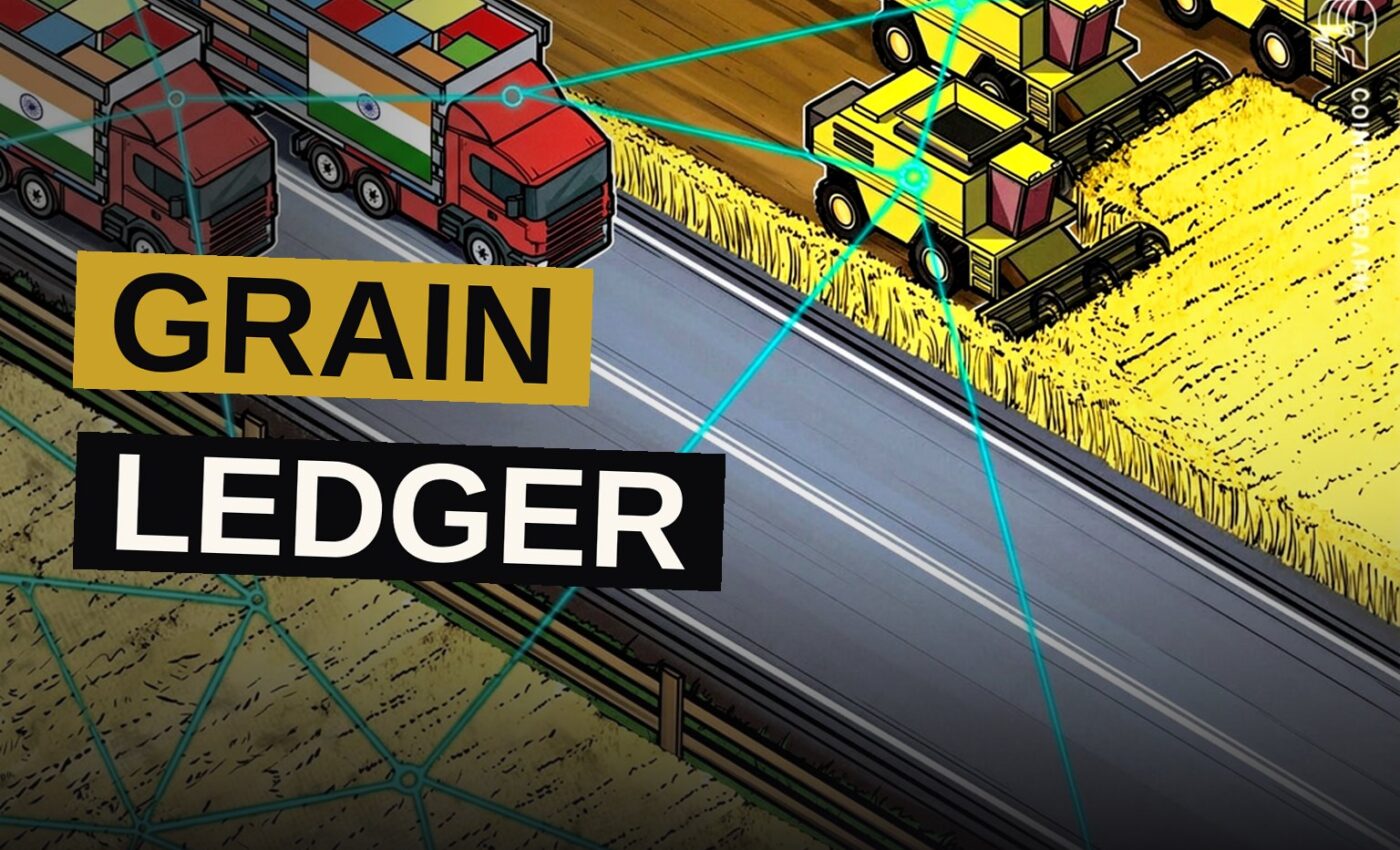
Arya.ag, an Indian company, is putting grain ownership records on the Avalanche blockchain through a system it is testing. The system uses tokenized warehouse receipts that stand for stored crops.
Finternet is teaming up with the agricultural warehousing and lending firm to link grain deposits, warehouse receipts, collateral commitments and loan status via a separate Avalanche layer-1 network. Testing is already underway, according to Devika Mittal, head of India at Ava Labs, who said that each tokenized receipt will stand for ownership of the stored commodity.
Neither company has said when the first rollout will begin, nor have they revealed how much grain or lending the initial deployment is expected to handle.
The Grain Receipt Problem
Arya.ag’s current business centers on electronic warehouse receipts, which allow farmers and agricultural firms to borrow money using crops stored in warehouses rather than selling them right after harvest. This approach forms the foundation of the company’s operations, and it has grown into a substantial business.
The company’s warehouse network holds roughly $2 billion in agricultural goods, while its lending unit, Arya Dhan, provides around $230 million in loans yearly. The announcement states that the firm backs some 120 billion Indian rupees (roughly $1.26 billion) in loans annually.
These numbers refer to Arya.ag’s current operations, not to any assets or loans that have already moved onto the blockchain.
The issue the new system targets is visibility. Lenders want to see what grain sits inside a warehouse, determine who owns it, establish whether it has already been pledged as collateral, and track any outstanding debt against it.
How the Token System Works
Sanmesh Kalyanpur, a director at Finternet Labs, said Arya.ag’s samplers collect information about stored grain and enter it into the company’s portal. Finternet will combine farmer, commodity, warehouse and insurance information into what Kalyanpur called a “composite token” that banks can use when assessing collateral risk.
The token stands for the complete image of a held grain reserve, rather than the commodity alone. It brings together the farmer’s identity, the grain, the storage facility where it rests, and the insurance protecting it.
A network joins grain deposits, warehouse receipts, collateral commitments and loan status together as individual data points. It remains unclear from the source whether loan status rests within or outside the combined token.
The two firms say the system exists to give lenders a shared record showing all of that data in one place. But the announcement notes that accurate verification of the physical commodities represented by the digital records will still be required.
The strength of the final argument rests on the fact that a token’s value depends entirely on what is placed inside it, with the actual examination of grain serving as the base upon which the entire system is built.
The Finternet Backstory and Why Avalanche
The Finternet concept traces back to a 2024 Bank for International Settlements paper co-authored by Infosys co-founder Nandan Nilekani and then-BIS General Manager Agustín Carstens.
The proposal concerned interconnected unified ledgers for tokenized assets, with an emphasis on the requirement for supportive legal and regulatory frameworks. It stood as a conceptual blueprint rather than a finished product.
The system runs on its own dedicated Avalanche layer-1 blockchain, which means the grain records operate on a separate network instead of sharing space with other applications on the main Avalanche chain.
Cointelegraph reported in January that tokenized real-world assets on Avalanche had surpassed $1.3 billion by the close of 2025. That growth was driven by loans and tokenized money-market funds, adding to Avalanche’s growing history in the field.
Agricultural and financial records projects have tried blockchain before, and related coverage from Cointelegraph pointed to one example: Pineapple Financial placed $1 billion in mortgage records on Injective, a separate layer-1 network.
What Lenders Get
Banks and other lenders receive a shared, up-to-date record of what grain is held and what claims exist against it, which makes the system’s offer clear to them.
The key data points in the network:
- Farmer identity and details
- Information about stored grain collected by samplers
- Warehouse location and storage information
- Insurance coverage on the stored grain
- Loan status and outstanding debt, connected through the network
That list lays out the key queries a lender raises before funding secured by stockpiled grain. The questions concern whether the grain exists, who owns it, whether it has already been put up as security elsewhere, and what the current debt standing is.
One single verifiable record is what the tokenized system seeks to create, holding everything within it.
The Government Push
To encourage this form of financing, the Indian government has taken action. It began a 10 billion-rupee credit-guarantee program in 2024. The program is meant to support financing against electronic negotiable warehouse receipts, especially for small and marginal farmers.
An alternate route to credit exists through warehouse receipts. A grower who preserves grain after harvest may borrow against it rather than selling at a reduced post-harvest price.
This tokenized system from Arya.ag and Finternet matches up with this wider policy direction, even though neither company said whether the pilot connects to the government program.
What Is Not Known
Several key details remain unannounced. No launch date has been set, and the companies gave no figures on either the scale of grain involved or the scope of the lending that the initial rollout would address.
The $2 billion in stored commodities and $1.26 billion in annual loan support describe Arya.ag’s existing business. They are not commitments to move those figures onchain.
Before lenders begin trusting the system for collateral decisions, proof at scale must be established. Testing has commenced, yet it remains distinct from deployment.
Physical verification still stands as a restriction. The accuracy of a digital record depends entirely on the inspection underneath it.
The Bottom Line
The company is placing the records of a genuine enterprise onto a blockchain. Arya.ag already holds billions in grain and backs more than a billion dollars in loans each year. The tokenized receipts aim to increase transparency for lenders who extend credit to the firm.
The idea is simple: bring together farmer, grain, warehouse, insurance and loan information into one shared network so banks can look at it when deciding whether to take on risk. The proposal states its purpose directly, without extra padding.
Execution is what will decide whether this succeeds. The companies must ensure the physical verification process itself functions correctly, earn enough trust from lenders for the digital records, and push the system past its testing phase into actual use.
The Finternet concept came from a 2024 BIS paper by two heavyweight authors. Now it is being applied to grain warehouses in India. The direction is set, but the details remain to be proven.
| Date | Event |
|---|---|
| 2024 | BIS paper outlining the Finternet concept published |
| 2024 | Indian government launches 10 billion-rupee credit-guarantee program for electronic warehouse receipts |
| End of 2025 | Tokenized real-world assets on Avalanche exceed $1.3 billion, per Cointelegraph |
| Now | Arya.ag and Finternet testing tokenized warehouse receipts on Avalanche layer-1 |
Source: cointelegraph.com
Get the Notebook.
The day's best stories and every fresh verdict, in plain English, in your inbox by seven. One email a day, no more.