
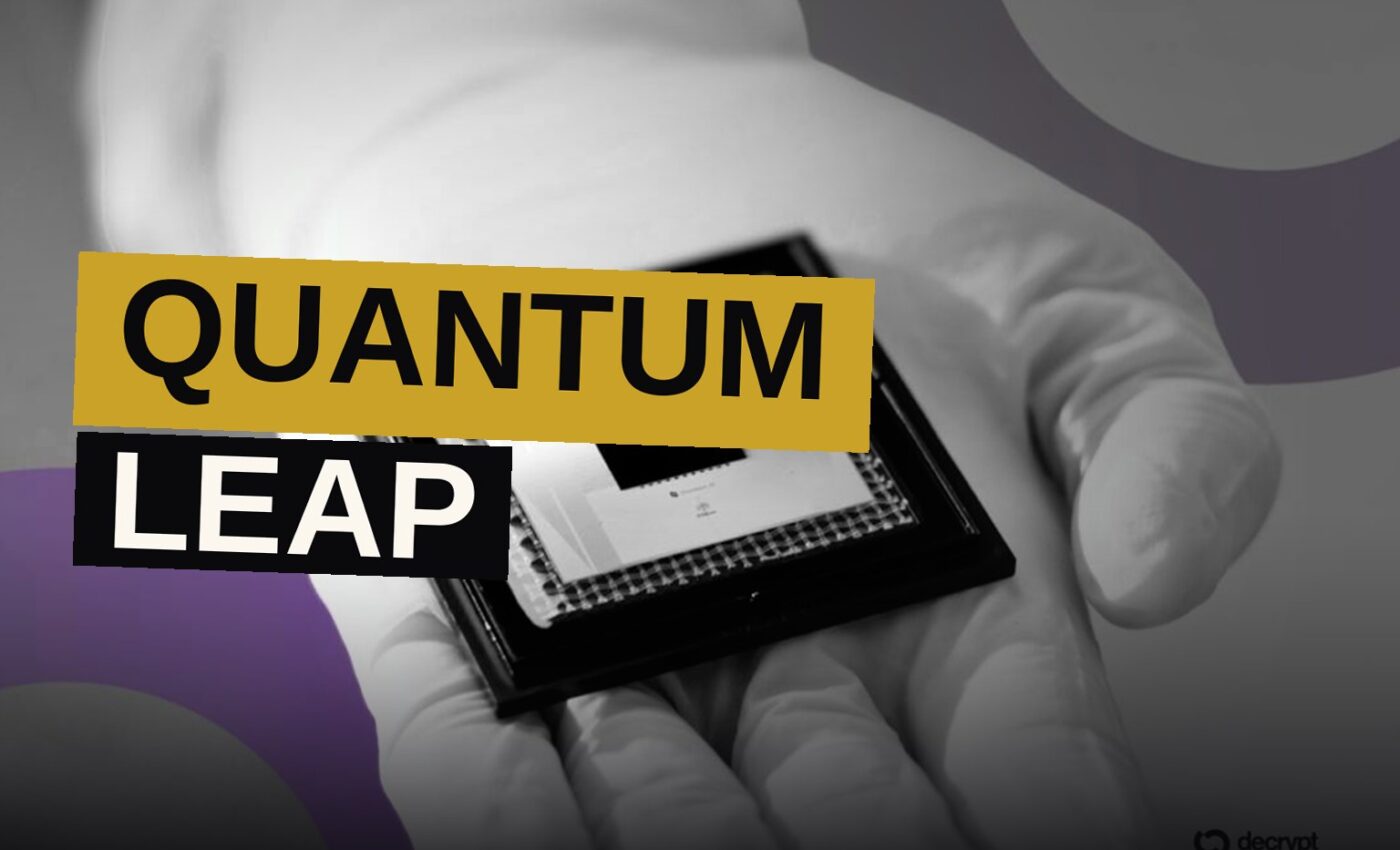
IonQ, the publicly traded quantum computing company, opened orders Tuesday for its Superion 256 quantum computer, with customer deliveries scheduled for 2027. The Maryland-based company says the system marks a shift from building machines one at a time to manufacturing them at semiconductor scale.
Bitcoin developers are currently debating when quantum computers might pose a danger to the cryptocurrency’s security, and the announcement is part of that ongoing discussion.
Superion 256 and the Chip Strategy
IonQ constructs quantum computers and provides access to them via cloud services. It additionally works on quantum networking, sensing, and security technology. The Superion 256, which fits inside a standard server rack, will be made available through IonQ’s cloud.
The company credits two acquisitions for the new system.
“Superion is the result of two strategic acquisitions coming together to deliver this historic milestone,” IonQ Chairman and CEO Niccolo de Masi said in a statement. “Oxford Ionics enabled IonQ to control natural, trapped-ion qubits using standard electronics, and SkyWater unlocked the ability to manufacture at semiconductor costs and scale.”
SkyWater, a chipmaking subsidiary of IonQ, has produced the first 256-qubit processors, and groups have captured the first ions within prototypes at multiple U.S. sites.
The quantum computer’s fundamental piece of information is called a qubit. A regular computer bit holds either a zero or a one. A qubit, by contrast, can be set up as a mix of those two states before it gets measured, which lets quantum machines tackle particular kinds of calculations in a distinct way.
Calculations grow more intricate with a greater number of qubits, yet these components are easily disrupted, producing errors. The dependability of the qubits working together determines how useful a 256-qubit computer is.
Manufacturing and the Road to 2027
The firm’s strategy involves building these machines using proven chipmaking techniques, with electronic controls incorporated directly into the chip itself to manage the atoms. According to IonQ, this method reduces expenses, and SkyWater reduced its chip design cycle from nine months to two.
“Quantum computing, like classical computing before it, ultimately scales most powerfully on a semiconductor foundation,” de Masi said. “Superion 256 is the first quantum computer platform designed to be built by the hundreds rather than one at a time. Every generation that follows will be designed, fabricated, and packaged similarly—creating unique upgradeability in our Superion platform.”
Deliveries for the company’s first system were scheduled to begin in 2027, after it was pre-sold in early 2026. The firm is also building Superion 10K, a machine designed to show off error-resistant computing by 2027, with commercial production expected to start in 2028.
| System | Qubits | Delivery or Production Target |
|---|---|---|
| Superion 256 | 256 | Customer deliveries in 2027 |
| Superion 10K | Not disclosed | Error-resistant demo in 2027; commercial production in 2028 |
IonQ has not disclosed results demonstrating a complete 256-qubit computer’s performance. The first chips and prototypes mark progress, but the company has not published benchmark data for the full system.
The Bitcoin Threat Question
Researchers are still arguing over how soon a quantum computer might be able to crack Bitcoin’s security. The worry is that a sufficiently powerful machine could take an exposed public key and work out the secret key needed to spend someone else’s Bitcoin.
A sustained, reliable attack using error-protected qubits is what it would take. A 256-qubit machine does not automatically break 256-bit security, though, since the two figures measure different things.
A quantum computer’s qubit count cannot be compared to the bit length of a cryptographic key, since they measure entirely separate things.
Preparations are nevertheless underway.
In July, Galaxy said it was putting up to $5 million behind Bitcoin quantum-security efforts, which covers developer grants, research, and an advisory council.
Delivery Timelines and Open Questions
IonQ has not disclosed results demonstrating a complete 256-qubit computer’s performance.
IonQ’s wager rests on the semiconductor method. The company argues that if SkyWater’s manufacturing process performs as expected, it will be able to produce hundreds of these systems through mass production instead of putting each one together by hand.
There is still no public proof that a full working machine with all of its qubits operates reliably. The firm has prototypes and a pre-sold initial system, but no one has demonstrated that a complete 256-qubit device performs consistently.
For Bitcoin, the question is whether an attack machine would need error-protected qubits and sustained reliable calculations. The Superion 256’s qubit count alone does not settle that question, since 256 qubits do not automatically break 256-bit security.
The debate among developers continues.
Source: decrypt.co
Get the Notebook.
The day's best stories and every fresh verdict, in plain English, in your inbox by seven. One email a day, no more.