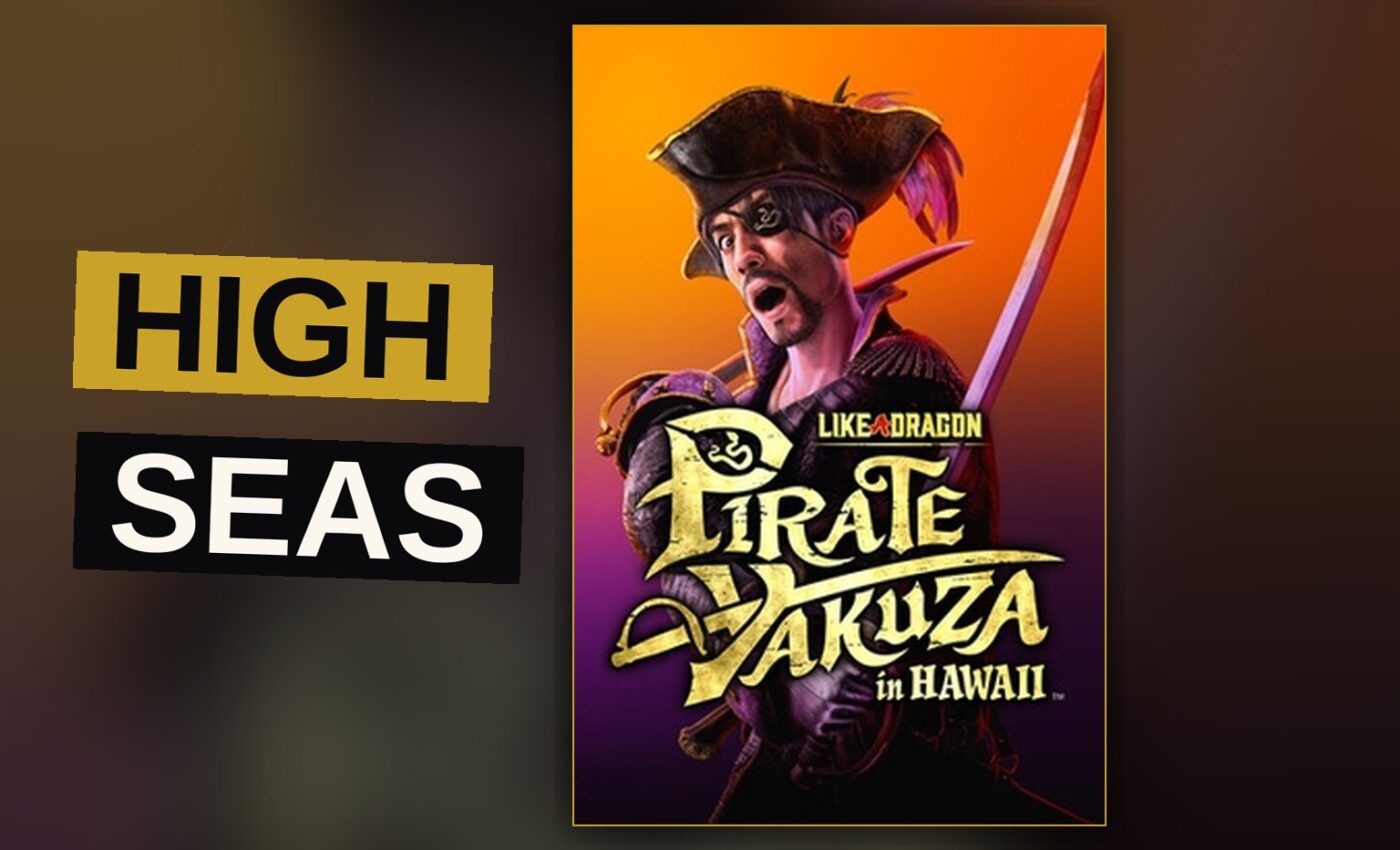
Goro Majima wakes up on a beach near Hawaii with no memory of who he is. By the end of Like a Dragon: Pirate Yakuza in Hawaii, he has a pirate crew, a ship called the Goromaru, and a treasure to find. The setup is absurd. The game knows it, and that confidence carries it a long way.
Trailer, via GameSpot.
Rich Island and the Lost Memories
Ryu Ga Gotoku Studio’s spin-off takes place six months after the events of Like a Dragon: Infinite Wealth. Majima washes up on Rich Island, saves a local boy named Noah Rich from pirates, and gets pulled into a fight involving Hawaiian pirates and ex-yakuza from Japan. He becomes a captain and goes looking for the Lost Treasure of the Esperanza, a hoard rumored to hold an elixir that cures any disease.
The amnesia device is the weakest part. Majima is one of the series’ most recognizable characters, and wiping his memory strips the edge that makes him worth watching. What replaces it is a looser, sillier energy that mostly works.
Mad Dog, Sea Dog, and the Goromaru
Combat returns to the beat ’em up system of older Like a Dragon titles. Majima has two fighting styles:
- Mad Dog, a speed-focused style
- Sea Dog, which gives him dual cutlasses, pistols, and other pirate tools
A new jump button opens up mid-air combos. That one addition does more for the feel of combat than either style on its own. Mad Dog is fast and loose. Sea Dog is slower and heavier, and the cutlasses land with weight.
Ship combat is the real swing. Players upgrade the Goromaru, sail the open sea, and fight other pirate ships in real time. Drain an enemy ship’s health and you can board it, battle the crew, and beat the captain. It is thin next to the on-foot fighting, but it breaks up the rhythm in a way the series has needed.
Four Locales, Uneven Ground
Pirate Yakuza in Hawaii spreads across four areas: Rich Island, the criminal haven Madlantis, Nele Island, and Honolulu, which returns from Infinite Wealth. Honolulu is the most fully built of the four, which is a strange thing to say about the setting the game treats as a detour. Madlantis has the best atmosphere, all neon and bad money. Nele Island, home to the Palekana religious group, is where the plot turns serious, and it never quite earns that turn.
Masaru’s Love Journey and the Minigames
The side content is where the game relaxes. Karaoke, Crazy Delivery, and Dragon Kart all return. Masaru’s Love Journey is new, and it tasks Majima with recruiting “Minato girls” to spend time with crew chef Masaru Fujita. It is a strange, small thing that fits the tone better than most of the main story.
There are also unlockable emulations of older Sega games, including Poseidon Wars 3-D, Space Harrier 3-D, Star Jacker, and the arcade game The Ocean Hunter. These are pleasant. They are also filler, and the game leans on them when the pacing sags.
A Crew Worth Sailing With
Hidenari Ugaki and Matthew Mercer return as Majima. The new cast is broad: Jason Rich, a retired treasure hunter; Teruhiko Shigaki, a former Tojo Clan patriarch cleaning up Nele Island; Rodriguez, a Palekana disciple; Mortimer, who leads the Mortimer Armada; Queen Michele, who rules Madlantis; Raymond Law, the Pirate King; and Spade Tucker, a New York loan shark who knows where the treasure is. Naomi Rich, Jason’s estranged daughter, is the most interesting of them, and the game underuses her.
What Holds and What Slips
The plot runs through a conspiracy involving the Palekana leadership and the Tojo Clan, with ex-yakuza now working legally to clear radioactive waste from Nele Island. That is a real idea. The game treats it as set dressing between coliseum fights.
The combat is the strongest it has been in a spin-off, and the ship sections justify their place. The amnesia story does not. Majima without his history is a mascot, not a character, and the game never finds a reason for the loss beyond giving him somewhere to start.
A Fun Detour, Not a Landmark
Like a Dragon: Pirate Yakuza in Hawaii is a confident, uneven game that knows exactly what it is. The Goromaru, the two fighting styles, and the jump combos are worth the price of admission. The main story is not. Ryu Ga Gotoku Studio followed this in February 2026 with Yakuza Kiwami 3 & Dark Ties, and that remake is the more important release for the series’ future. This one is a detour, and a fun one, but a detour.
Get the Notebook.
The day's best stories and every fresh verdict, in plain English, in your inbox by seven. One email a day, no more.