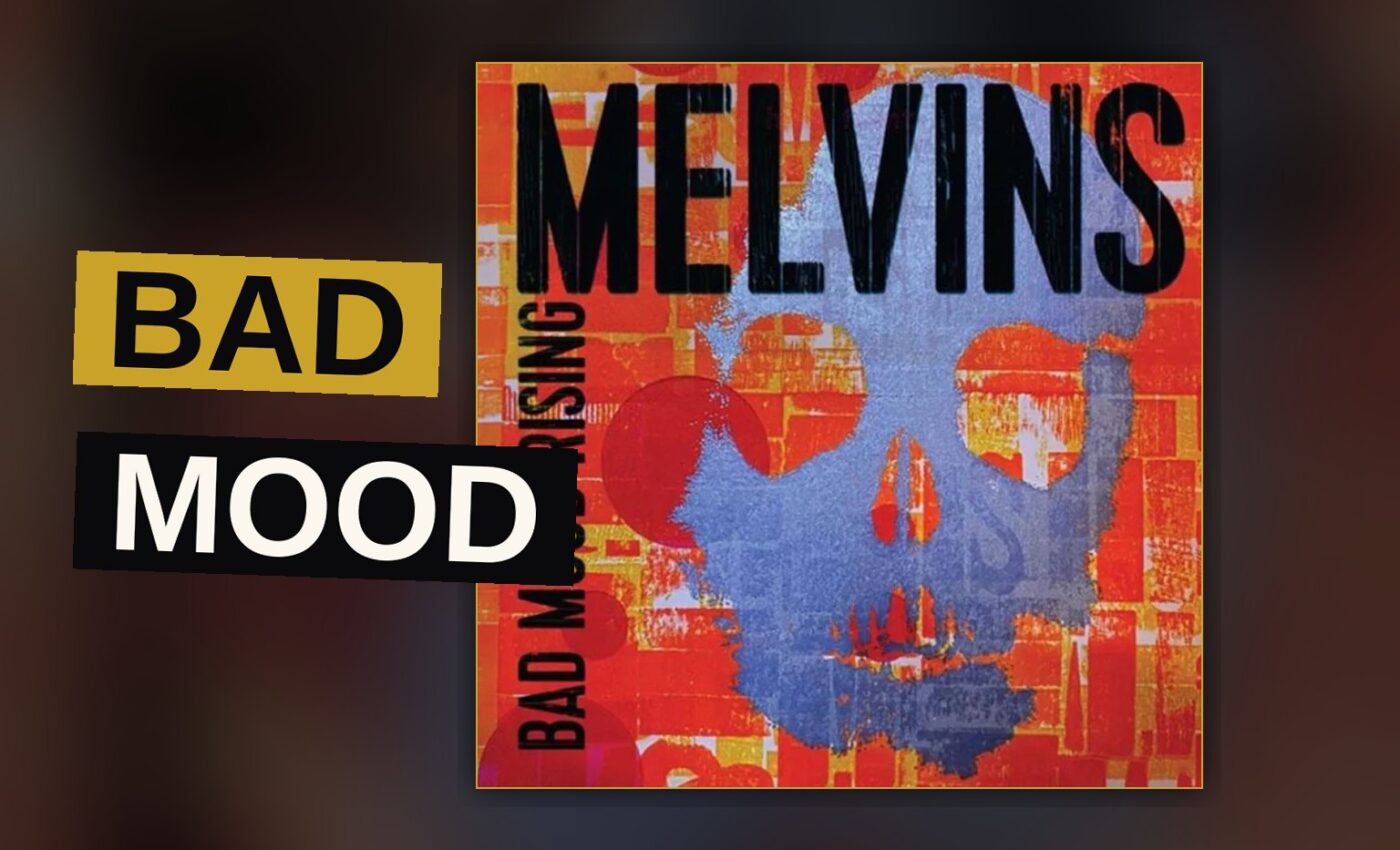
Melvins have spent decades making records that sound like no one else, and Bad Mood Rising is the latest proof. The band’s 2022 album is a heavier record than their recent work, but it’s also more accessible — a strange combination for a group whose catalog has always leaned into the slow and the dense. The record blends sludge metal with a wide range of influences, and it features guest guitarist Dylan Carlson throughout the six tracks.
The result is a record that rewards patience and punishes skimmers. This is not a band trying to win over new listeners with hooks. This is a band trying to make a heavy record that still holds together across a full listen. It mostly succeeds.
Mister Dog Is Totally Right Opens the Record
The album opens with “Mister Dog Is Totally Right,” a 14-minute epic that sets the tone immediately. It’s slow, sludgy, and built on a riff that refuses to resolve. The song doesn’t rush anywhere. It sits in its groove and lets the tension build before releasing it in waves of distorted guitars. The track earns its length through repetition and release, and it announces that this is a record willing to take its time.
“Never Say You’re Sorry” follows and shifts the pace. It’s shorter and tighter, with a chorus that actually sticks. The song draws on some of the band’s earliest music, and it sounds like a reminder of why people fell in love with the Melvins in the first place. It’s the most immediate track here, and it’s the one that will likely get played the most.
“My Discomfort Is Radiant” continues the momentum. It’s a mid-tempo burner with a chugging rhythm that keeps the energy high without ever reaching a peak. The song is about discomfort, but the performance is anything but uncomfortable — it’s confident and controlled. It’s a solid track, though it doesn’t quite reach the heights of the songs around it.
“It Won’t or It Might” is the longest track after the opener, clocking in at 8:21. It’s a slower, more meditative piece that builds slowly before erupting into a distorted climax. The song shows off the band’s ability to balance heaviness with restraint, and it’s one of the tracks critics pointed to as a standout. It’s a strong closer to the album’s middle stretch.
Hammering and the Final Stretch
“Hammering” is a shorter, more aggressive track that picks up the pace again. It’s built on a relentless drum pattern and a driving guitar line, and it feels like the band shaking off the sludge to move forward. The song is less interesting than the tracks around it, but it serves as a bridge to the album’s final statement.
“The Receiver and the Empire State” closes the record at just 2:49. It’s a brief, atmospheric piece that feels like a coda rather than a proper song. The track is moody and sparse, and it leaves the listener with a sense of resolution rather than a big payoff. It’s a fitting end to an album that spends most of its runtime building toward something that never quite arrives.
What Works Best on the Album
The tracks that stand out are the ones that commit fully to the band’s approach. “Mister Dog Is Totally Right” and “Never Say You’re Sorry” are the strongest examples — the former for its patience and the latter for its immediacy. “My Discomfort Is Radiant” and “It Won’t or It Might” are solid but slightly less essential, showing the band’s range without matching the peaks of the other two.
The influence of Dylan Carlson is felt throughout the record, particularly on the slower, more atmospheric tracks. His playing adds a layer of complexity that fits the band’s sound without overwhelming it. The blend of sludge metal with diverse influences is the album’s core idea, and it’s executed well enough to justify the record’s existence.
The Weak Points and the Verdict
Not everything lands. “Hammering” is a decent track, but it lacks the urgency of the songs around it. It’s functional rather than memorable, and it’s the kind of song that will be forgotten quickly once the album ends. The shorter tracks like “The Receiver and the Empire State” are pleasant but slight, and they don’t leave much of an impression.
The record’s heaviest moments are also its most rewarding. The slow-building tension of “Mister Dog Is Totally Right” and the controlled aggression of “Never Say You’re Sorry” are the album’s highlights, and they justify the time investment required to get through the slower stretches.
The Track List Breakdown
Here’s how the album breaks down:
- Mister Dog Is Totally Right (14:02) — the slow, patient opener that sets the tone
- Never Say You’re Sorry (5:17) — the immediate standout track with a memorable chorus
- My Discomfort Is Radiant (4:48) — a solid mid-tempo burner that doesn’t quite reach the heights of the others
- It Won’t or It Might (8:21) — a strong closer to the middle stretch with real restraint
- Hammering (5:30) — a decent bridge track that’s less interesting than the songs around it
- The Receiver and the Empire State (2:49) — a brief, atmospheric closer that feels like a coda
The Final Word
Bad Mood Rising is a strong album from a band that has never been interested in easy listening. It’s heavy, patient, and occasionally inaccessible, but it’s also the band’s most focused record in years. The best tracks — “Mister Dog Is Totally Right” and “Never Say You’re Sorry” — are genuinely excellent, and they justify the time investment required to get through the slower stretches.
8 of 10.
- Mister Dog Is Totally Right14:02
- Never Say You're Sorry5:17
- My Discomfort Is Radiant4:48
- It Won't or It Might8:21
- Hammering5:30
- The Receiver and the Empire State2:49