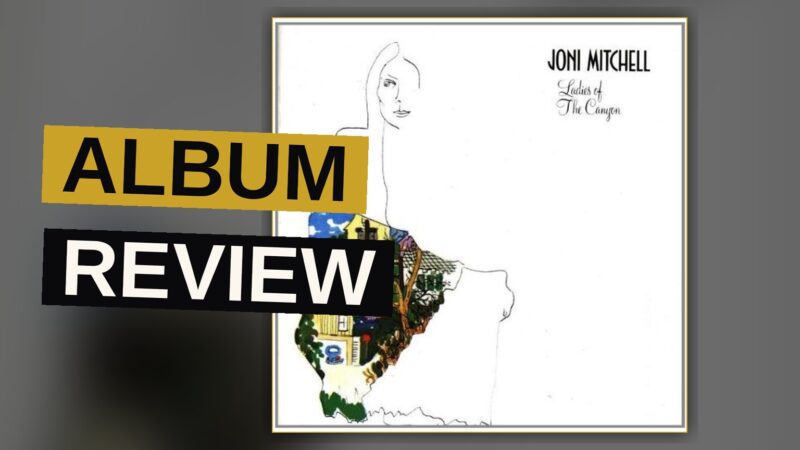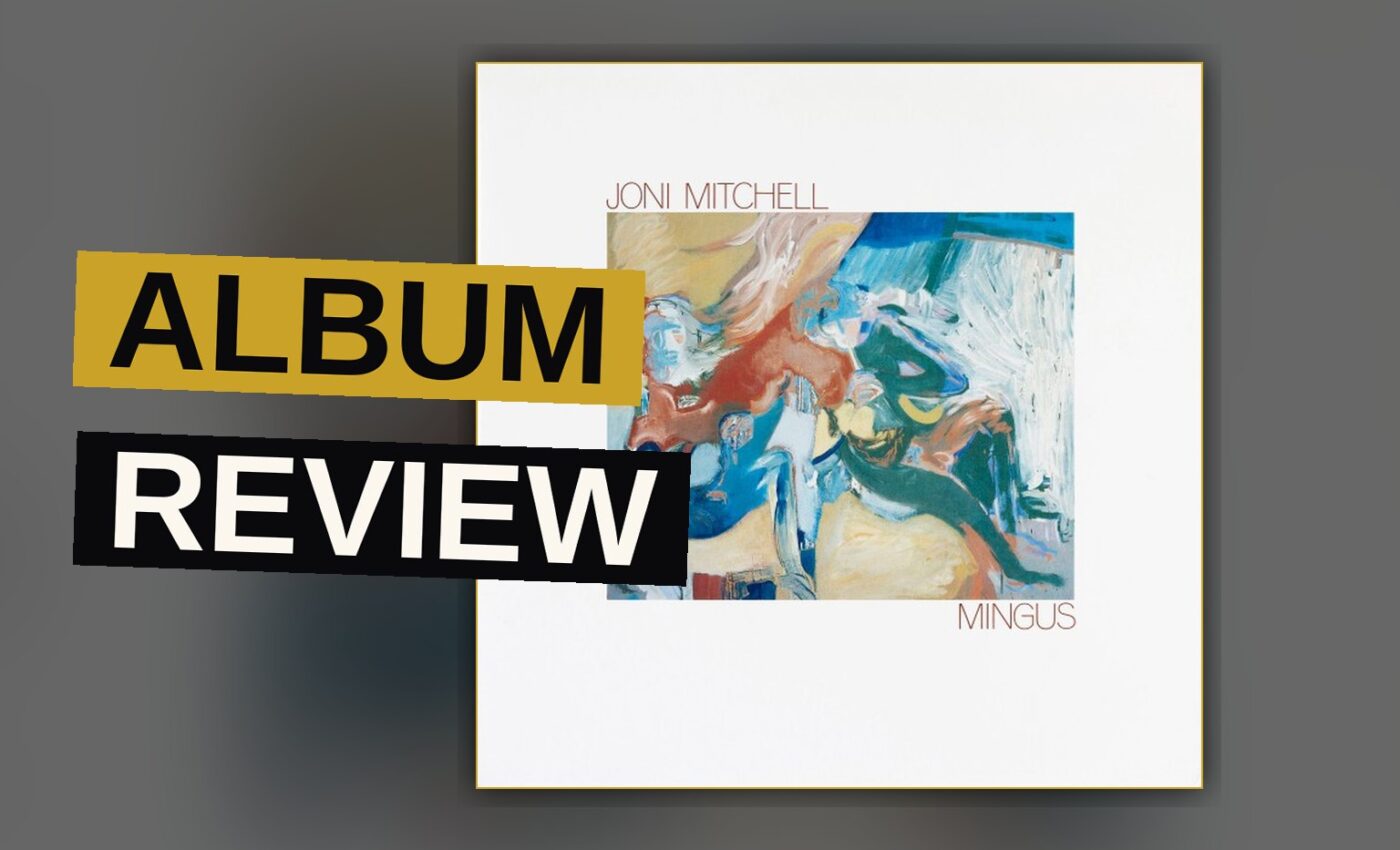
Joni Mitchell’s Mingus is a memorial album that never quite decides what it wants to mourn. Released in 1979, it was conceived as a collaboration with the legendary jazz bassist Charles Mingus, who approached Mitchell with a set of melodies and asked her to write lyrics.
Mingus died before the sessions were finished, leaving Mitchell to complete the record as a tribute. The result is a strange, patchwork thing: part jazz standard, part spoken-word experiment, part pop record trying on a suit that does not fit. It is ambitious, messy, and frequently fascinating, but it is not the record Mingus deserved, and it is not quite a great Joni Mitchell record either.
Running Order: The Long Tracks
The album runs 37 minutes across 11 tracks, and its structure is immediately telling. Five of those tracks are short rap interludes — spoken-word fragments that total barely two minutes combined. They are not raps in any musical sense; they are recited poems, odd little asides that break up the flow of the longer pieces.
The shortest, “Lucky,” lasts four seconds. “I’s a Muggin'” lasts seven.
The real music sits in the six full songs. “God Must Be a Boogie Man” opens the album proper, a swinging, sardonic number built on a Mingus melody. It is one of the strongest tracks here, with Mitchell’s voice sliding over the rhythm like she has finally found a groove.
“A Chair in the Sky” follows, a slower, more meditative piece that lets the band breathe. “The Wolf That Lives in Lindsey” is a character study, sharp and strange, and it works. “Sweet Sucker Dance” is the longest track at over eight minutes, a sprawling piece that drifts in and out of focus.
“The Dry Cleaner From Des Moines” is the most immediately catchy thing here, a jaunty, almost novelty number. And “Goodbye Pork Pie Hat,” the Mingus classic, closes the album with Mitchell singing over the familiar melody, the one moment where the collaboration feels genuinely seamless.
The Rap Interludes
The five spoken-word tracks do not earn their place. “Happy Birthday 1975” is a minute of Mitchell talking over sparse backing, a birthday greeting that feels like a demo rather than a finished piece. “Funeral” is a minute of poetry about death, which is on-theme but underwhelming.
“I’s a Muggin'” is seven seconds of a single repeated phrase. “Coin in the Pocket” is twelve seconds of nothing much. “Lucky” is four seconds.
These are not songs; they are fragments, and their presence pads the running time without adding weight. A stronger record would have cut them entirely or developed them into something real. As it stands, they read as indecision, a sign that Mitchell did not know what shape this album was supposed to take.
A Collaboration That Never Quite Happens
The central problem with Mingus is that it is not really a Mingus album. The melodies are his, but the arrangements, the vocals, and the overall feel are pure Mitchell. The Globe and Mail put it well: “the melodies have a little wider range and a more legitimate jazz feeling to them than Mitchell could compose, but given Mitchell’s peculiar vocal talent, what started out Mingus ended up sounding just like Joni Mitchell, moving forward once again into new territory.”
That is the tension at the heart of the record. Mitchell is too strong a personality to disappear into someone else’s material, and Mingus’s music is too idiosyncratic to be smoothed into a pop-jazz hybrid. The two forces pull against each other, and the album never resolves the conflict.
Stereo Review was harsher, noting that “Joni’s ‘memorial’ album has danged near no improvisation.” That is the damning critique, because improvisation was the whole point of Mingus. His music was built on spontaneity, on musicians pushing each other in the moment. Mitchell’s version is composed, arranged, and polished. It is a tribute that removes the very thing that made its subject great.
DownBeat called it “a wonderful piece of work,” and the ambition is real. But the album as a whole lacks the fire that Mingus himself would have brought to it.
What Works and What Does Not
- Works: “God Must Be a Boogie Man,” “The Dry Cleaner From Des Moines,” “Goodbye Pork Pie Hat,” “The Wolf That Lives in Lindsey”
- Does not work: “Happy Birthday 1975,” “Funeral,” “I’s a Muggin’,” “Coin in the Pocket,” “Lucky,” “Sweet Sucker Dance”
The best tracks are worth hearing, and the album is never boring. But the filler raps, the lack of improvisation, and the mismatch between Mitchell’s voice and Mingus’s material hold it back.
It is a memorial that does not quite honor its subject, and a Joni Mitchell album that does not quite hit her usual standard.
It is a curiosity, not a classic.
- Happy Birthday 1975 (rap)0:58
- God Must Be a Boogie Man4:36
- Funeral (rap)1:07
- A Chair in the Sky6:43
- The Wolf That Lives in Lindsey6:33
- I’s a Muggin’ (rap)0:07
- Sweet Sucker Dance8:05
- Coin in the Pocket (rap)0:12
- The Dry Cleaner From Des Moines3:22
- Lucky (rap)0:04
- Goodbye Pork Pie Hat5:37