
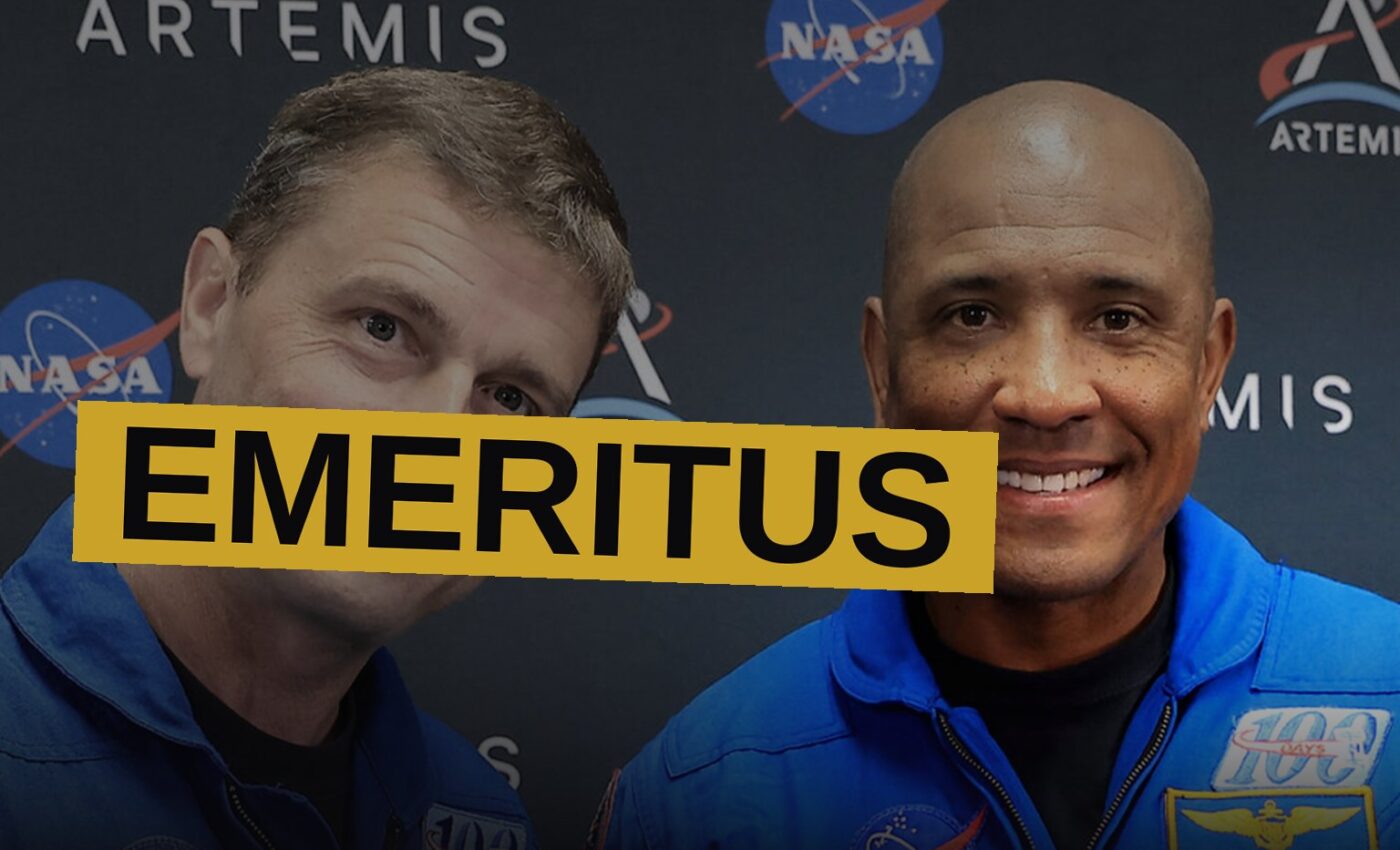
Reid Wiseman and Victor Glover aren’t entirely stepping away from NASA’s Artemis II mission have gained a new distinction five months after splashing down from the Moon: They’. The two astronauts are the first to sign up for NASA’s emeritus program, which lets them keep aiding the work at Johnson Space Center in Houston. They’ll stay on hand to train and guide the current workforce there, even as they’re free to look for work and chances beyond the agency.
Neither man is saying goodbye; the title marks a change in status rather than an end to service. They both flew the mission and made it back to Earth together. What follows is a period of transition, with each keeping one foot in the space agency while planting the other in a new career.
The Meaning of Emeritus
At NASA, the term holds real significance. It has traditionally been reserved for researchers whose work continues long after they leave the agency’s employ. Now, for the first time, the space agency is applying that honor to astronauts.
“I have asked NASA … to not use the term ‘retire’ as much, but technically emeritus is a retirement program,” Glover told collectSPACE.com on Wednesday. “It’s something we have typically done for scientists when they have groundbreaking research, and they want to go back to academia to teach or to research and publish.”
The difference alters the conditions under which someone departs. A retired astronaut does not simply leave. They stay connected to the organization, ready to provide training, mentorship and advice, even as they are free to accept outside employment.
“You can be paid or you can be a gratis service, which is compensation waived, and that’s what I’m doing.”
NASA has agreed to let Glover continue his work without pay, keeping both his access and his position instead.
Glover’s Path to Cal Poly
California Polytechnic State University (Cal Poly) in San Luis Obispo has hired Glover for a full-time administrative leadership post. In it he helps craft the school’s long-range plans. It marks a notable shift away from piloting spacecraft toward work inside university administration and institutional strategy.
Glover’s dedication to NASA persists alongside his current duties. He has pledged to make himself available to share his knowledge of the Orion spacecraft and its systems with future Artemis missions. That expertise is both rare and recent. He lived inside Orion, and that firsthand experience is precisely what the next crews will require.
“So I’m not going to be paid for it, but I’ll be able to voluntarily be an advisor or a consultant providing insight into what living in Orion is like,” Glover said. The practical details are already in motion. He will be issued an access badge and plans to be present at the training simulation runs.
The United States Space Academy
Glover’s ambitions go beyond training runs. He wants to help build a new initiative, the United States Space Academy, which would serve both NASA and the US Space Force.
Glover has not yet been given a defined role at the Academy. But his desire to help bring it into existence comes from his own direct experience. He is not leaving spaceflight behind. Instead, he is moving into a supporting position, working on its behalf from a new direction.
Wiseman’s Role
The announcement did not lay out Wiseman’s plans for after his time with NASA. What is plain is that he, like Glover, has opted for the emeritus route instead of walking away entirely. The two men share the distinction of being first.
A New Category of Astronaut
A formal category that did not exist before has been created through the emeritus program. This is how the sequence of events played out:
- Wiseman and Glover were selected for the Artemis II crew.
- The mission launched and splashed down.
- Five months after splashdown, NASA named both men emeritus astronauts.
- Glover accepted his administrative post at Cal Poly and committed to unpaid NASA advisory work.
What the sequence documents is a distinct shift from active service to a new formal standing. The men were not simply left behind and later recalled with fondness. Instead, they were formally reassigned while they remained active within the wider space community.
The Value of Staying Close
What the emeritus program offers is lasting connection between generations of astronauts. Orion is a fresh vehicle, and the individuals who rode it possess information that no handbook can fully contain. Glover intends to hand down that knowledge through training exercises and personal advice sessions.
He still carries an access badge that lets him move through the corridors of Johnson Space Center. His mere presence offers current crews a connection to someone who has truly lived inside Orion. Such insight cannot be conveyed by any document.
The arrangement is voluntary and unpaid.
The agency that sent Wiseman and Glover around the Moon has not lost them. They remain at its disposal, in a permanent arrangement, and so the astronauts are still there for the agency to call upon. NASA acquires seasoned advisors through this setup, while the astronauts themselves gain the freedom to pursue new careers. The emeritus program satisfies the desires of both parties involved, and it establishes a model that will be watched closely by every astronaut who comes after.
Source: arstechnica.com
Get the Notebook.
The day's best stories and every fresh verdict, in plain English, in your inbox by seven. One email a day, no more.