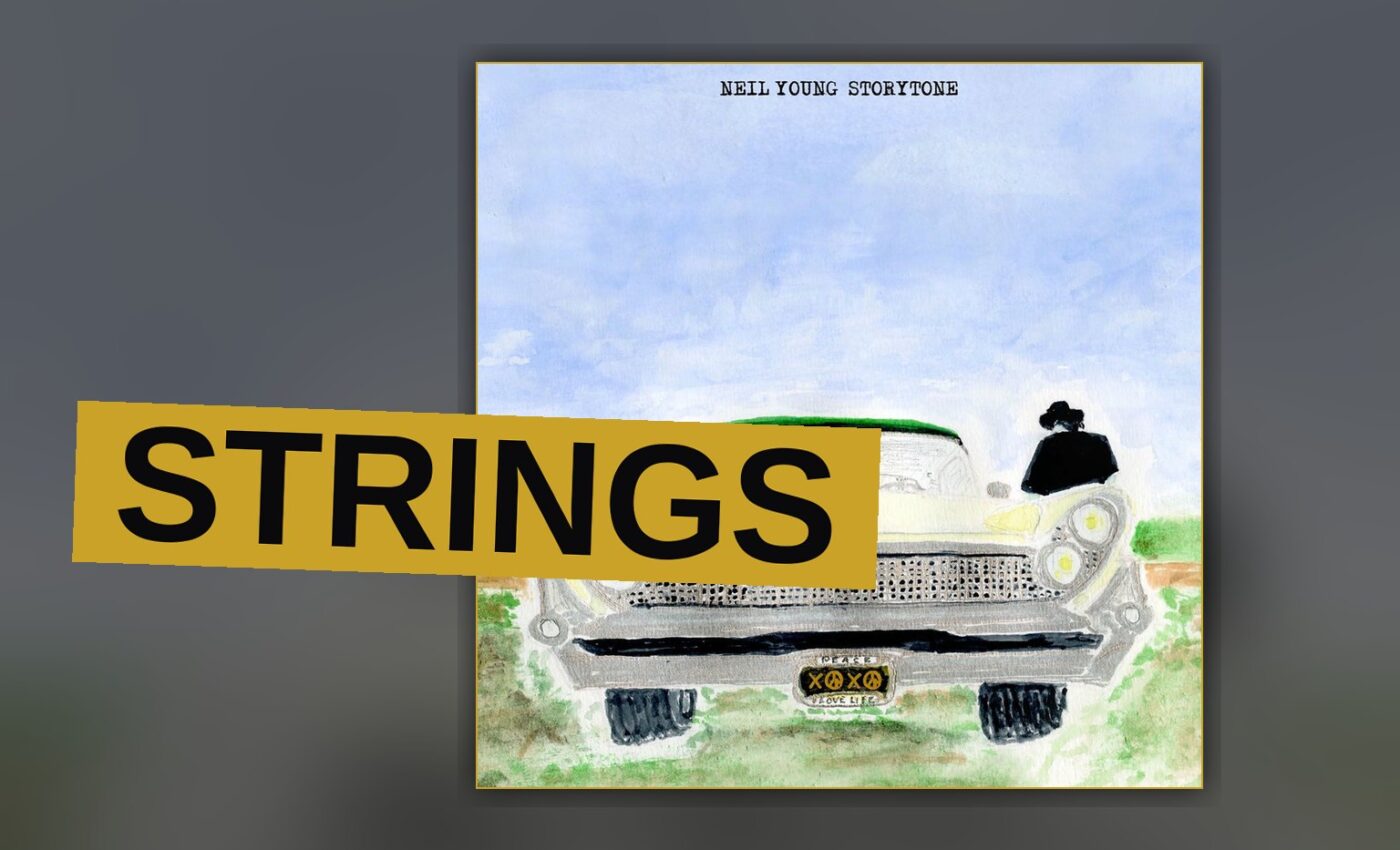
Neil Young has spent decades doing what he wants, and Storytone is another turn in that long road. His 35th studio album takes ten new songs and dresses them in full orchestra and big-band arrangements. The idea is bold. The result is uneven.
The record is a response to climate change, love, and the passage of time. Young recorded the same songs twice — once with the full band, once solo — but the version released in 2014 is the grand one. It swings between tender and heavy, often within a single track.
Opening With The Orchestra
“Plastic Flowers” starts the album with a slow, mournful horn line. The strings swell quickly, and Young’s voice strains against them. The song’s central image — fake flowers placed on a grave — is sharp, but the arrangement buries the point.
“Who’s Gonna Stand Up?” is the album’s political heart. Young wrote it as a climate anthem, and the big-band brass gives it a march-like urgency. It is the rare track where the full sound adds power instead of weight. The chorus is simple and direct.
“I Want to Drive My Car” is a short, odd detour. A blues about escaping the city, it feels slight next to the two songs before it. The horns are fun, but the lyrics are thin.
“Glimmer” slows things down with a piano ballad. Young’s vocal is cracked and intimate, and for a moment the band stays out of the way. Then the strings arrive, and the song loses some of its quiet force.
The Middle Stretch
“Say Hello to Chicago” is the album’s loosest moment. A jazz-tinged number about returning to a familiar place, it benefits from the big-band sound. The trumpet solos are bright, and Young sounds relaxed for the first time.
“Tumbleweed” is a country waltz that gets lost in the mix. The song’s melody is pleasant but unremarkable, and the full arrangement does little to lift it.
“Like You Used to Do” is the shortest track here, a two-minute and 41-second blues that feels like a cast-off. It is not bad, but it is not memorable.
“I’m Glad I Found You” is the album’s purest love song. The lyrics are simple, and the arrangement, for once, stays restrained. It works.
Closing Strong
“When I Watch You Sleeping” is the peak. A slow, aching ballad, it shows Young at his most open. The strings are still there, but they support rather than smother. This is the song that makes the case for the whole experiment.
“All Those Dreams” closes the record on a hopeful note. It is a gentle tune that lets the album end quietly. It is a good song, but it feels like a retreat after the ambition that came before.
“Storytone does the opposite, overwhelming any inherent heart or soul in Young’s original compositions”
That line from The A.V. Club, via Metacritic, is the core problem. Young’s writing is strong throughout, and his voice — worn and raw — carries real feeling. But the strings are often too much.
Slant Magazine was kinder, noting that “the extent to which Young is willing to go to avoid resting on his laurels… is admirable.” That is true. Rolling Stone put it differently: “Neil Young’s only style is doing what he wants, with zero fucks given about anyone’s co-sign.”
The Verdict
Storytone is a flawed, fascinating record. The best tracks — “Who’s Gonna Stand Up?”, “When I Watch You Sleeping”, and “I’m Glad I Found You” — justify the experiment. The lesser ones, like “Tumbleweed” and “Like You Used to Do”, get lost in the lavish arrangements.
Metacritic puts the album at 60 out of 100, and that feels right. Pitchfork gave it 4.8 out of 10, which is a little harsh but understandable.
Young is still taking risks. That deserves credit. But risk alone does not make a great record.
Storytone is a mixed bag with a strong core. It will frustrate you, then win you back. It is worth your time, but only in pieces.
6 out of 10.
- Plastic Flowers4:06
- Who’s Gonna Stand Up?4:24
- I Want to Drive My Car3:11
- Glimmer5:01
- Say Hello to Chicago4:58
- Tumbleweed3:38
- Like You Used to Do2:41
- I'm Glad I Found You3:43
- When I Watch You Sleeping5:31
- All Those Dreams4:25