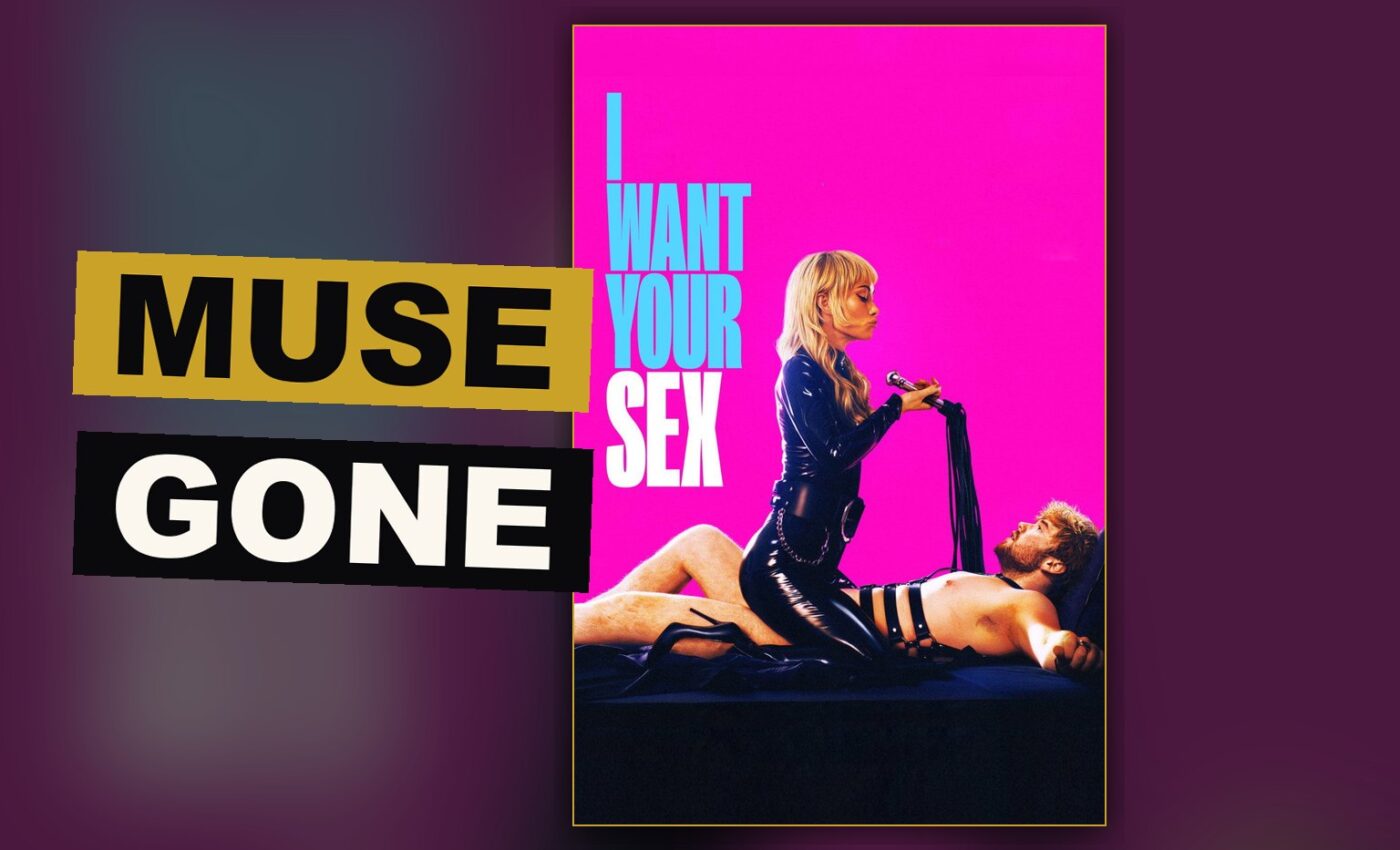
Gregg Araki puts a young man through real trouble in “I Want Your Sex,” and the trouble is Olivia Wilde. She plays Erika Tracy, an artist and public figure known for pushing limits, who hires Elliot Bell, played by Cooper Hoffman, for what starts as a dream job and turns into something far more demanding. Elliot wants to be useful to Erika. Erika wants a muse. Neither of them fully understands what that word is going to cost.
The setup is simple and Araki knows it. Elliot lands the job, Erika makes him her muse in matters of desire and image, and the film spends its 90 minutes watching him get in over his head. What starts as a dream fulfilled turns into a fixed attachment, then power games, then a turning against him, then a killing. Araki does not waste time getting there. The film feels quick for a director whose work can drift into mood for its own sake, and that quality suits the material.
Erika Tracy Runs the Show
Wilde is the reason this movie works when it works. She plays Erika as someone who is funny before she is anything else, and that choice keeps the character from turning into a stock villain. She is commanding and greatly funny in the part, and that comic force keeps the darker turns from becoming too heavy to carry.
Hoffman matches her by staying grounded. Elliot could easily be a blank substitute for the audience, a young man things happen to. Hoffman plays him instead as someone actively not ready for what Erika is asking of him, and that quality is what makes the back half — the turn against him, the killing — land as a real consequence rather than surprise for its own sake.
Mason Gooding and Chase Sui Wonders round out Elliot’s world as Zap and Apple, while Johnny Knoxville and Margaret Cho show up as Detective Zem and Detective Zola once the story needs actual detectives.
Comedy Against Commentary
Here is where “I Want Your Sex” gets weaker. Karley Sciortino and Araki wrote this as a comedy with something to say about how young people today relate to desire, power, and image — and the comedy keeps moving faster than the commentary can keep up with. The jokes land. The commentary, when the film reaches for it, feels thinner, like a first draft of an idea rather than the finished argument the movie wants credit for.
That difference is what separates a movie that is pleasing from a movie that is pleasing and wise. “I Want Your Sex” gets most of the way there.
| Element | What it delivers | What it does not |
|---|---|---|
| Wilde’s Erika Tracy | Genuine comic force, commanding control of every scene | Full psychological depth beneath the image |
| Hoffman’s Elliot Bell | A convincing, sympathetic coming apart under pressure | Much control once the story turns worse |
| The commentary on young people and desire | Clever individual lines and situations | A clear point about young people as a whole |
| The turn toward killing | A real turn in the story, as set up by its own terms | Full logic linking it back to the setup |
This film has been called a fresh, welcoming time that also offers clever commentary on changing habits around desire, and the pleasing half of that claim is simpler to back than the commentary half. It keeps finding new places to take Elliot and Erika’s arrangement.
Where It Lands
This is, by a wide space, one of the more welcoming and pleasing works in Araki’s body of work. It is built to be watched and enjoyed rather than studied, and that is a compliment. The performances from Wilde and Hoffman carry more of the film’s weight than the script does, and the movie is honest enough not to conceal that fact — it relies on them, heavily, and they hold.
It does not fully deliver on its own premise as commentary on today’s young people. But as a comedy about wanting the wrong thing and getting exactly what you asked for, it is clever, quick, and steadily funny, with Wilde doing some of the best work of her career at its center.
67 of 100.