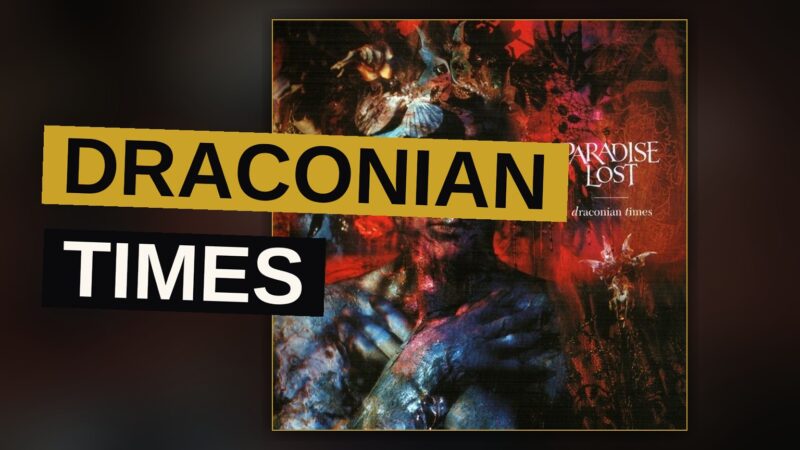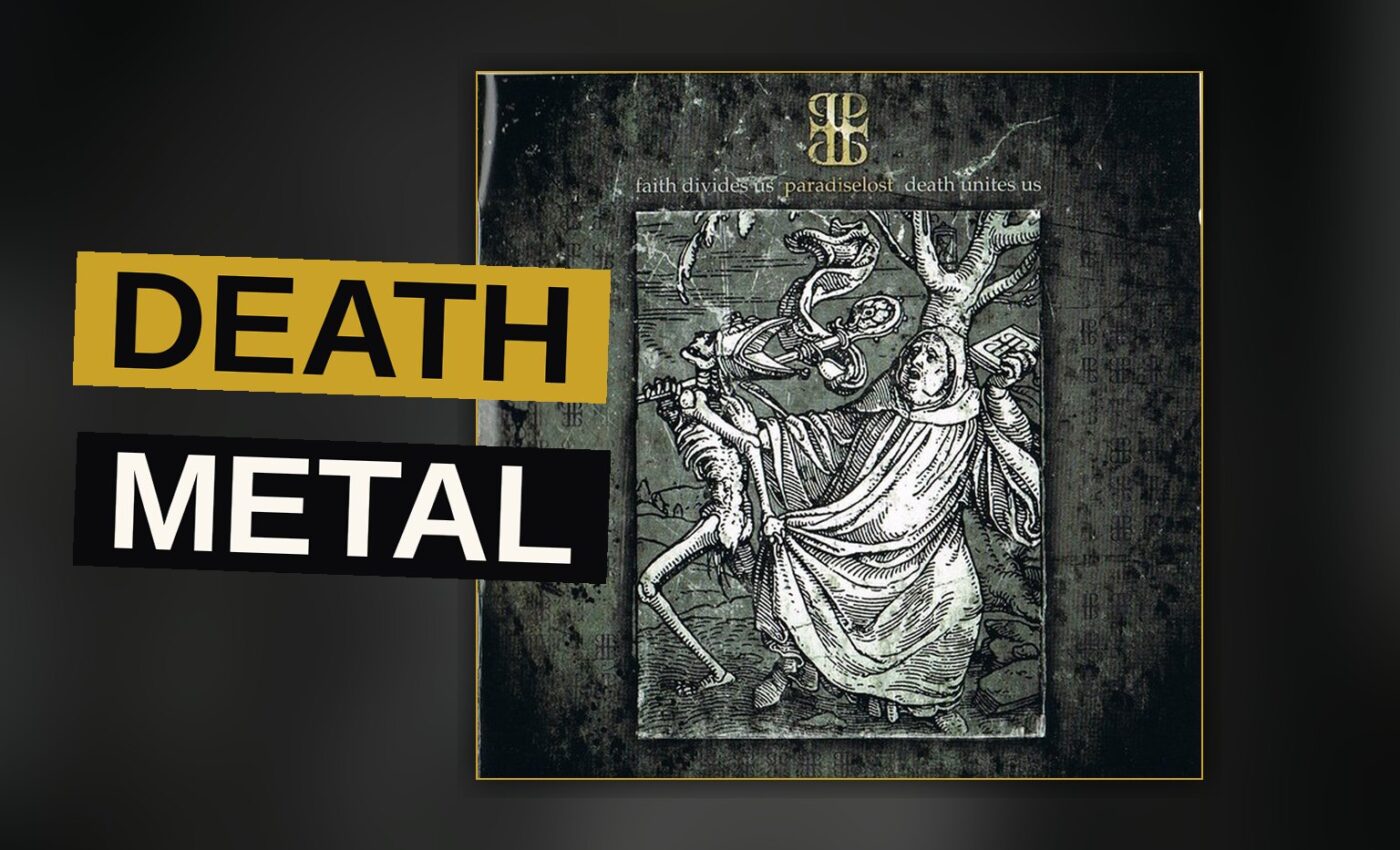
Paradise Lost have spent their career moving between extremes, and Faith Divides Us – Death Unites Us is the sound of a band finally deciding which side it wants to sit on. Released in 2009, this tenth studio album is the heaviest record the group has made since 1995’s Draconian Times, and it plays like a deliberate bid to reclaim the death metal roots that defined that earlier era. The title itself is a statement of intent: faith separates people, but death brings everyone together. That is a grim motto, and the music matches it.
The record runs ten tracks and 46 minutes, and it opens with a slow, crawling build that sets the tone for everything that follows. This is not a band chasing pop hooks or radio moments. This is a band chasing heaviness, and they do not let up for the full runtime.
As Horizons End Opens the Record
The album starts with “As Horizons End,” a five-minute opener that builds slowly from a brooding guitar line into a full-throttle charge. It is a patient track, letting the tension accumulate before the release, and it announces the record’s central idea immediately: the world is ending, and the music will not soften the blow.
“I Remain” follows at 4:09, a shorter, more direct track that keeps the momentum without overstaying its welcome. It is a solid piece of work, though it does not reach the heights of the songs around it. It functions as a bridge between the opener’s atmospheric intro and the heavier material to come.
First Light and Frailty Carry the Middle Stretch
“First Light” is the track that critics singled out, and it earns that attention. At 5:01, it is a slow-burning epic that builds from a quiet, almost fragile verse into a massive chorus. The shift is sudden and effective, and it shows off the band’s ability to balance melody and brutality in a way few of their peers manage. It is the kind of track that rewards repeat listens, and it stands as one of the album’s clear highlights.
“Frailty” follows at 4:25 and is a more mid-tempo affair, built around a steady, chugging riff and a vocal delivery that leans into the track’s title. It is a solid, if unremarkable, piece of the puzzle, doing the necessary work of keeping the album’s energy consistent without demanding much attention on its own.
Faith Divides Us – Death Unites Us Sets the Thesis
The title track arrives at 4:22 and delivers exactly what its name promises: a song about the destructive power of belief and the unifying force of mortality. It is a dense, complex track that moves through several distinct movements, and it is the clearest statement of the album’s thesis. The track is not flashy, but it is effective, and it sets the tone for the rest of the record.
The Rise of Denial Builds Toward the Peak
“The Rise of Denial” is a slower, more atmospheric track at 4:48, and it leans into the doom influences that have always run through Paradise Lost’s sound. It is a brooding, introspective piece that gives the listener space to breathe before the album’s final stretch. It is not the most immediate track on the record, but it serves a purpose, building tension before the songs that follow.
Living With Scars, Last Regret and Universal Dream Close the Strong Run
“Living With Scars” is another standout, a 4:23 track that critics flagged as one of the album’s best. It is a song about damage, both physical and emotional, and it carries a sense of weariness that fits the record’s overall mood. The track is built on a simple, repetitive riff that grows in intensity over time, and it features some of the strongest vocals on the album. It is a track that rewards close listening, and it is one of the reasons the record holds together as well as it does.
“Last Regret” follows at 4:24 and is another strong entry in the back half of the album. It is a song about loss and the weight of decisions made, and it carries a sense of melancholy that ties into the album’s broader themes. It is not the most technically ambitious track on the record, but it is one of the most emotionally direct, and it lands well.
“Universal Dream” closes the main body of the album at 4:18, and it is a quieter, more reflective piece that looks outward rather than inward. It is a track about the shared human experience, and it offers a moment of calm before the final push. It is a good track, but it is not essential to the record’s core mission.
In Truth Closes the Album
The album ends with “In Truth,” a 4:54 closer that pulls the threads together. It is a song about honesty and the cost of living in denial, and it delivers the record’s final statement with a sense of resolution. It is a strong finish, though it does not quite match the peaks of the middle stretch.
This is definitely one of the album’s best tracks
That line, attributed to a critic, sums up the general feeling toward “Living With Scars.” The track is the kind of song that sticks with you after the album ends, and it is one of the reasons the record remains a strong entry in Paradise Lost’s catalog.
The Verdict on Faith Divides Us
Faith Divides Us – Death Unites Us is a heavy, dramatic record that knows exactly what it wants to be. It is not a reinvention, and it does not pretend to be one. It is a band returning to its roots, sharpening its tools, and delivering an album that is consistently strong from start to finish.
The record’s flaws are minor. Some tracks feel like connective tissue rather than destinations, and a few of the middle cuts blend together in memory. But those moments are brief, and they are outweighed by the quality of the highlights. The album’s best tracks — “First Light,” “Living With Scars,” “Last Regret,” and “Universal Dream” — are among the strongest songs Paradise Lost have ever recorded.
The drumming deserves special mention. One review flagged it as the best performance on a Paradise Lost album since Lee Morris’ debut on Draconian Times, and the claim holds up. The rhythm section drives the record forward with precision and aggression, and it is a major factor in why the album sounds as cohesive as it does.
Holmes’ vocals also get singled out. One review notes that they have never been better, and that assessment feels accurate. His range is wider than ever, and he commits fully to the material, delivering performances that match the weight of the songs around him.
The production is clean and punchy, giving each instrument room to breathe while keeping the overall sound tight. There is no filler here, no wasted tracks, and no moments where the record loses focus.
This is a confident, focused album from a band that has spent years finding its footing. It is not the most adventurous record Paradise Lost have made, but it is one of the most accomplished. It is heavy, dramatic, and well-balanced, and it stands as a worthy addition to the band’s catalog.
- As Horizons End5:27
- I Remain4:09
- First Light5:01
- Frailty4:25
- Faith Divides Us – Death Unites Us4:22
- The Rise of Denial4:48
- Living With Scars4:23
- Last Regret4:24
- Universal Dream4:18
- In Truth4:54